Comparison
Tri-Ply vs 5-Ply Stainless Steel Cookware
The honest version of the ply question, including what extra layers cost you and who is answering it with a product to sell.
Top pick: All-Clad D3 Stainless Fry Pan
10 guides and reviews
What the layers do, what the numbers on the box mean, and which claims are marketing.

Every pick below links straight to the live Amazon listing. We never print a price, because a printed price is wrong within a month.
Comparison
The honest version of the ply question, including what extra layers cost you and who is answering it with a product to sell.
Top pick: All-Clad D3 Stainless Fry Pan
Guide
The definition, the reason stainless needs help conducting heat, and how to spot clad construction on a shelf.
Top pick: All-Clad D3 Stainless Fry Pan
Guide
The construction difference that decides whether a pot scorches, how to spot it, and when a disc bottom is genuinely fine.
Top pick: Tramontina Signature Tri-Ply Clad Cookware Set

Guide
What the chromium and nickel numbers mean, why induction pans use two alloys, and the 18/10 caveat.
Top pick: Heritage Steel Titanium Series Fry Pan

Guide
Nickel, scratches, heat tint and the sealed core, addressed without either alarmism or hand-waving.
Top pick: Heritage Steel Titanium Series Fry Pan
Comparison
Lifespan, heat limits, searing and eggs compared, with a clear recommendation to own both.
Top pick: All-Clad D3 Stainless Fry Pan
Comparison
Heat retention, reactivity, maintenance and lifespan compared, with an honest case for owning both.
Top pick: All-Clad D3 Stainless Fry Pan
Comparison
What ceramic coatings actually are, how long they last, and where they genuinely beat stainless.
Top pick: All-Clad D3 Stainless Fry Pan
Comparison
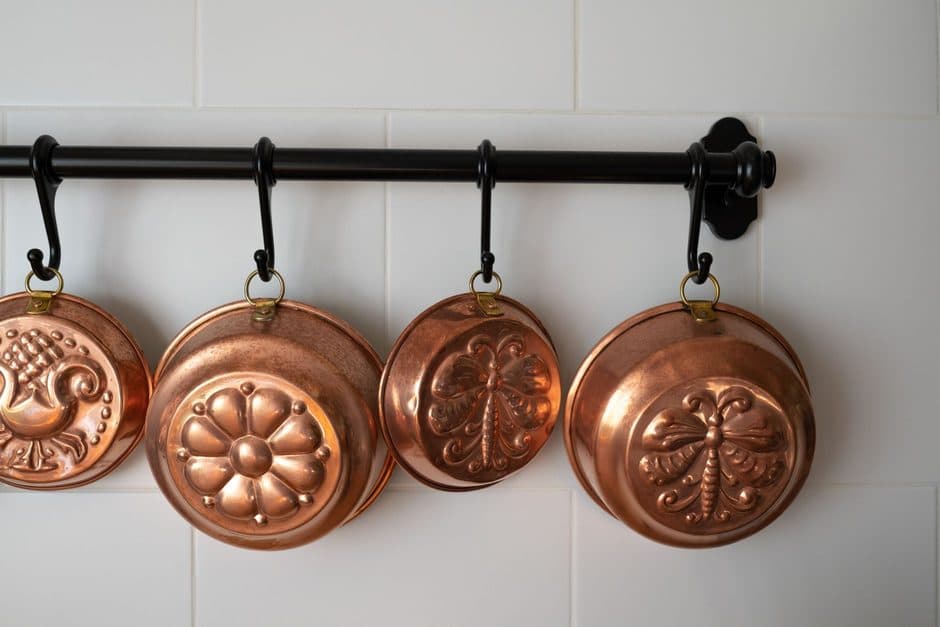
Solid copper, copper-core clad and plain stainless compared on response, maintenance and lifespan.
Top pick: All-Clad Copper Core Saucier
Comparison
Conductivity against durability and reactivity, and why clad construction is the answer to this question.
Top pick: All-Clad D3 Stainless Fry Pan
Stainless steel is a poor conductor of heat. That is not a criticism; it is the whole reason clad cookware exists. Put a sheet of stainless on a burner and you get a searing hot ring where the flame touches and cool metal an inch away. Stainless is used for the cooking surface because it is hard, non-reactive, easy to clean and does not leach into food — not because it moves heat. Something else has to do that job.
That something is almost always aluminum, occasionally copper. Aluminum conducts heat roughly fifteen times better than stainless but is soft, reactive with acidic food, and not magnetic. Copper is better again and worse again on cost. The engineering answer is to bond them: a sandwich with a conductive core spreading heat and stainless skins doing the cooking and the cleaning. That laminate is what "clad" means, and it is explained properly in what does clad mean in cookware.
Before you worry about three layers versus five, check whether the pan is clad at all. Two constructions get sold side by side and they are not comparable.
Fully clad means the laminate runs from the base up through the walls to the rim. Heat travels up the sides, so food touching the walls cooks rather than scorches.
Disc bottom — also called impact-bonded — means a slab of aluminum is welded to the base of a pot whose walls are single-layer stainless. Cheaper, and adequate for boiling water. For anything that clings to a wall, it is a worse pan, and the weld is a failure point a bonded laminate does not have. Full comparison in fully clad vs disc bottom.
A great deal of cookware marketing depends on customers not knowing this distinction, because "stainless steel cookware set" covers both and the price difference is large.
Adding layers does two things, and only one of them is usually sold to you. It increases total mass, so the pan holds temperature better when cold food hits it. And it increases thermal lag, so the pan is slower to respond when you change the heat. The first is an advantage. The second is a disadvantage. Which dominates depends entirely on what you cook: steadier is better for a long braise on an uneven burner, slower is worse when you are trying to stop a butter sauce from breaking.
The brand telling you more plies are strictly better is usually a brand that sells five-ply. The honest version — with the trade named in both directions — is our highest-effort page, tri-ply vs 5-ply.
18/10, 18/8 and 18/0 describe chromium and nickel content by percentage. 18/10 is roughly 18% chromium and 10% nickel, 18/8 is 18 and 8, and 18/0 has effectively no nickel. Chromium is what makes steel stainless. Nickel adds corrosion resistance and a brighter finish — and, crucially, makes the alloy non-magnetic.
Which is why a good induction-compatible clad pan usually has 18/10 inside and magnetic 18/0 outside: the nickel-bearing alloy faces the food, and the nickel-free alloy faces the induction coil. That is engineering, not cost-cutting, and the 18/0 exterior is not a cheaper pan. Worth knowing before someone convinces you otherwise. We also note there that 18/8 and 18/10 are frequently the same alloy with different marketing, in 18/10 vs 18/8 vs 18/0.
Stainless is not the right answer for everything, and a site that claimed otherwise would not be worth reading. Nonstick is better for eggs and delicate fish and will always wear out. Cast iron holds more heat and is more forgiving of abuse. Carbon steel does what cast iron does at half the weight and needs seasoning. Copper is more responsive and needs maintenance. Ceramic coatings are nonstick with a shorter life and a better reputation than they have earned.
The realistic kitchen owns clad stainless for most things and one coated pan for eggs, replaced when it dies. Each of those comparisons has its own page in this section, written to say when stainless loses.
The number of bonded metal layers in the pan wall. Tri-ply is stainless, an aluminum core and stainless again. Five-ply adds two more alternating layers. The plies exist because stainless conducts heat poorly and needs help.
No. More plies mean more mass and steadier heat, but also slower response. Steadier helps a long braise; slower hurts a pan sauce. Whether that trade is an upgrade depends on how you cook.
Fully clad means the layered construction runs from base to rim, so the walls conduct heat. Disc bottom welds an aluminum slab to the base of a single-layer pot, leaving the walls to scorch anything clinging to them.
For the cooking surface, yes, because nickel improves corrosion resistance and finish. For the exterior of an induction pan, 18/0 is required, because nickel-free steel is magnetic. Good clad pans use both deliberately.
Yes. The food only ever touches the stainless interior, which is non-reactive and does not leach in ordinary use. The aluminum or copper core is fully sealed between steel layers and never contacts food.
The exterior layer is probably non-magnetic 18/10 or 18/8 rather than 18/0. Test it with a fridge magnet: if the magnet does not stick firmly to the base, an induction hob cannot drive it.