Roundup
The Best Stainless Steel Sauciers of 2026
Four clad sauciers ranked on longevity, plus why three quarts is nearly always the right size.
Top pick: Made In Stainless Clad Saucier
8 guides and reviews
The second pan you should own, and the one almost nobody recommends.
Every pick below links straight to the live Amazon listing. We never print a price, because a printed price is wrong within a month.
Roundup
Four clad sauciers ranked on longevity, plus why three quarts is nearly always the right size.
Top pick: Made In Stainless Clad Saucier
Roundup
Clad saucepans ranked on longevity, with the lid-rating trap and the size most people should buy.
Top pick: All-Clad D3 Stainless Saucepan
Comparison
The corner, the evaporation rate, and a straight answer about which of the two you should buy next.
Top pick: Made In Stainless Clad Saucier
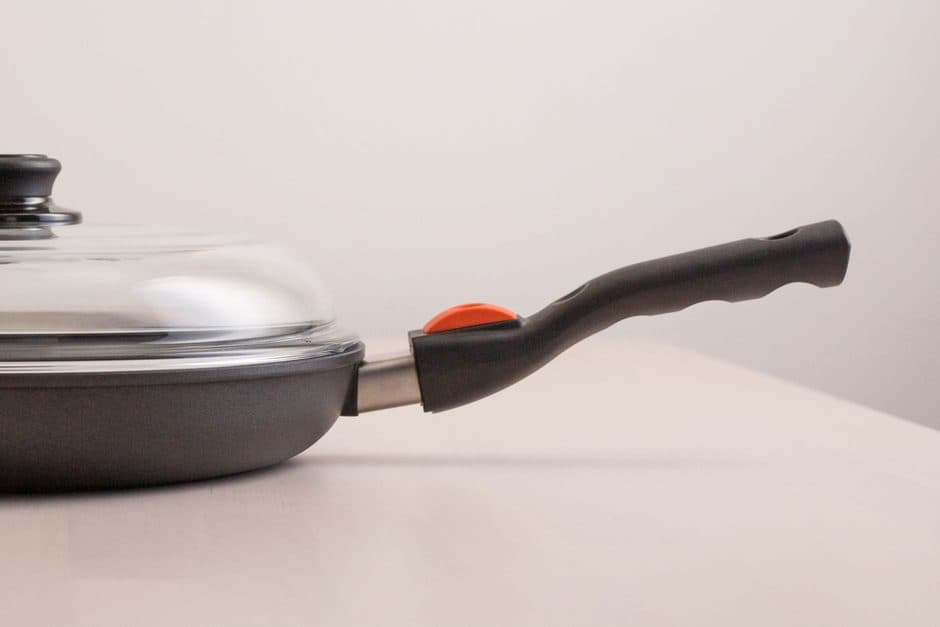
Comparison
Two 5-ply 800F sauciers compared on the things that actually differ: origin, dishwasher rating, handle.
Top pick: Made In Stainless Clad Saucier
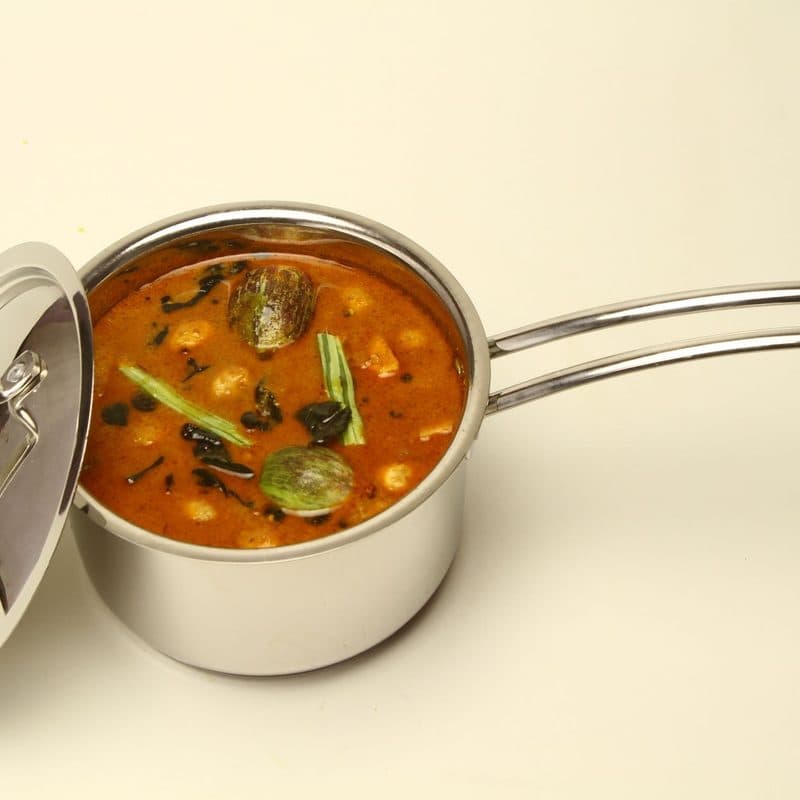
Review
A review of the copper-core saucier, including an honest account of who should not buy it.
Top pick: All-Clad Copper Core Saucier
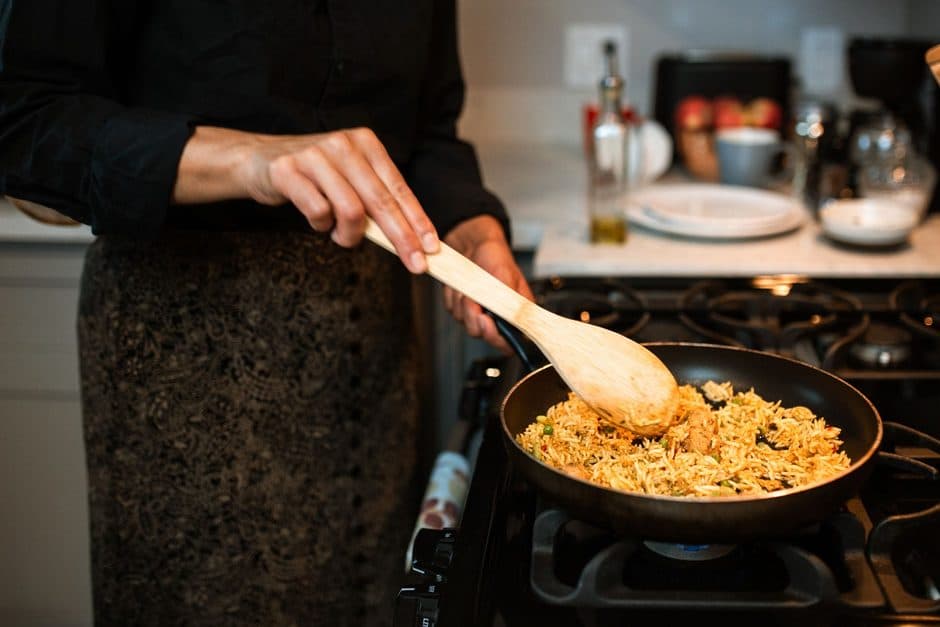
Guide
A sizing guide with the two-quart trap, the four-quart edge case and how it pairs with your skillet.
Top pick: Made In Stainless Clad Saucier
Guide
Techniques the curved wall unlocks, from the sweeping stir to reductions and emulsified sauces.
Top pick: Made In Stainless Clad Saucier
Guide
Why rice and risotto need different pans, and the best clad option for each.
Top pick: All-Clad D3 Stainless Saucepan
Every cookware roundup on the internet will tell you to buy a skillet. Almost none of them will tell you what to buy second, and the honest answer is not another skillet, a stockpot, or a sauté pan. It is a three-quart saucier — a saucepan with the corners taken out of it. It is the single most useful pan most home kitchens do not own, and the fact that it is nearly absent from the major roundups is the reason this section exists.
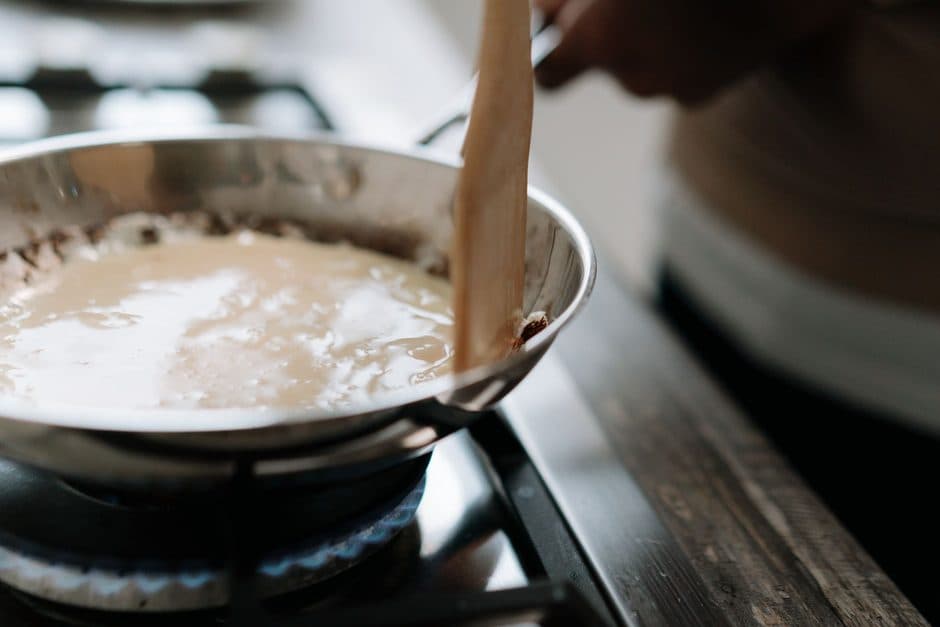
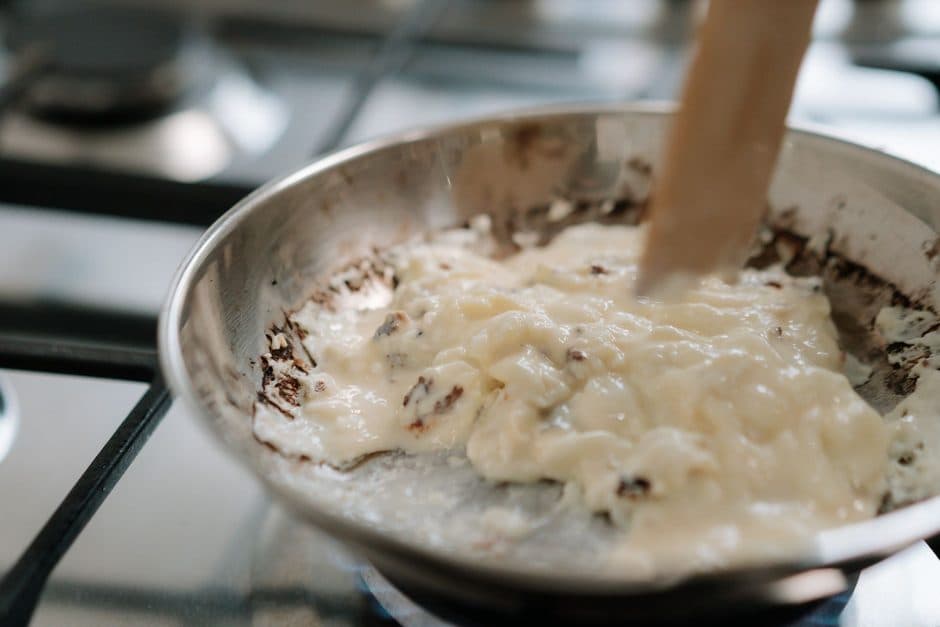
The difference between a saucepan and a saucier is one design decision: a saucepan has straight walls meeting the base at a right angle, and a saucier has walls that curve up from the base in a continuous sweep. That sounds cosmetic. It is not. A right-angled corner is a place a whisk physically cannot reach, which is where roux scorches, where custard sets into lumps, and where risotto sticks and then burns. A curved wall has no such corner. The same three quarts of liquid, the same clad construction, the same burner — and one pan fights you while the other does not.
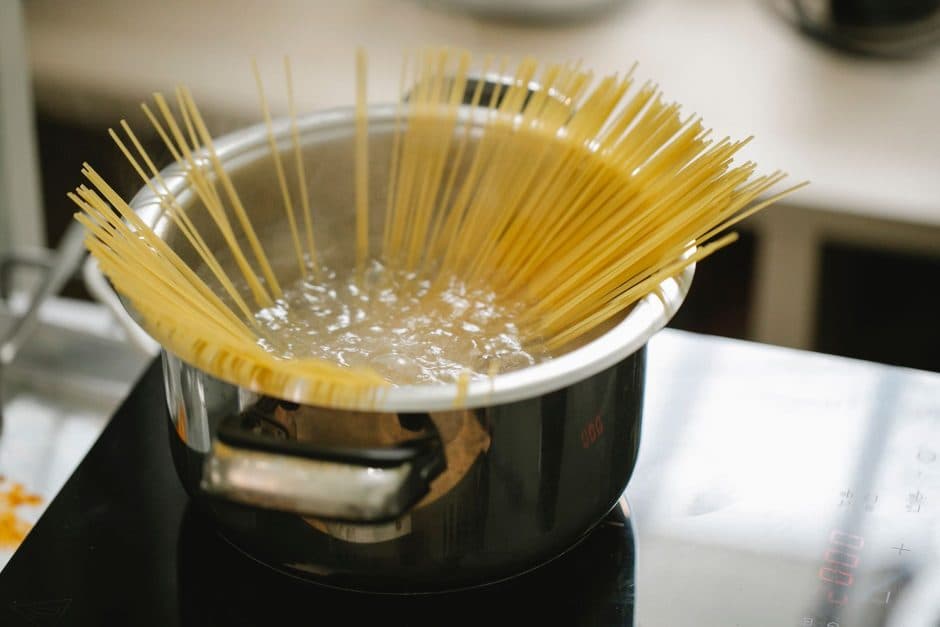
Because saucepans are better at one thing, and it is the thing beginners do most: boiling. Straight walls and a narrow mouth mean less surface area exposed to air, so less evaporation, so a saucepan holds a gentle simmer for an hour with far less attention. If what you cook is pasta water, rice, stock and potatoes, the saucepan is the right pan and the saucier is an affectation. That is a real answer and we are not going to pretend otherwise; we lay out both sides in saucier vs saucepan.
But most people already own a saucepan. They came with the set, or they were the first thing bought. The marginal purchase — the one you are actually deciding about — is almost never a first saucepan. It is the next pan. And for the next pan, the saucier wins on range: it reduces faster because of the wider mouth, it whisks cleanly, it does everything a saucepan does except hold a very long simmer, and it can shallow-fry in a way a straight-walled pot cannot.
Three quarts is the answer for almost everyone. Two quarts is genuinely too small for anything you would make for more than two people, and it is the size most often bought because it is the cheapest way into a brand. Four quarts and up starts behaving like a small Dutch oven: fine, but you lose the responsiveness that made you want a saucier. If you cook for one, a two-quart earns its place; for everyone else it becomes the pan you reheat things in. We go through it in what size saucier do you need.
A skillet is mostly about the base, because that is where the food touches. A saucier is about the walls, because the food is a liquid and it is in contact with everything. That makes fully-clad construction meaningfully more important here than in a fry pan: a disc-bottomed saucepan, where a slab of aluminum is welded to the base of an otherwise single-layer pot, has stainless-only walls that run hot and scorch anything clinging to them. In a fry pan you might get away with it. In a saucier reducing a cream sauce, you will not.
This is also the shape where responsiveness earns its money, which makes it the one place a copper core is arguably worth the price. In a skillet, copper's speed is mostly invisible because you are cooking hot and fast anyway. In a saucier holding a beurre blanc just below the break point, the two or three seconds a copper-cored pan saves you when you pull it off the heat are the difference between a sauce and a bowl of separated butter. That is a narrow use case, and if you do not cook that way, an aluminum core is entirely sufficient — see what clad actually means.
One more thing, because it is the reason this pan gets recommended so rarely: sauciers photograph badly. They look like a saucepan someone sat on. A skillet looks like cooking; a saucier looks like a bowl with a handle. If you have wondered why a genuinely excellent shape is missing from so many best-of lists, that is a large part of it.
If you make sauces, risotto, custard, polenta or anything you whisk, yes. A saucepan has a right-angled corner a whisk cannot reach, and that corner is where things scorch. If you mostly boil, your saucepan is already the better pan.
Three quarts for almost everyone. Two quarts is too small for anything beyond two portions; four quarts and up starts losing the responsiveness that made the shape worth buying.
In this shape, more than in any other. A disc bottom leaves the walls as single-layer stainless, which runs hot and scorches anything clinging to them. Liquid touches the walls constantly, so the weakness shows immediately.
Only if you cook temperature-critical sauces. Copper reacts fast enough to save an emulsion you are about to break. For soup, rice and reheating, an aluminum core is indistinguishable and a lot cheaper.
You can, but the wide mouth means faster evaporation and more energy to hold a boil. A straight-walled saucepan or stockpot is the better tool. That is the trade the saucier shape makes.
Mostly marketing. Both describe a rounded-wall pan, though sauteuse usually implies a wider, shallower body with two handles and a saucier a taller one with a single handle. Judge the shape in the photograph, not the name.