Saucepans & Sauciers
What Size Saucier Do You Need?
Three quarts, unless you cook for one. Here is the reasoning, and the exceptions.
Disclosure: Ply & Pan earns a commission on qualifying purchases made through links on this page. We take no free product and no sponsorship, and we never print a price. How we are funded.
Quick picks
The short answer. Tap any row for the full write-up.
| # | Product | Best for | Score | Price |
|---|---|---|---|---|
| 1 | 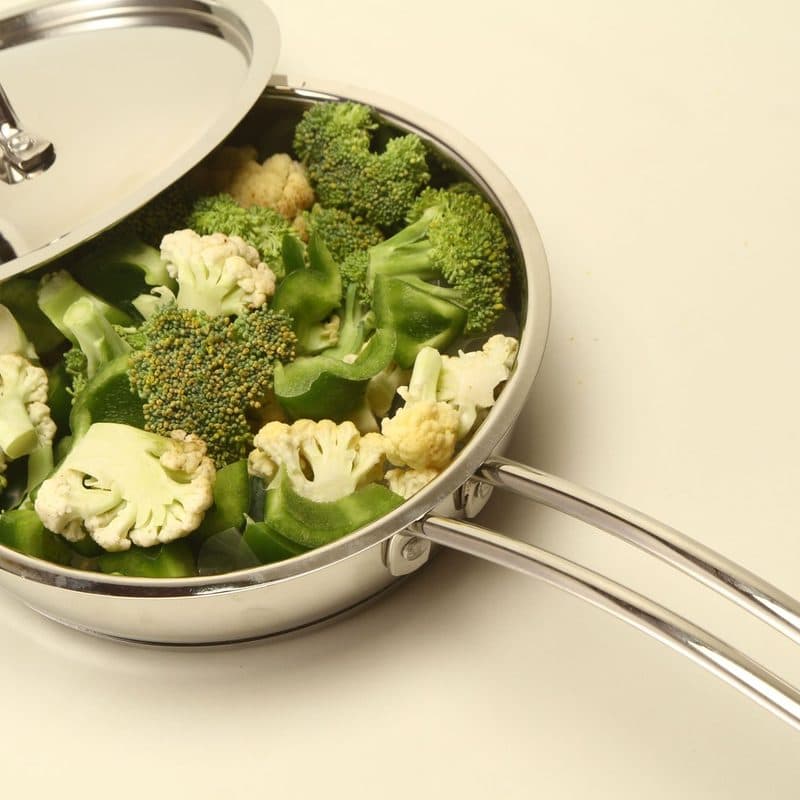 Made In Stainless Clad SaucierIf you buy one saucier, buy three quarts, and this is the one we would buy it in. | The size that covers almost everything | 8.9 | |
| 2 | 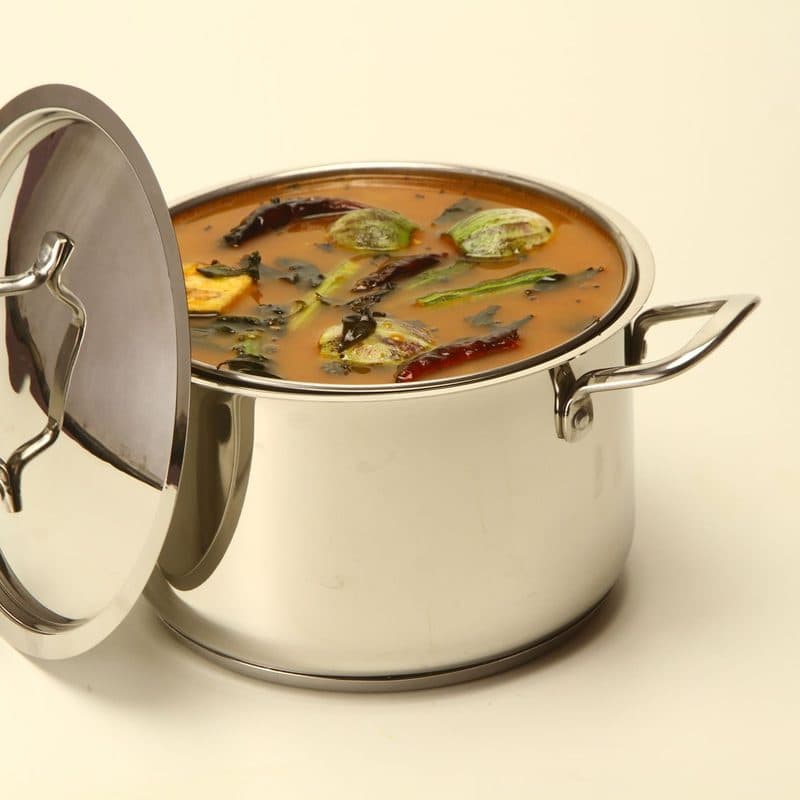 Misen Stainless SaucierCheap enough that a two-quart alongside a three-quart is a reasonable indulgence. | Buying a second, smaller saucier without doubling the spend | 8.6 |
#ad Buy links are affiliate links. We never print a price — prices change weekly and a printed one is wrong within a month, so every link goes to the live Amazon listing. How we are funded.
The answer, then the reasoning
Buy three quarts. It is the right size for the overwhelming majority of home kitchens, and the other sizes exist for specific reasons that probably do not apply to you.
What each size is for
1.5 to 2 quarts. Genuinely too small for most cooking, and the most commonly bought saucier because it is the cheapest way into a brand. It will make a sauce for two, melt butter, or warm milk. It will not hold a risotto for four — the rice needs room to move and the liquid needs space to reduce. If you cook for one and never entertain, this is a legitimate choice; otherwise it becomes the pan you reheat things in.
2.5 to 3 quarts. The right answer. Enough capacity for risotto for four, a full batch of polenta, a quart of sauce, or grains for a family meal, while still shallow and wide enough to keep the responsiveness the shape exists for. Nearly every brand builds its best saucier around this volume.
3.5 to 4 quarts. A specialist choice for people who batch-cook or regularly feed six. It starts behaving like a small Dutch oven: more thermal mass, slower to react, heavier to pour. Buy it as a second saucier, not a first, and insist on a helper handle.
5 quarts and up. Usually sold as a sauteuse. At this size you have a braising pan, and you should evaluate it as one rather than as a large saucier.
By household and dish
| You cook for | Buy | Why |
|---|---|---|
| One | 2 quarts | Single portions of rice, sauce and grains without waste |
| Two | 3 quarts | Handles two portions easily and leftovers for four |
| Three to four | 3 quarts | The full-capacity size for a family risotto or polenta |
| Five or more | 4 quarts, with a helper handle | Volume wins over responsiveness at this scale |
Volume is not the whole story
Two three-quart sauciers from different brands can behave quite differently, because the same volume can be wide and shallow or narrow and tall. Wide and shallow reduces faster and gives better whisk access; narrow and tall loses less liquid and suits long cooking.
If a brand publishes base diameter, use it. A three-quart with a base around eight inches is the classic proportion. Much narrower and you have a saucepan with rounded corners; much wider and you have a sauteuse and will need to watch reduction rates.
Pair it with the skillet you own
A three-quart saucier and a 12-inch skillet is the combination that covers most home cooking, and the pairing is deliberate: the skillet handles dry, high-heat work and the saucier handles wet, stirred work. Together they are the argument of the two-pan kitchen.
If you cook mostly for one and bought a 10-inch skillet, the matching saucier is two quarts rather than three. Keep the scale consistent — an oversized saucier next to a small skillet means one of them is always the wrong tool. Skillet sizing is in what size skillet do you need.
Does size affect longevity?
Less than it does with skillets, because sauciers are rarely run empty. The relevant effect is burner matching: a four-quart saucier on a small ring concentrates heat in the center of the base, and repeated center-to-edge temperature gradients are the slow version of the thermal shock that warps pans.
Larger pans also put more leverage on a single handle, which is why anything over three quarts should have a helper handle. A four-quart saucier poured full and one-handed is the realistic way one gets dropped — and a dropped pan with a dented rim no longer seats its lid.
The picks in full
1. Best 3-quart
Made In Stainless Clad Saucier
Made In
If you buy one saucier, buy three quarts, and this is the one we would buy it in.
- Shape
- 9.2
- Heat
- 9.0
- Durability
- 8.6
- Value
- 8.8
- Five-ply stainless clad construction
- Heat safe to 800F (Made In published spec)
- Induction compatible; handwash preferred
- Rounded walls with no corner for a whisk to miss
- Lifetime warranty on stainless cookware
What it gets right
- Cheapest route into a genuinely good saucier from a fully-clad brand
- The 800F rating makes oven-finishing a braise or a gratin uncomplicated
- Wide mouth reduces sauces faster than a straight-walled saucepan
Who should skip it
- That wide mouth is a liability if you mostly boil small quantities
- Rounded base means less contact area on a small induction ring
- Five plies are slower off the heat than a copper-core saucier
Three quarts in five-ply clad with an 800F rating is the do-everything saucier. Large enough to make sauce for four, small enough to stay responsive.
2. Best if you want to try two sizes
Misen Stainless Saucier
Misen
Cheap enough that a two-quart alongside a three-quart is a reasonable indulgence.
- Shape
- 8.6
- Heat
- 8.8
- Durability
- 8.0
- Value
- 9.4
- Five-ply stainless construction
- Oven safe to 800F (Misen published spec)
- Dishwasher safe; induction compatible
- Lifetime warranty against defects
- Manufactured in China
What it gets right
- The cheapest genuinely fully-clad saucier we would recommend
- The dishwasher-safe rating removes the main reason people avoid steel
- Rounded interior does the job a saucier exists to do
Who should skip it
- No long service history behind the lifetime claim
- Handle geometry is less comfortable than Made In's
- Overseas manufacture rules it out for buy-American shoppers
If you already have a three-quart and genuinely keep wanting something smaller, this is the sensible way to add one without paying premium prices for a secondary pan.
Frequently asked questions
What size saucier is most useful?
Three quarts. It handles risotto or polenta for four, a quart of sauce, and grains for a family, while staying shallow and wide enough to keep the responsiveness the shape exists for.
Is a 2-quart saucier too small?
For most households, yes. It will make sauce for two and melt butter, but it cannot hold a risotto for four. It is the most commonly bought size because it is the cheapest way into a brand.
When should I buy a 4-quart saucier?
If you regularly cook for five or more, or batch-cook. Expect more thermal mass, slower response and real weight, and insist on a helper handle at that size.
What is the difference between a 3-quart saucier and a 3-quart saucepan?
Same capacity, different geometry. The saucier is wider and shallower with curved walls; the saucepan is narrower and taller with straight walls and a corner at the base.
Should the saucier match my skillet size?
Roughly. A 12-inch skillet pairs with a 3-quart saucier; a 10-inch skillet pairs with a 2-quart. Mismatched scale means one of the two pans is always slightly wrong for the quantity.
Does base diameter matter more than volume?
It matters alongside it. The same three quarts can be wide and shallow, which reduces faster and whisks better, or narrow and tall, which loses less liquid. Around eight inches is the classic three-quart base.