Brands & Head-to-Head
All-Clad vs Made In
Made In wins the spec sheet decisively. All-Clad wins the thing a spec sheet cannot show. Which matters depends on you.
Disclosure: Ply & Pan earns a commission on qualifying purchases made through links on this page. We take no free product and no sponsorship, and we never print a price. How we are funded.
Quick picks
The short answer. Tap any row for the full write-up.
| # | Product | Best for | Score | Price |
|---|---|---|---|---|
| 1 |  All-Clad D3 Stainless Fry PanWorse on paper, better on proof. The only pan here with published abuse-test results. | Structural durability and a fifty-year service record | 9.0 | |
| 2 | 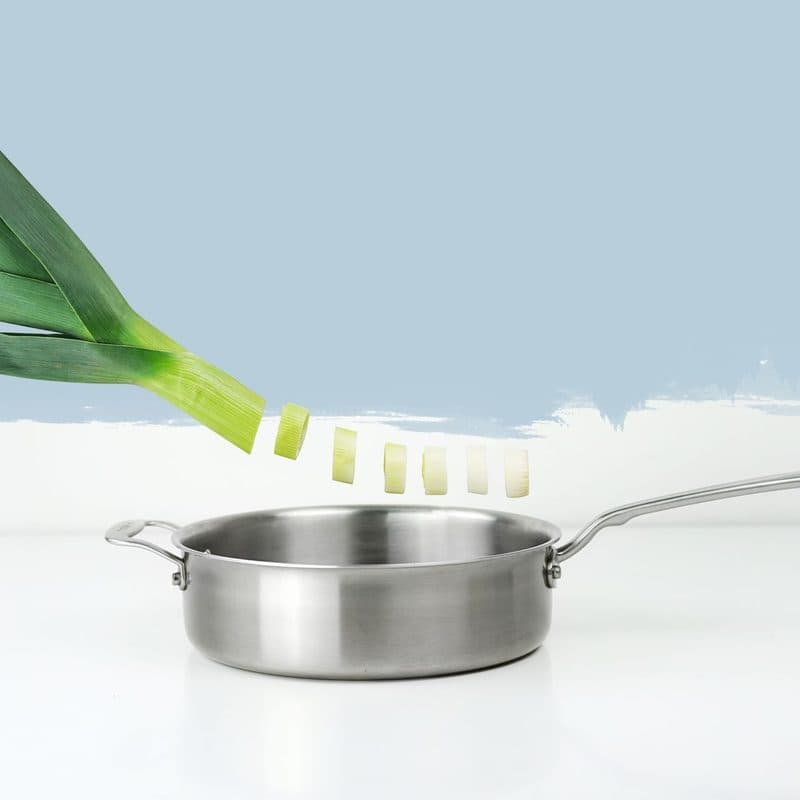 Made In Stainless Clad Frying PanFive plies, 800F, more comfortable, usually cheaper. Younger company behind the same promise. | Oven and broiler work, and a better handle | 8.9 |
#ad Buy links are affiliate links. We never print a price — prices change weekly and a printed one is wrong within a month, so every link goes to the live Amazon listing. How we are funded.
Key takeaways
- Made In publishes five plies at 2.7mm and an 800F heat rating. All-Clad D3 publishes three plies and 600F. Made In usually costs less.
- All-Clad is the only pan in this category with published abuse-test evidence, and it has been bonding metal in the same Pennsylvania factory since 1971.
- Both are handwash-preferred with lifetime warranties that exclude warping from heat or thermal shock.
- Made In's handle is more comfortable. All-Clad's is the most common complaint from its own owners.
- Buy Made In for the oven ceiling and the grip. Buy All-Clad for the probability that someone honors a claim in 2046.
The quick answer
Made In is the better-specified pan and All-Clad is the better-evidenced one. If you finish food under a broiler, buy Made In — the 800F rating keeps you inside the manufacturer's spec where All-Clad's 600F does not. If you are making a genuinely once-in-a-lifetime purchase and want the highest odds the warranty is still honored in twenty years, buy All-Clad and accept the worse numbers.
Side by side
| All-Clad D3 | Made In Stainless Clad | |
|---|---|---|
| Layers | 3 | 5 |
| Published thickness | Not published | 2.7mm |
| Oven rating | 600F, broiler safe | 800F / 430C |
| Induction | Yes | Yes |
| Dishwasher | Handwash only | Handwash preferred; staining excluded from warranty |
| Warranty | Limited lifetime, US and Canada, original purchaser | Lifetime on stainless; 2 years on nonstick |
| Made in | Canonsburg, Pennsylvania | Italy (frying pans) |
| Operating since | 1971 | 2010s |
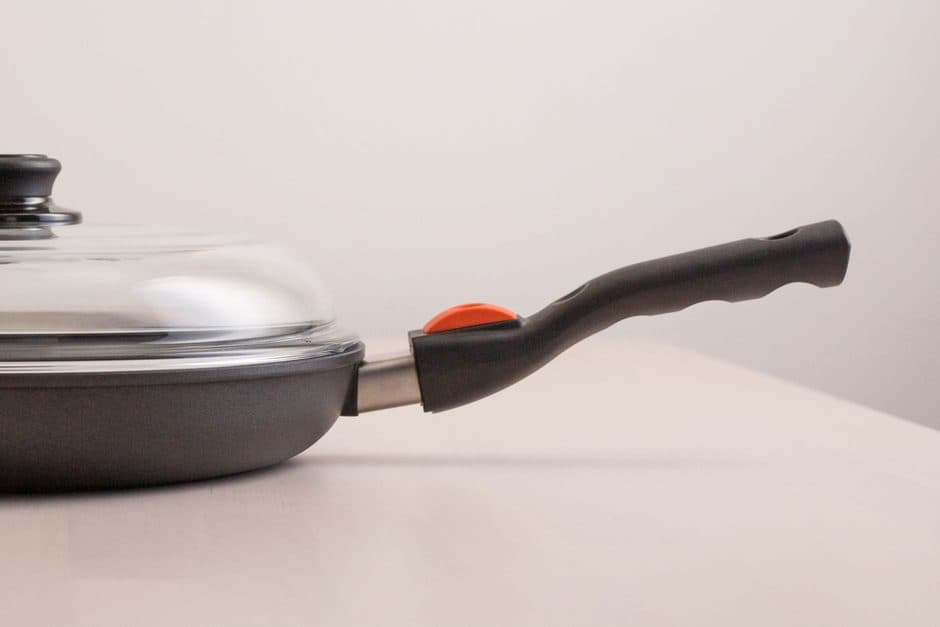
| Handle | Narrow stick, common complaint | Longer and flatter, more comfortable |
| Published abuse testing | Yes, via America's Test Kitchen | None we could find |
| Typical price | Higher | Lower |
Construction and materials
Three plies versus five is a difference in behavior rather than quality. All-Clad's D3 is stainless, aluminum core, magnetic stainless. Made In adds two more alternating layers at a stated 2.7mm total.
More layers means more mass, so the pan holds temperature better when cold food hits it, and more thermal lag, so it responds more slowly when you change the heat. On a weak or uneven burner the extra steadiness helps. When you are building a pan sauce and need to pull heat out fast, the lag hurts. Neither is better in the abstract — the full argument is in tri-ply vs 5-ply, and it is the same trade that separates D3 from D5 within All-Clad's own range.
Cooking performance
Close enough that this is not where the decision gets made. Both are fully clad, both spread heat well across the base, both sear properly once preheated, and both stick if you skip the preheat — see why food sticks.
The detectable differences: D3 reacts faster to a heat change, and Made In recovers slightly better when a cold steak lands. Both are small, and both are dwarfed by pan size and preheating technique.
How long will it last?
This is the section the decision actually turns on, because both pans will cook your dinner adequately for thirty years if nothing goes wrong.
Evidence. America's Test Kitchen's protocol heats pans to 500F, plunges them into ice water to provoke warping, then strikes each three times against a concrete platform. Most pans sustained pronounced dents; one handle loosened and another nearly came off. The All-Clad emerged with barely a ding. We have no equivalent published result for Made In — which means unproven, not disproven, but a careful buyer weighs proof above absence of proof.
Heat headroom. Made In wins clearly. Every warranty in this category excludes heat damage, so the published ceiling is the line between a covered pan and an uncovered one. Broilers routinely exceed 500F and approach 600F. On an 800F pan, a broiler finish is comfortably inside spec; on a 600F pan it is marginal.
Warranty terms. Broadly equivalent in substance. All-Clad excludes normal wear, discoloration and warping from high heat or heating empty, misuse, abrasive-cleaner damage and commercial use, for the original purchaser in the US and Canada. Made In excludes warping from prolonged high heat or thermal shock, accidental damage, appearance changes from normal wear, metal utensils or dishwasher use, and unprotected stacking. Both reasonable, both excluding the likeliest failures. Full table in warranties compared.
Institutional risk. All-Clad has operated the same factory for over fifty years. Made In has not existed for one. A lifetime warranty is a promise from a company; company longevity is the assessable half.
Price over ten years
Made In generally costs less up front for more plies, which makes the ten-year arithmetic favor it — unless the pan fails in a way Made In does not honor and All-Clad would have. That is an unquantifiable risk, which is precisely why reasonable buyers land on both sides.
The one thing we would say firmly: neither is the right answer if you are hard on pans. Warping from thermal shock voids both, and a Tramontina at a third of the price will warp identically for a third of the loss. That is covered in All-Clad vs Tramontina.
Which should you buy?
Buy Made In if you broil or oven-finish regularly, if handle comfort matters, if you want five plies, or if the price gap is significant.
Buy All-Clad if this is a once-in-a-lifetime purchase and institutional longevity is what you are actually buying, if you want the fastest-responding pan for sauces, or if published durability evidence is what convinces you.
Buy neither if you want dishwasher-safe cookware — both specify handwashing, and Demeyere, Misen and Tramontina all publish dishwasher-safe ratings instead.
The picks in full
1. Buy if you want evidence
All-Clad D3 Stainless Fry Pan
All-Clad
Worse on paper, better on proof. The only pan here with published abuse-test results.
- Specs
- 7.6
- Evidence
- 9.8
- Handling
- 7.8
- Value
- 7.2
- Tri-ply: stainless interior, aluminum core, magnetic stainless exterior
- Oven and broiler safe to 600F (All-Clad published spec)
- Induction compatible on any stovetop
- Handwash only, per the manufacturer
- Limited lifetime warranty; bonded, engineered and assembled in Canonsburg, PA
What it gets right
- Survived America's Test Kitchen's concrete-strike abuse testing with barely a ding
- Rivets and handle join are the sturdiest in the category
- Decades of parts and service history standing behind the warranty
Who should skip it
- Costs roughly three times a Tramontina that cooks nearly as evenly
- The stick handle is narrow and bites into your palm on a loaded 12-inch pan
- Handwash only, which is a real constraint if you hate washing up
Tri-ply, 600F, handwash only, limited lifetime warranty, bonded in Canonsburg since 1971. The argument is the rivets and the warranty department, not the numbers.
2. Buy if you want specification
Made In Stainless Clad Frying Pan
Made In
Five plies, 800F, more comfortable, usually cheaper. Younger company behind the same promise.
- Specs
- 9.4
- Evidence
- 7.4
- Handling
- 8.8
- Value
- 8.6
- Five-ply construction, 2.7mm thick (Made In published spec)
- Heat safe to 800F / 430C, 200F above All-Clad's rating
- Gas, electric and induction; handwash preferred
- Lifetime warranty on stainless; the frying pans are made in Italy
- Flared rim pours cleanly, which sounds trivial until you deglaze
What it gets right
- The 800F rating puts broiler work and hard oven finishes in spec rather than in hope
- Longer, flatter handle is more comfortable than All-Clad's stick handle
- Direct-to-consumer pricing undercuts All-Clad at an equivalent ply count
Who should skip it
- No decades-long warranty service record yet; the company is young
- Five plies make it slower to respond than a tri-ply of the same size
- Warranty excludes warping from thermal shock, same as everyone else's
Five-ply at 2.7mm, 800F published rating, lifetime warranty on stainless, frying pans made in Italy. On every measurable axis except service history it is the stronger product.
Frequently asked questions
Is Made In better than All-Clad?
On published specification, yes: five plies to three and an 800F rating against 600F, usually for less money. On evidence and service history, no: All-Clad is the only pan here with published abuse-test results.
Is All-Clad worth the extra over Made In?
If you are buying once and want the highest odds a claim is honored in twenty years, yes. If you finish food under a broiler, Made In's 800F rating is worth more than All-Clad's record.
Which has the better handle, All-Clad or Made In?
Made In. All-Clad's narrow stick handle with a raised spine is the most common complaint from its own owners, worst on a loaded 12-inch. Made In's is longer and flatter.
Are both All-Clad and Made In dishwasher safe?
Neither. All-Clad specifies handwash only; Made In prefers handwashing and excludes dishwasher staining from its warranty. Tramontina, Misen, Zwilling, Demeyere and Hestan publish dishwasher-safe ratings.
Is Made In made in America?
Not the Stainless Clad frying pans, which are made in Italy per the specification. All-Clad's D3 and Copper Core are bonded, engineered and assembled in Canonsburg, Pennsylvania.
Does 5-ply beat 3-ply?
Not straightforwardly. Five plies add mass and steadiness but slow the pan's response. Steadier helps a long braise; slower hurts a pan sauce. It is a trade rather than an upgrade.
Which lasts longer, All-Clad or Made In?
Unknown for Made In, because there is no published long-term or abuse testing. All-Clad has both, plus fifty years of warranty service. Both should last decades absent thermal shock.
Sources
- All-Clad — D3 Stainless 12-inch Fry Pan, published specification
- All-Clad — Cookware Limited Lifetime Warranty (PDF)
- All-Clad — Warranty and repairs, customer service
- Made In — Stainless Clad Frying Pan, published specification
- Made In — Warranty policy
- America's Test Kitchen — The Best Stainless-Steel Skillets
- America's Test Kitchen — Getting Whacked (how the abuse testing works)
- Prudent Reviews — All-Clad vs Made In