Construction & Materials
Stainless Steel Cookware: Pros and Cons
Six real advantages, five real drawbacks, and the two kinds of cook who should buy something else.
Disclosure: Ply & Pan earns a commission on qualifying purchases made through links on this page. We take no free product and no sponsorship, and we never print a price. How we are funded.
Quick picks
The short answer. Tap any row for the full write-up.
| # | Product | Best for | Score | Price |
|---|---|---|---|---|
| 1 | 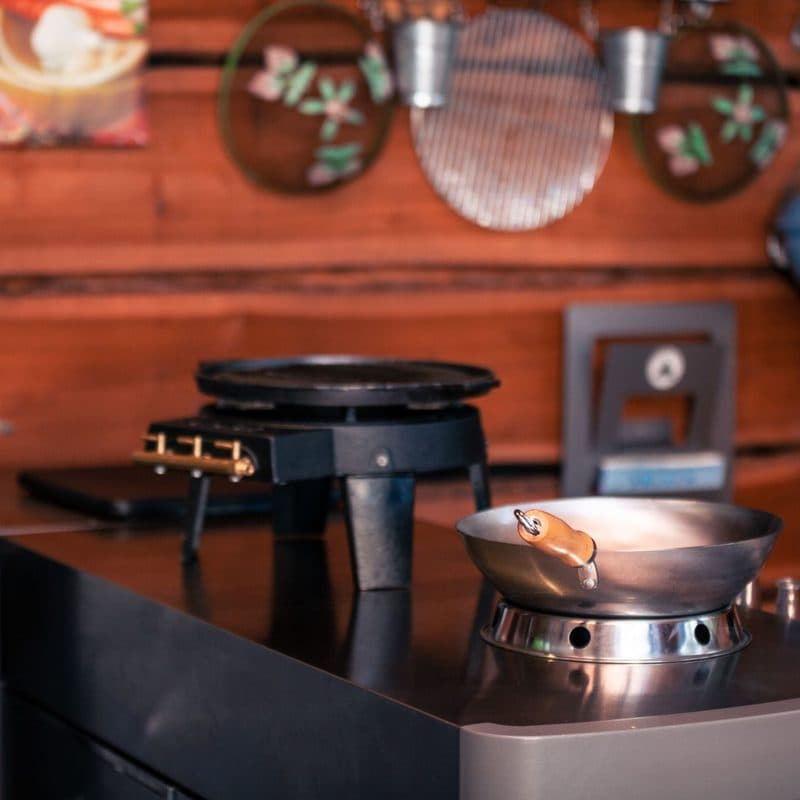 All-Clad D3 Stainless Fry PanEverything on the pro list and everything on the con list, in the same pan. Handwash only, 600F, and probably outlives you. | Seeing what the advantages look like when they are all present | 9.1 | |
| 2 | 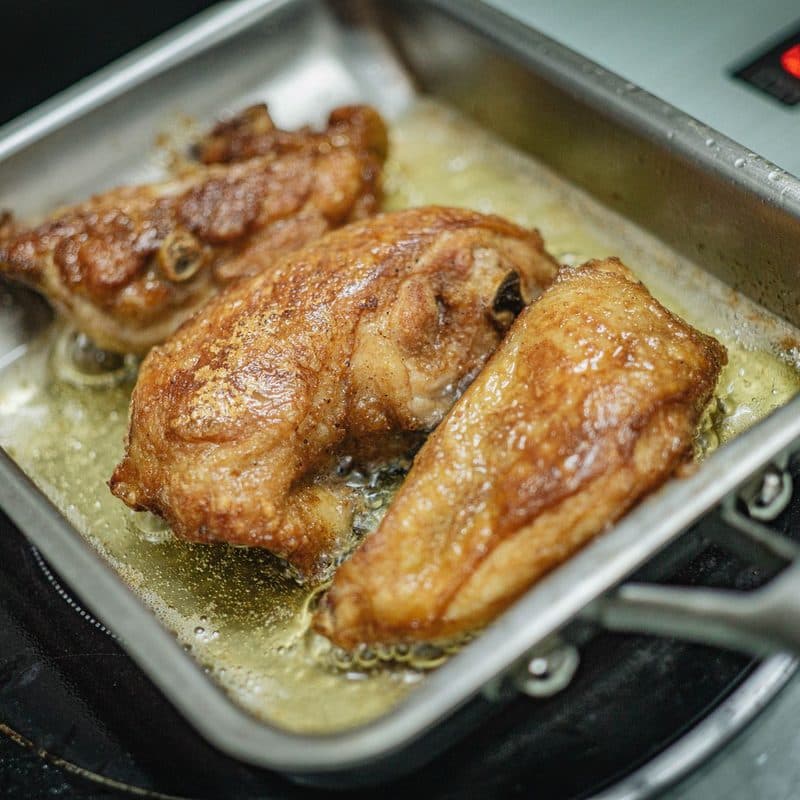 Tramontina Signature Tri-Ply Clad Fry PanFully clad, NSF-certified and dishwasher safe for roughly a third of the premium price. Removes two cons at once. | Deciding the cons are mostly about money | 8.6 | |
| 3 | 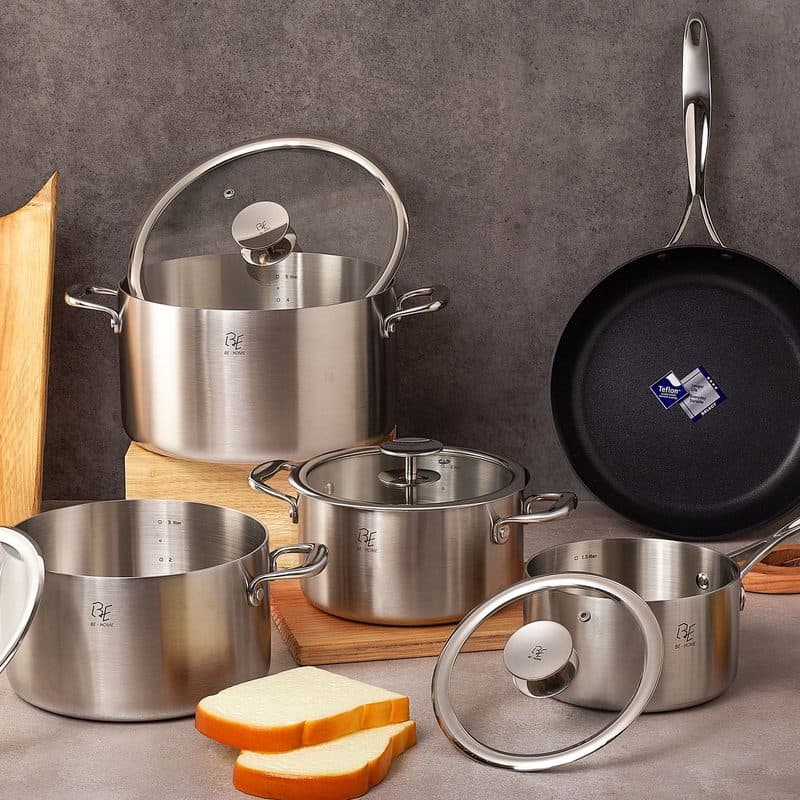 Hestan NanoBond Titanium SkilletRated to 1050F, which puts broiler and grill work inside spec rather than inside hope. | Cooks who want the oven and grill ceiling removed entirely | 8.6 |
#ad Buy links are affiliate links. We never print a price — prices change weekly and a printed one is wrong within a month, so every link goes to the live Amazon listing. How we are funded.
The short answer
Clad stainless steel is the most durable everyday cookware you can buy, and the price of that durability is that it asks something of you at the stove. It has no coating with a service life, it tolerates oven and broiler heat that destroys nonstick, it is non-reactive, and it browns food properly. In exchange it is heavier, more expensive, needs a correct preheat to release food, and conducts heat so badly on its own that it only works as a laminate.
The pros
1. Nothing on it wears out. This is the one that matters most and gets stated least. A nonstick or ceramic pan has a coating doing the work, and that coating is on a countdown from the day you buy it. Stainless is solid metal through the skin layer. There is nothing to abrade, nothing to flake, and a scratch is cosmetic because chromium's passive oxide layer reforms immediately on the damaged surface.
2. Heat tolerance. Published oven ratings across the brands we cover run from 500F (Tramontina, Zwilling Spirit, Demeyere Industry 5) through 600F (All-Clad) to 800F (Made In, Heritage Steel) and 1050F for Hestan's NanoBond. Coated pans do not play in that range. Full table in oven-safe temperatures by brand.
3. It browns and it makes fond. Food sticking slightly and leaving caramelised residue is not a defect, it is the mechanism behind every pan sauce. Nonstick is specifically designed to prevent it.
4. It is non-reactive. Tomato, wine and lemon can sit in stainless without taking on metal flavour, which bare cast iron and bare aluminum cannot offer.
5. Metal utensils are fine. No coating to breach means no utensil anxiety. Some warranties exclude appearance changes from metal-utensil marks, which is about looks rather than function.
6. Induction compatible by design. A clad pan uses magnetic stainless on the outside precisely so an induction hob can drive it, while the nickel-bearing 18/10 inside faces the food. Detail in is stainless steel cookware magnetic.
The cons
1. Food sticks if you rush. This is the real objection and we are not going to minimise it. Protein bonds to hot metal and releases only once a crust forms, so an under-preheated pan with cold oil will glue your dinner down. It is a technique problem with a short learning curve, not a defect — see why food sticks.
2. Stainless conducts heat badly. Type 304 stainless has a thermal conductivity of about 14.4 W/m·K against roughly 236 for aluminium and 401 for copper. On its own it produces a searing ring where the flame touches and cool metal an inch away. The whole reason clad construction exists is to work around this — what clad means.
3. Price. A premium clad skillet costs several times what a nonstick pan costs. The buy-it-for-life arithmetic usually wins over a decade, but the money leaves your account on day one.
4. Weight. A 12-inch five-ply skillet is genuinely tiring to toss food in. Misen publishes 3.0mm and Made In 2.7mm; the heaviest pans we cover are hard work in the larger sizes.
5. Handwashing, often. All-Clad specifies handwash only and Made In prefers it and excludes dishwasher staining from its warranty. Tramontina, Misen, Zwilling, Demeyere, Cuisinart and Hestan publish dishwasher-safe ratings, so this is a brand choice rather than a material one — but it catches people out.
Against the alternatives
| Clad stainless | Nonstick | Cast iron | |
|---|---|---|---|
| Consumable part | None | The coating | The seasoning, which is renewable |
| Published oven ceiling | 500F to 1050F by brand | Low; coating-dependent | Very high |
| Acidic food | Fine | Fine | Strips seasoning if bare |
| Metal utensils | Fine | No | Fine |
| Release without technique | No | Yes | Only once well seasoned |
| Dishwasher | Brand-dependent | Usually not advised | No |
Head-to-head detail in stainless vs nonstick and stainless vs cast iron.
Who should buy something else
Daily egg cooks who will not change their method. Eggs are the hardest thing to release from steel. A cheap nonstick pan alongside your steel is a legitimate purchase, treated as a consumable — and if you want to make steel work, start at the best stainless skillet for eggs.
Anyone who cannot lift the pan comfortably. A pan you dread picking up is a pan you stop using. Weight is a real accessibility constraint and no amount of specification beats it. Buy a 10-inch tri-ply rather than a 12-inch five-ply.
How long will it last?
Indefinitely, if you protect the geometry. Clad stainless rarely wears out; it fails in three ways. Warping from thermal shock is the common one and it is excluded from every warranty in this category. Rivets working loose over decades is the slow one. Delamination is rare, is a manufacturing defect, and is the one failure lifetime warranties genuinely cover.
Notice the shape of that: the two likely failures are excluded and the unlikely one is covered. That is normal across the industry and it is why reading exclusions beats counting years — we read all of them. Avoid cold water on a hot pan, add salt only once liquid is moving, and a clad stainless pan has no obvious end.
The picks in full
1. The pros, in one pan
All-Clad D3 Stainless Fry Pan
All-Clad
Everything on the pro list and everything on the con list, in the same pan. Handwash only, 600F, and probably outlives you.
- Durability
- 9.6
- Heat
- 8.8
- Handling
- 7.8
- Value
- 7.2
- Tri-ply: stainless interior, aluminum core, magnetic stainless exterior
- Oven and broiler safe to 600F (All-Clad published spec)
- Induction compatible on any stovetop
- Handwash only, per the manufacturer
- Limited lifetime warranty; bonded, engineered and assembled in Canonsburg, PA
What it gets right
- Survived America's Test Kitchen's concrete-strike abuse testing with barely a ding
- Rivets and handle join are the sturdiest in the category
- Decades of parts and service history standing behind the warranty
Who should skip it
- Costs roughly three times a Tramontina that cooks nearly as evenly
- The stick handle is narrow and bites into your palm on a loaded 12-inch pan
- Handwash only, which is a real constraint if you hate washing up
The D3 is the clearest illustration of the trade this page describes. No coating to wear out, a lifetime warranty with a real service record behind it, a 600F oven and broiler rating — and handwash only, a handle most owners complain about, and roughly three times the price of a pan that cooks nearly as well.
2. Pros without the price con
Tramontina Signature Tri-Ply Clad Fry Pan
Tramontina
Fully clad, NSF-certified and dishwasher safe for roughly a third of the premium price. Removes two cons at once.
- Durability
- 7.8
- Heat
- 8.4
- Handling
- 7.0
- Value
- 9.7
- Tri-ply: aluminum core between two layers of 18/10 stainless
- Oven safe to 500F (Tramontina published spec)
- Dishwasher safe; works on gas, electric, ceramic glass and induction
- NSF-certified for commercial kitchens
- Mirror-polished exterior, riveted stainless handle
What it gets right
- Cooks close enough to All-Clad that most people could not pick them apart blind
- Dishwasher safe and NSF-certified, neither of which All-Clad's tri-ply is
- Cheap enough that replacing it in fifteen years still costs less than one D3
Who should skip it
- The 500F oven rating is 100F below All-Clad and 300F below Made In
- Handle is less comfortable and the polished finish scuffs faster
- Lighter gauge base is more prone to warping under thermal shock
Two of the five drawbacks below — cost and handwashing — are brand decisions rather than properties of the material. This pan deletes both: fully clad tri-ply, dishwasher safe, NSF-certified, at a fraction of the premium price. What you give back is a 500F ceiling and a lighter gauge.
3. The heat-tolerance ceiling
Hestan NanoBond Titanium Skillet
Hestan
Rated to 1050F, which puts broiler and grill work inside spec rather than inside hope.
- Materials
- 9.4
- Heat
- 9.8
- Durability
- 9.0
- Value
- 5.8
- Titanium-based alloys bonded to stainless in nano layers
- Oven, broiler and grill safe to 1050F (Hestan published spec)
- Dishwasher safe; induction compatible
- Made without PFAS, nickel, lead or cadmium
- Lifetime warranty; handcrafted in Italy
What it gets right
- The 1050F rating puts grill and broiler work genuinely in spec
- A nickel-free cooking surface matters if you react to nickel
- Hestan claims four times the durability of plain stainless, and the surface does resist scratching
Who should skip it
- The most expensive skillet in this category, and it is not close
- The titanium surface changes appearance, not stick behavior; food still sticks if you rush the preheat
- Repair is not realistic, so a damaged surface means a replacement claim
Heat tolerance is stainless steel's quiet advantage over every coated alternative, and Hestan pushes it furthest: oven, broiler and grill safe to 1050F, dishwasher safe, published as made without PFAS, nickel, lead or cadmium. The con is the price, which is the highest on this site.
Frequently asked questions
What are the main advantages of stainless steel cookware?
No coating with a service life, high published oven ratings, proper browning and fond for pan sauces, non-reactivity with acidic food, metal-utensil tolerance, and induction compatibility by design.
What are the disadvantages of stainless steel cookware?
Food sticks if you under-preheat, stainless conducts heat poorly so it only works as a clad laminate, it costs more up front, heavier gauges are tiring, and several brands specify handwashing.
Why does stainless steel cookware need an aluminum core?
Because Type 304 stainless conducts heat at roughly 14.4 W/m-K against about 236 for aluminium. Without a conductive core you get a hot ring where the flame touches and cool metal an inch away.
Is stainless steel cookware worth the money?
Over a decade, usually yes, because there is no coating to replace. Over one year it is simply more expensive than nonstick. The arithmetic depends on how long you keep pans.
Who should not buy stainless steel cookware?
Daily egg cooks who will not adapt their method, and anyone who cannot comfortably lift a heavier pan. In both cases a lighter pan or a cheap nonstick alongside the steel is the better answer.
Does stainless steel cookware need seasoning?
No. Seasoning is a cast-iron and carbon-steel concept. Stainless releases food through correct preheating and fat, not through a polymerised layer.
Sources
- All-Clad — D3 Stainless 12-inch Fry Pan, published specification
- All-Clad — Cookware Limited Lifetime Warranty (PDF)
- All-Clad — Care and use instructions for stainless cookware
- Tramontina — Signature Tri-Ply Clad Stainless Steel Fry Pan, published specification
- Hestan Culinary — NanoBond titanium skillet, published specification
- Made In — Stainless Clad Frying Pan, published specification
- Misen — Stainless Steel Skillet, published specification
- The Engineering ToolBox — Thermal conductivity of metals and alloys
- Xometry — 18/8 vs 18/10 vs 18/0 stainless steels compared