Guide
Why Food Sticks to Stainless Steel
The mechanism behind sticking, the water test that fixes it, and the five mistakes that cause it.
Top pick: All-Clad D3 Stainless Fry Pan
10 guides and reviews
Most stainless steel problems are technique problems. The rest are warranty questions.
Every pick below links straight to the live Amazon listing. We never print a price, because a printed price is wrong within a month.
Guide
The mechanism behind sticking, the water test that fixes it, and the five mistakes that cause it.
Top pick: All-Clad D3 Stainless Fry Pan
Guide
How to read the water test, what the Leidenfrost effect is, and the three ways people get it wrong.
Top pick: All-Clad D3 Stainless Fry Pan
Guide
Why stainless will not hold a seasoning layer, what replaces it, and when a light oiling genuinely helps.
Top pick: All-Clad D3 Stainless Fry Pan
Guide
The temperature window eggs need, how much fat, and two methods that work, plus when to just use nonstick.
Top pick: All-Clad D3 Stainless Fry Pan

Guide
Four methods in escalating order, plus the abrasive damage that warranties specifically exclude.
Top pick: Bar Keepers Friend Cookware Cleanser

Guide
Heat tint, hard-water spots and chloride pitting told apart, with the fix or the prevention for each.
Top pick: Bar Keepers Friend Cookware Cleanser
Guide
Why pans warp, whether a warped pan can be saved, and the three habits that prevent it entirely.
Top pick: All-Clad D3 Stainless Fry Pan
Guide
Brand-by-brand dishwasher ratings, what detergent actually does to stainless, and the warranty implications.
Top pick: Demeyere Industry 5 Fry Pan
Guide
Every brand's published oven rating in one table, with the lid trap and what exceeding the ceiling costs you.
Top pick: Hestan NanoBond Titanium Skillet
Roundup
The one cleanser worth buying, the two staples that handle the rest, and what to keep away from your pans.
Top pick: Bar Keepers Friend Cookware Cleanser
The complaints people have about stainless steel are remarkably consistent: food sticks, it discolors, something burned onto the base and will not come off, and the pan now rocks on the hob. Three of those four are fixable and one is usually terminal. Knowing which is which saves both a lot of scrubbing and a certain amount of money.
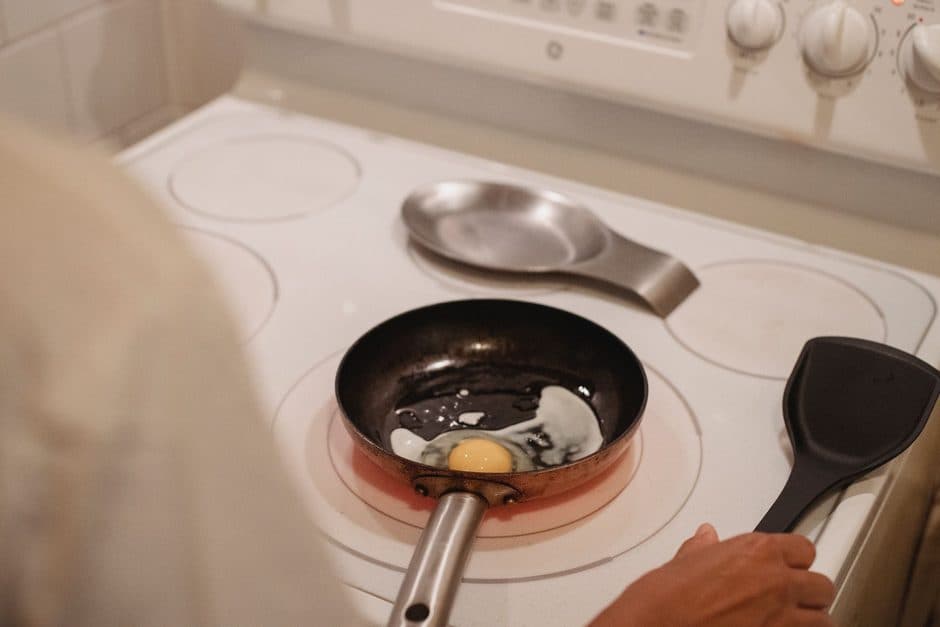
Start with sticking, because it accounts for most of the frustration and almost none of it is the pan's fault. Stainless steel looks smooth and is not. At a microscopic level the surface is pitted, and those pits expand when the metal is heated. Put food into a cold or half-heated pan and proteins settle into open pores and bond as they cook — mechanically, not chemically. Heat the pan properly first and the metal has already expanded, oil fills the pores, and there is a barrier between the protein and the steel.
The test for "properly heated" is the water test, and it is the single most useful thing on this site: flick a few drops of water into the dry pan. If they hiss and evaporate, the pan is too cold. If they shatter into many small skittering beads, still too cold. When a drop forms one mercury-like ball that glides across the surface without boiling, the pan is at temperature. That is the Leidenfrost effect, and it is a physical threshold rather than a guess. Now add oil, then food. Full method in the stainless steel water test.
Two kinds of mark get mistaken for ruin. Rainbow staining is heat tint — a thin oxide layer that forms when the surface gets hot, refracting light like oil on water. It is cosmetic, harmless and removable with an oxalic-acid cleanser. White chalky spots are calcium from hard water, and a splash of vinegar takes them off. Neither is a defect, neither affects cooking, and neither is a reason to replace anything.
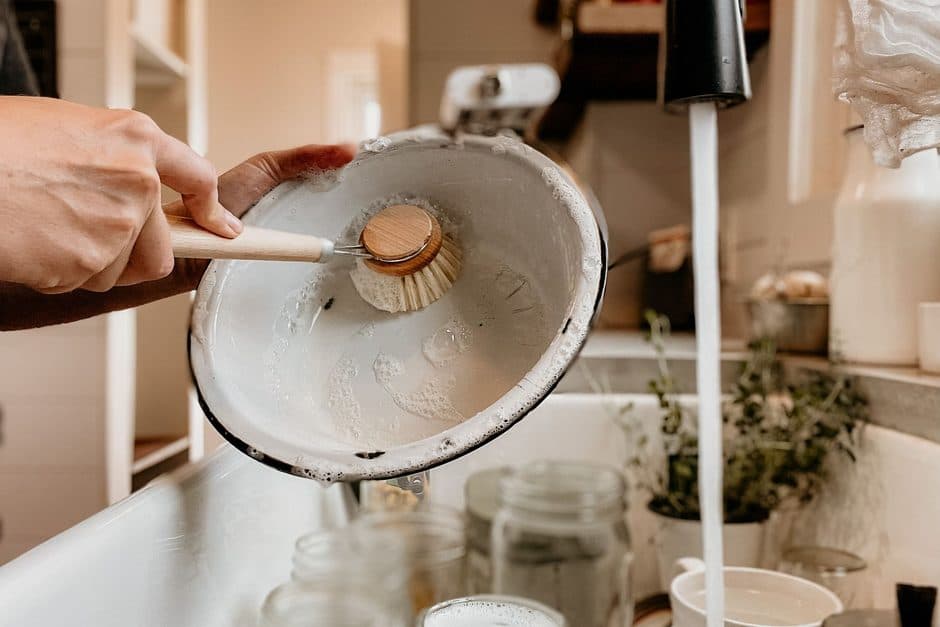
Burnt-on food is a chemistry problem, not a scrubbing problem. The instinct is to attack it with steel wool, which scratches the surface and makes the next thing stick worse. What actually works is deglazing: cover the base with water, bring it to a simmer, and scrape with a wooden spoon while it is hot. Most fond releases in under five minutes. What survives that gets baking soda or an oxalic cleanser. What survives those was carbonized, and abrasion is the only remaining option. Method by method in how to clean a burnt stainless pan.
A warped base is the failure that genuinely degrades a pan, and on a glass or induction hob it makes one effectively unusable — it rocks, it contacts unevenly, and oil pools at the low point. It is caused by thermal shock: rapid temperature change making the aluminum core and the stainless skins expand at different rates until the base takes a set. Putting a hot pan under a cold tap is the classic way to do it, and heating an empty pan hard is the other.
It is also, on nearly every pan sold, explicitly excluded from the warranty. All-Clad's terms exclude warping from high heat or prolonged heat exposure when empty. Made In's exclude warping from excessive heat or thermal shock. Those exclusions are defensible — the manufacturer did not do it — but they mean the most common serious failure is the one you pay for. Which makes prevention the entire strategy: let pans cool before washing, never heat one empty for long, and match the pan to the burner. See what to do about a warped pan.
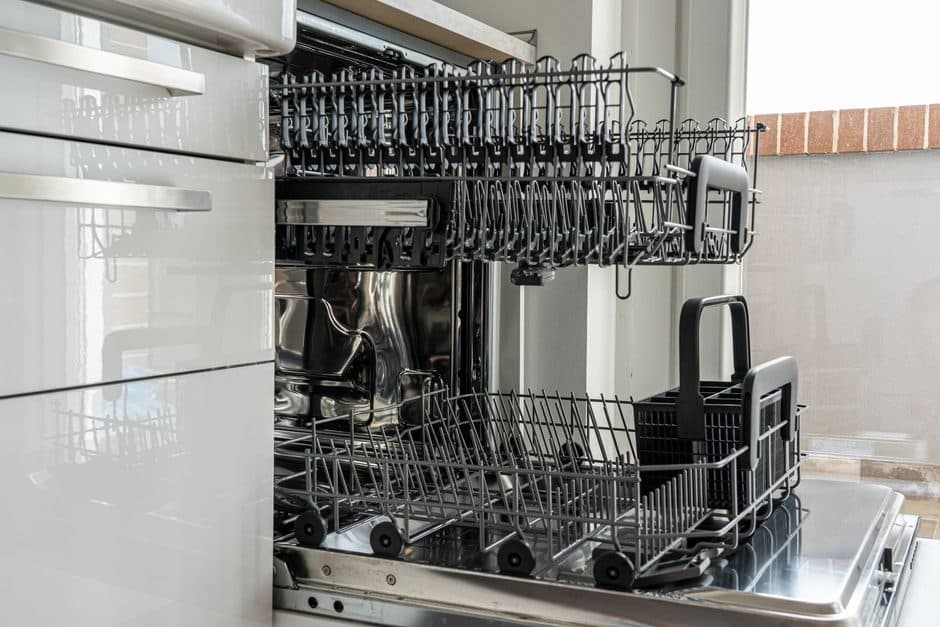
The answer genuinely varies by brand, which is why this is worth checking rather than assuming. Tramontina, Misen, Zwilling, Demeyere and Hestan publish dishwasher-safe ratings. All-Clad, Made In and Heritage Steel say handwash, and Made In's warranty specifically excludes staining from dishwasher use. Dishwasher detergent is strongly alkaline and will dull a polished exterior over time even where it is permitted. It will not destroy the pan. It will make it look older than it is.
Almost always an underheated pan. Stainless is microscopically porous, and those pores close as the metal expands with heat. Food added to a cold pan settles into open pores and bonds mechanically as it cooks.
No, not in the way cast iron needs it. Stainless does not build a durable polymerized layer, so any seasoning washes off. What replaces it is correct preheating plus oil added after the pan is hot.
Yes. Rainbow staining is heat tint, a thin oxide layer that refracts light. It is cosmetic, does not affect cooking and does not indicate damage. An oxalic-acid cleanser removes it if it bothers you.
Rarely, and not well. Hammering a clad base risks separating the bonded layers. If the pan rocks badly on a flat hob, treat it as a boiling pan and replace it for stovetop work.
It depends on the brand. Tramontina, Misen, Zwilling, Demeyere and Hestan publish dishwasher-safe ratings. All-Clad, Made In and Heritage Steel specify handwashing, and Made In's warranty excludes dishwasher staining.
An oxalic-acid cleanser such as Bar Keepers Friend for heat tint and stubborn fond, baking soda for everyday burnt residue, and plain white vinegar for hard-water spots. Avoid steel wool and bleach entirely.