Skillets & Fry Pans
The Best Budget Stainless Steel Skillets
Cheap and fully clad is a real category. Cheap and disc-bottomed is a different product wearing the same words.
Disclosure: Ply & Pan earns a commission on qualifying purchases made through links on this page. We take no free product and no sponsorship, and we never print a price. How we are funded.
Quick picks
The short answer. Tap any row for the full write-up.
| # | Product | Best for | Score | Price |
|---|---|---|---|---|
| 1 | 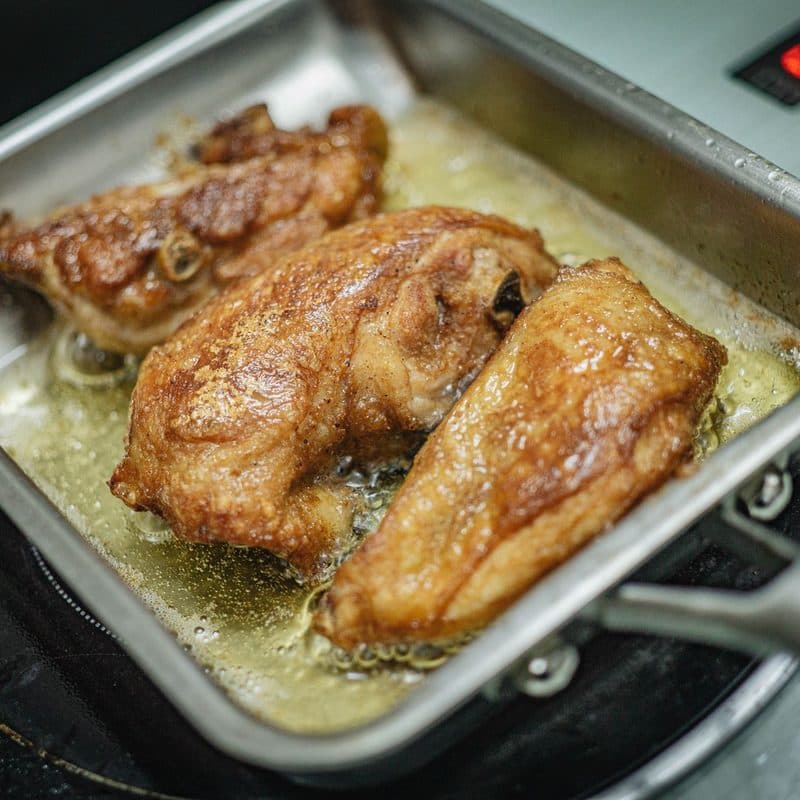 Tramontina Signature Tri-Ply Clad Fry PanFully clad, NSF-certified, dishwasher safe, and about a third of All-Clad's price. Nothing else at this money is close. | The pan to buy if you only read one line of this page | 8.6 | |
| 2 | 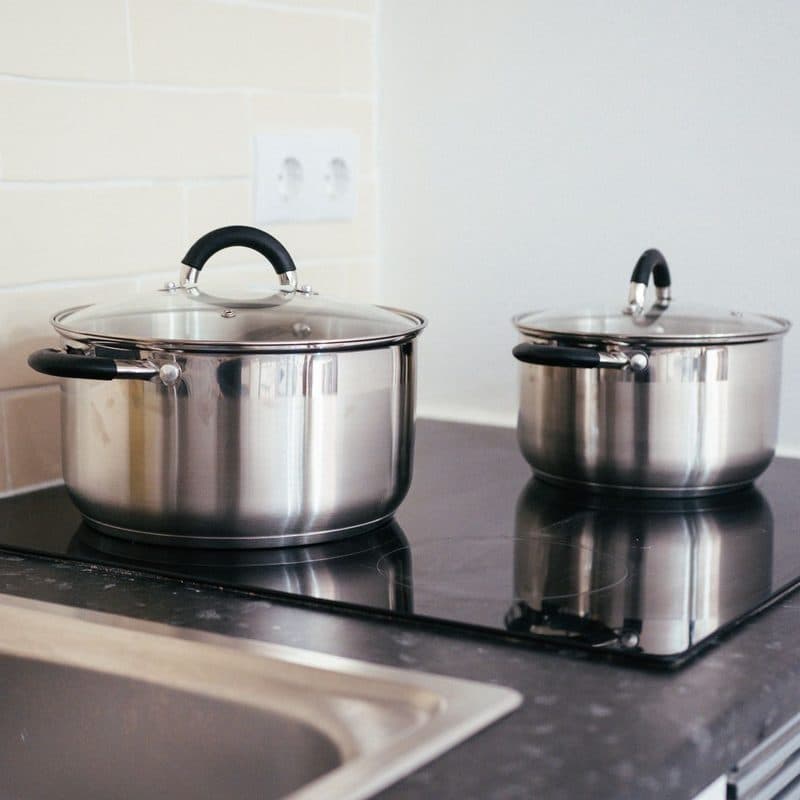 Cuisinart MultiClad Pro Cookware SetTri-ply throughout with a lifetime warranty. Thinner than Tramontina, but stocked everywhere. | Furnishing a kitchen at once rather than one pan at a time | 7.9 | |
| 3 |  Misen 5-Ply Stainless Skillet3.0mm of 5-ply and an 800F rating below the American brands. The trade is where it is made. | Wanting 5-ply specs without an American-made price | 8.5 |
#ad Buy links are affiliate links. We never print a price — prices change weekly and a printed one is wrong within a month, so every link goes to the live Amazon listing. How we are funded.
What "budget" has to still include
There is a floor below which a stainless pan stops being worth owning, and it is not about the brand. It is about construction. A budget pan on this page has to be fully clad: the layered aluminum-and-stainless laminate running from the base up through the walls. The alternative — a disc of aluminum welded to the bottom of an otherwise single-layer pot — is sold under the same words and the same shelf label, costs less again, and is a materially worse pan. The walls have no conductive layer, so anything that climbs them scorches.
That single distinction removes most of the cheap stainless market from consideration. What remains is a small field, which is why this page has three entries rather than ten. Padding it out with disc-bottom pans would make the page longer and the advice worse. See fully clad vs disc bottom for how to tell them apart in a shop.
The arithmetic nobody runs
The buy-it-for-life argument says a $180 pan kept thirty years costs $6 a year and a $60 pan replaced every six costs $10. True — but it assumes you keep the expensive pan for thirty years, and the most common way pans die is thermal shock, which is a habit rather than a product flaw. Every warranty in this category excludes warping from heat or thermal shock, All-Clad's and Made In's explicitly.
So the question is not which pan lasts longest in principle. It is whether you will run one under a cold tap while it is still hot. If the answer is honestly yes, buy the Tramontina, treat it as a consumable, and spend the difference on something else. That is a legitimate strategy and almost nobody selling cookware will say it.
How long will it last?
A well-treated Tramontina Signature will outlast a badly-treated All-Clad, and neither statement is controversial once you know what kills these pans. The lighter gauge on budget pans does mean a slightly lower warping threshold, because there is less metal to resist the differential expansion. The handles are the other difference: budget rivets are smaller and there are sometimes two where a premium pan has three.
Tramontina and Cuisinart both offer lifetime warranties. Read them the same way you would read All-Clad's: they cover manufacturing defects, and the failure you are most likely to suffer is excluded. The practical difference at this price point is that a declined claim costs you $60 rather than $180.
What to avoid at this price
Avoid "stainless steel" sets that do not state their construction — the omission is the answer. Avoid encapsulated or impact-bonded bases if you cook sauces. Avoid anything with a riveted plastic handle, because the plastic sets the oven ceiling regardless of what the metal could take. And avoid buying a twelve-piece set to get one good skillet; the maths never works, as we show in set vs buying piece by piece.
The picks in full
1. Best budget overall
Tramontina Signature Tri-Ply Clad Fry Pan
Tramontina
Fully clad, NSF-certified, dishwasher safe, and about a third of All-Clad's price. Nothing else at this money is close.
- Durability
- 7.8
- Heat
- 8.4
- Handling
- 7.0
- Value
- 9.7
- Tri-ply: aluminum core between two layers of 18/10 stainless
- Oven safe to 500F (Tramontina published spec)
- Dishwasher safe; works on gas, electric, ceramic glass and induction
- NSF-certified for commercial kitchens
- Mirror-polished exterior, riveted stainless handle
What it gets right
- Cooks close enough to All-Clad that most people could not pick them apart blind
- Dishwasher safe and NSF-certified, neither of which All-Clad's tri-ply is
- Cheap enough that replacing it in fifteen years still costs less than one D3
Who should skip it
- The 500F oven rating is 100F below All-Clad and 300F below Made In
- Handle is less comfortable and the polished finish scuffs faster
- Lighter gauge base is more prone to warping under thermal shock
The test for a budget clad pan is whether the manufacturer cut the construction to hit the price. Tramontina did not. The Signature line is genuinely tri-ply — an aluminum core between two layers of 18/10 stainless, running through the walls to the rim — and it is NSF-certified, which is a commercial-kitchen standard rather than a marketing badge. It is also dishwasher safe, which All-Clad's equivalent is not.
What Tramontina cut instead was gauge, finish and handle comfort. The pan is lighter than an All-Clad of the same size, which makes it slightly more prone to warping under thermal shock and slightly less stable when cold food hits it. The mirror polish scuffs quickly. The handle is adequate and no more. And the oven rating is 500F, the joint lowest here.
None of those are hidden. All of them are the right corners to cut if you have to cut some, because none of them change how the food comes out. Compare it directly against the benchmark in All-Clad vs Tramontina.
2. Best if you want the whole set
Cuisinart MultiClad Pro Cookware Set
Cuisinart
Tri-ply throughout with a lifetime warranty. Thinner than Tramontina, but stocked everywhere.
- Durability
- 7.2
- Heat
- 7.8
- Handling
- 7.0
- Value
- 8.8
- Triple-ply: a pure aluminum core between stainless layers
- Oven safe to 500F (Cuisinart published spec; some retailers list 550F)
- Dishwasher safe; induction compatible
- Lifetime warranty
- Tapered rims for drip-free pouring
What it gets right
- Widely stocked, so replacing a single piece is easy
- Aluminum runs up the sidewalls, not just across the base
- Has been on the market long enough that its failure modes are known
Who should skip it
- Retailers list conflicting oven ratings; treat 500F as the safe number
- Thinner gauge than Tramontina's equivalent, and it shows on high heat
- Handles get hot faster than the clad competition
MultiClad Pro is included here because the individual skillets are hard to find on their own and the set is where the value sits. It is genuine triple-ply with a pure aluminum core that runs up the sidewalls rather than stopping at the base, oven safe to 500F by Cuisinart's own spec, dishwasher safe and induction compatible, with a lifetime warranty.
A caution worth stating plainly: retailers list conflicting oven ratings for this line, with some showing 550F. Cuisinart's own product page says 500F. When a manufacturer and a retailer disagree, use the manufacturer's number — it is the one the warranty is written against.
Against Tramontina it is thinner, and on high heat that shows as slightly less even browning and a bit more hot-spotting on a powerful gas ring. What it has instead is ubiquity: it is stocked in almost every general retailer, so replacing one damaged piece in six years is trivial. That is worth more than it sounds for a set you intend to keep.
3. Most pan for the money
Misen 5-Ply Stainless Skillet
Misen
3.0mm of 5-ply and an 800F rating below the American brands. The trade is where it is made.
- Durability
- 8.2
- Heat
- 9.0
- Handling
- 7.6
- Value
- 9.0
- Five-ply, 3.0mm construction (Misen published spec)
- Oven safe to 800F / 426C
- Dishwasher safe and induction compatible
- Lifetime warranty against defects
- Manufactured in China
What it gets right
- Thickest pan in its price band; 3.0mm is genuinely heavy gauge
- Dishwasher safe, which almost nothing else in this class claims
- Sloped sides make it more useful for tossing than a straight-walled skillet
Who should skip it
- Overseas manufacturing is a deal-breaker if made-in-USA is the point
- The warranty is defect-only, and the company is younger than the pans it warranties
- 3.0mm is heavy enough to be tiring in a 12-inch
On raw specification Misen is the outlier here: 3.0mm five-ply construction and an 800F oven rating, matching Made In and Heritage Steel on both counts, at a price closer to the budget brands. It is also dishwasher safe, which neither of those two is. For someone shopping on the spec sheet, it is the obvious answer.
Two things keep it out of the top spot. It is manufactured in China, which is neutral for quality in 2026 but decisive if buying American is part of why you are on this page at all. And the lifetime warranty is defect-only, from a company younger than the lifetime it is promising — the same discount we apply to Made In, applied harder.
The 3.0mm gauge also has a cost nobody mentions: weight. A 12-inch at that thickness is tiring, and if you toss food rather than turn it, you will feel it within a month.
Frequently asked questions
What is the best budget stainless steel skillet?
The Tramontina Signature Tri-Ply Clad. It is fully clad with an 18/10 interior over an aluminum core, NSF-certified, dishwasher safe and oven safe to 500F, at roughly a third of All-Clad's price.
Is cheap stainless steel cookware worth buying?
If it is fully clad, yes. The cooking difference between a good budget clad pan and a premium one is small. If it is disc-bottomed, no: the walls have no conductive layer and will scorch anything clinging to them.
How can I tell if a cheap pan is fully clad?
Look at the rim. A fully clad pan shows the laminate layers as a fine sandwich at the cut edge. A disc-bottom pan has a uniform single-layer rim and a visible step or seam around the base.
Does a budget pan warp more easily?
Slightly, because there is less metal to resist differential expansion. But the cause is the same at every price: thermal shock. A hot pan under a cold tap warps All-Clad too, and the warranty excludes it either way.
Is Cuisinart MultiClad Pro oven safe to 500F or 550F?
Cuisinart's own product page says 500F; some retailers list 550F. Use the manufacturer's number, because the warranty is written against it, not against a retailer's listing.
Is Misen worth it over Tramontina?
On specification, yes: 3.0mm five-ply and an 800F rating versus tri-ply and 500F. On price and availability, Tramontina wins. Misen is made in China, which matters to some buyers and not others.
Sources
- Tramontina — Signature Tri-Ply Clad Stainless Steel Fry Pan, published specification
- Cuisinart — MultiClad Pro Stainless Cookware Set, published specification
- Misen — Stainless Steel Skillet, published specification
- Misen — Lifetime warranty
- All-Clad — Cookware Limited Lifetime Warranty (PDF)
- Made In — Warranty policy