Construction & Materials
Stainless Steel vs Enameled Cast Iron
These are not competitors so much as opposites. One stores heat, the other moves it, and most kitchens eventually want both.
Disclosure: Ply & Pan earns a commission on qualifying purchases made through links on this page. We take no free product and no sponsorship, and we never print a price. How we are funded.
Quick picks
The short answer. Tap any row for the full write-up.
| # | Product | Best for | Score | Price |
|---|---|---|---|---|
| 1 | 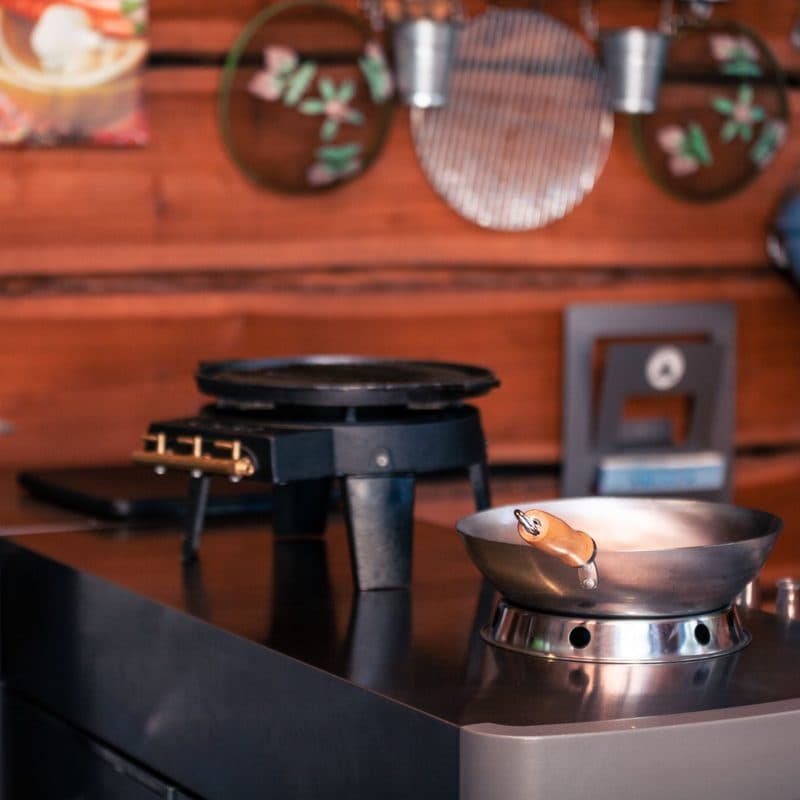 All-Clad D3 Stainless Fry PanThe pan that handles the eighty percent of cooking that is not a braise: searing, sauteing, reducing, anything that needs heat to move. | Daily cooking where you need to change the heat quickly | 9.1 | |
| 2 | 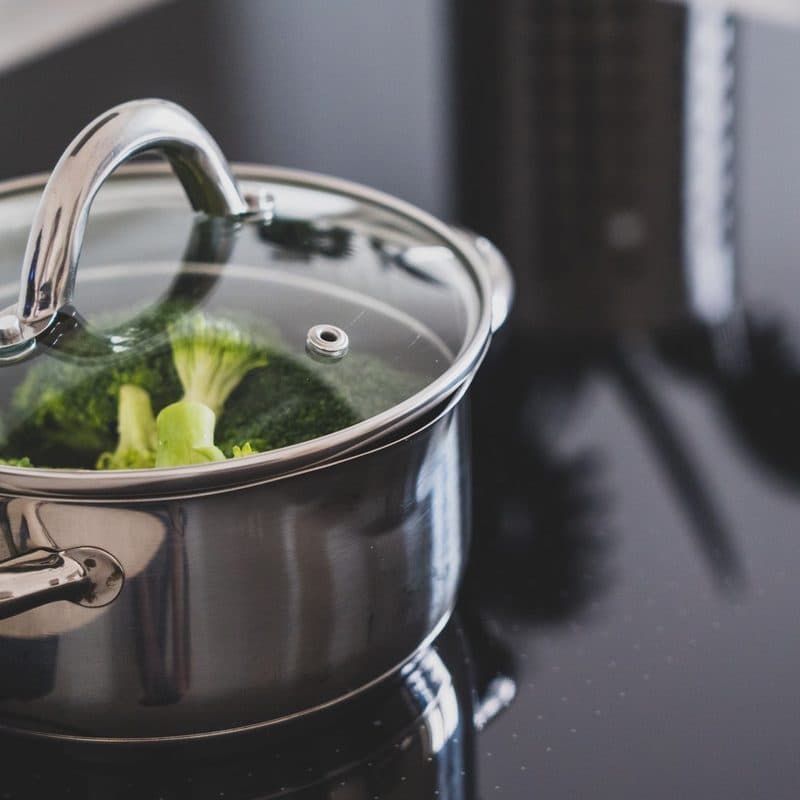 Tramontina Signature Tri-Ply Clad Stock PotIf what you want enameled cast iron for is volume and a lid, a clad stainless pot does it lighter and will not chip. | Big batch cooking without eight pounds of iron | 8.4 | |
| 3 | 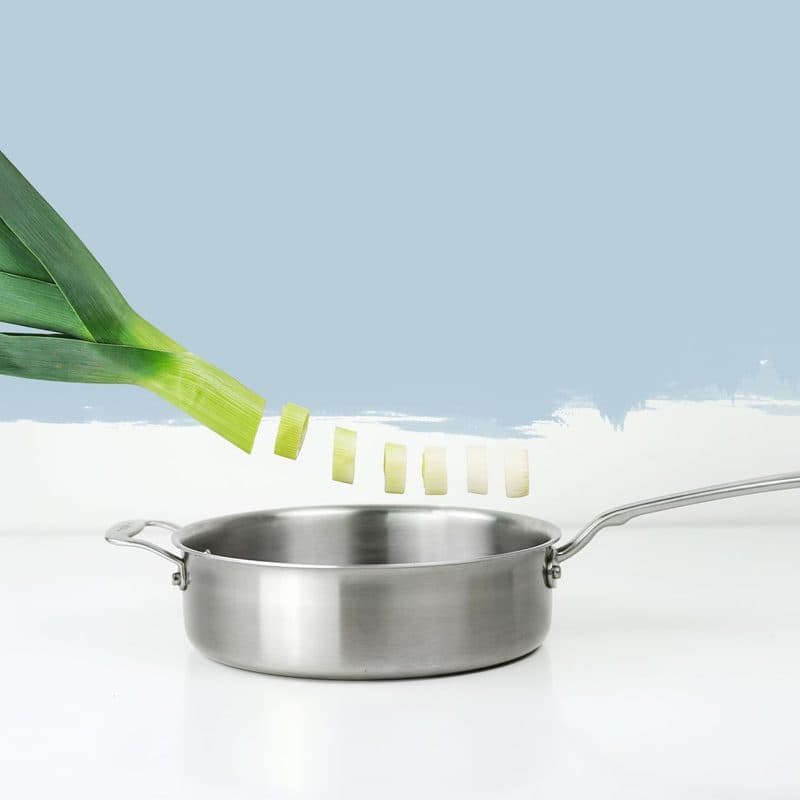 Made In Stainless Clad Frying PanAn 800F published rating puts stainless into the hot-oven territory people usually reach for cast iron to cover. | Hob-to-oven cooking where cast iron would be the default | 8.8 |
#ad Buy links are affiliate links. We never print a price — prices change weekly and a printed one is wrong within a month, so every link goes to the live Amazon listing. How we are funded.
The short answer
Buy clad stainless first. It handles far more of what you cook, and it responds to the hob in a way cast iron physically cannot. Enameled cast iron is the better tool for one specific thing: a long, low, covered braise where you want the pot to hold a steady temperature for hours. If you make those often, buy both — they are complements, not substitutes.
The two materials compared
| Property | Clad stainless steel | Enameled cast iron |
|---|---|---|
| Heat behaviour | Moves heat — responds quickly to the hob | Stores heat — slow to warm, slow to cool |
| Weight | Moderate | Heavy, often two to three times more |
| Surface | Bare metal, nothing to damage | Vitreous enamel — glass fused to iron |
| Main failure mode | Base warping after years of thermal shock | Chipped or crazed enamel, usually from impact |
| Repairability | None needed; damage is cosmetic | None — a chipped interior is the end of the pot |
| Metal utensils | Fine | Not advised on the enamel |
| Best at | Searing, sauteing, pan sauces, anything fast | Long braises, bread baking, holding temperature |
Why they behave so differently
The difference is thermal mass against thermal conductivity. Cast iron is thick and dense, so it absorbs a great deal of energy and releases it slowly. That makes it superb at staying at one temperature and bad at changing temperature — turn the burner down under a cast iron pot and nothing happens for several minutes.
Aluminum, the core of every clad stainless pan, conducts heat roughly three times better than iron and the pan carries far less mass. So clad steel tracks the hob almost immediately, which is the property you need when a sauce is about to split or onions are about to catch.
Neither is better. They are opposite tools, and the mistake is buying the heat-storage tool for the heat-control job. The same analysis applied to bare cast iron is in stainless vs cast iron, and the conductivity comparison across all the common cookware metals is in stainless vs copper.
The enamel is the catch
Enameled cast iron is marketed as the permanent, non-reactive answer to bare iron's seasoning maintenance, and for cooking that is fair: you can simmer tomatoes and wine in it indefinitely. The catch is that enamel is glass fused to metal, and glass chips.
A knocked rim, a dropped lid, a metal spoon used carelessly, or a cold pot taken straight onto a hot burner can all craze or chip the interior. Once the interior enamel is broken, the pot is finished for cooking — there is no repair, and the exposed iron will rust.
A clad stainless pan has no equivalent failure. You can scour it with steel wool, drop it, scrape it with a metal turner and it still works exactly as well. For a buyer whose whole criterion is not replacing things, that is a meaningful structural advantage — the sort of durability thinking behind buy-it-for-life cookware and what cookware lasts the longest.
Which browns better
Cast iron gets the reputation, but the reality is more even than the reputation suggests. A hot cast iron pan holds its surface temperature when cold food lands, which gives you a hard crust with less fuss. A clad stainless pan needs a proper preheat to do the same, and rewards it with a better fond — the browned residue that becomes a pan sauce.
Enameled cast iron, specifically, is worse at browning than bare cast iron, because the enamel surface is smoother and less forgiving and most manufacturers cap it below the temperature you would use for a hard sear. For pure searing, a bare iron pan or a clad stainless pan both beat it — the best skillet for searing steak goes through what actually matters.
Which to buy first
Buy the clad stainless skillet. It is the pan you will use most nights, it does the widest range of jobs, and nothing about it needs protecting. Add a stainless pot for volume cooking if you need capacity — lighter, chip-proof, and perfectly good for soups and stocks.
Add enameled cast iron when you know you want it: long braises, overnight beans, no-knead bread. It is a genuine specialist and it is very good at its specialty. It just should not be the first or only pot in a kitchen, for the same reason you would not buy a slow cooker before a frying pan. If you are assembling a kitchen from scratch, the two-pan kitchen is where we would start.
The picks in full
1. Buy this first
All-Clad D3 Stainless Fry Pan
All-Clad
The pan that handles the eighty percent of cooking that is not a braise: searing, sauteing, reducing, anything that needs heat to move.
- Response
- 9.4
- Browning
- 9.2
- Weight
- 7.8
- Durability
- 9.8
- Tri-ply: stainless interior, aluminum core, magnetic stainless exterior
- Oven and broiler safe to 600F (All-Clad published spec)
- Induction compatible on any stovetop
- Handwash only, per the manufacturer
- Limited lifetime warranty; bonded, engineered and assembled in Canonsburg, PA
What it gets right
- Survived America's Test Kitchen's concrete-strike abuse testing with barely a ding
- Rivets and handle join are the sturdiest in the category
- Decades of parts and service history standing behind the warranty
Who should skip it
- Costs roughly three times a Tramontina that cooks nearly as evenly
- The stick handle is narrow and bites into your palm on a loaded 12-inch pan
- Handwash only, which is a real constraint if you hate washing up
Clad stainless exists to move heat rather than store it. The aluminum core spreads burner heat sideways and the pan follows your hob up and down with very little lag, which is what you want for everything you cook on a Tuesday.
The D3 is the reference: tri-ply with an aluminum core, oven and broiler safe to 600F, induction compatible, handwash only, limited lifetime warranty, bonded in Canonsburg, Pennsylvania. It survived America's Test Kitchen's concrete-strike abuse protocol with barely a ding.
Against it: expensive, handwash only, and a narrow stick handle that bites into your palm on a loaded 12-inch. It also holds much less heat than cast iron, which is a real disadvantage for a long low braise.
2. The stainless answer to a braise
Tramontina Signature Tri-Ply Clad Stock Pot
Tramontina
If what you want enameled cast iron for is volume and a lid, a clad stainless pot does it lighter and will not chip.
- Response
- 8.4
- Browning
- 7.8
- Weight
- 9.0
- Durability
- 8.4
- 8 quarts; tri-ply clad, 18/10 stainless over an aluminum core
- Fully clad through the walls, not an encapsulated base
- Oven safe to 500F; dishwasher safe
- Induction compatible; NSF-certified
- Riveted cast stainless handles and a stainless lid; made in Brazil
What it gets right
- Fully clad walls, so it handles chili and thick sauces that a disc-bottom pot scorches
- Stainless lid shares the pot's oven rating rather than capping it
- Dishwasher safe and NSF-certified, neither of which All-Clad's tri-ply is
Who should skip it
- The 500F ceiling is the lowest here, so broiler finishing is out of spec
- You are paying for wall cladding that pure boiling never uses
- Lighter gauge than the commercial pots, so it is more prone to warping
The honest version of the comparison is that most people wanting enameled cast iron want a covered pot for soups, stocks, chili and braises. A clad stainless pot does the same jobs at roughly a third of the weight, with no enamel to chip and no special handling.
What it gives up is thermal mass, which matters for a four-hour braise and matters very little for a two-hour one. What it gains is that you can lift it full, it survives being knocked, and nothing about it is fragile.
Clad stainless pots do brown less aggressively than cast iron when you sear the meat at the start, and a thinner base is more prone to scorching if you walk away. Our sizing guide is what size stock pot do you need.
3. Best stainless for oven finishing
Made In Stainless Clad Frying Pan
Made In
An 800F published rating puts stainless into the hot-oven territory people usually reach for cast iron to cover.
- Response
- 8.8
- Browning
- 9.0
- Weight
- 8.2
- Durability
- 9.0
- Five-ply construction, 2.7mm thick (Made In published spec)
- Heat safe to 800F / 430C, 200F above All-Clad's rating
- Gas, electric and induction; handwash preferred
- Lifetime warranty on stainless; the frying pans are made in Italy
- Flared rim pours cleanly, which sounds trivial until you deglaze
What it gets right
- The 800F rating puts broiler work and hard oven finishes in spec rather than in hope
- Longer, flatter handle is more comfortable than All-Clad's stick handle
- Direct-to-consumer pricing undercuts All-Clad at an equivalent ply count
Who should skip it
- No decades-long warranty service record yet; the company is young
- Five plies make it slower to respond than a tri-ply of the same size
- Warranty excludes warping from thermal shock, same as everyone else's
One of the better reasons to own cast iron is that it goes into a very hot oven without complaint. Made In's published 800F rating narrows that gap substantially: five plies at 2.7mm, heat safe to 800F, induction compatible, lifetime warranty on stainless, frying pans made in Italy.
The extra thermal mass of five plies also makes this the stainless pan that behaves most like iron when cold food lands — it holds its surface temperature better than tri-ply, without the weight penalty of actual iron.
It is still slower off the heat than tri-ply, handwashing is preferred, and the brand has no long warranty history. It will never store heat like a cast iron pan, because it does not have the mass.
Frequently asked questions
Is stainless steel or enameled cast iron better?
Neither, universally. Clad stainless responds quickly to the hob and suits searing, sauteing and sauces. Enameled cast iron stores heat and suits long covered braises. Most kitchens want the stainless first.
Can enameled cast iron chip?
Yes. The enamel is glass fused to iron, and impact, careless metal utensils or sudden temperature changes can chip or craze it. A chipped interior ends the pot's useful life; there is no repair.
Does enameled cast iron sear as well as stainless?
Generally no. The enamel surface is smoother and most manufacturers cap it below hard-searing temperature. Bare cast iron or a well-preheated clad stainless pan both brown better.
Is enameled cast iron heavier than stainless?
Considerably — often two to three times the weight for the same capacity. That is the price of the thermal mass that makes it good at braising.
Can you use metal utensils in enameled cast iron?
It is not advised. Metal can chip or scratch the enamel. On bare clad stainless, metal utensils cause no functional damage at all.
Do I need both?
Only if you braise regularly. A clad stainless skillet plus a clad stainless pot covers almost everything. Enameled cast iron is a specialist that earns its space when long covered cooking is a habit, not an occasion.
Sources
- All-Clad — D3 Stainless 12-inch Fry Pan, published specification
- Made In — Stainless Clad Frying Pan, published specification
- Tramontina — Signature Tri-Ply Clad Stainless Steel Fry Pan, published specification
- The Engineering ToolBox — Thermal conductivity of metals and alloys
- America's Test Kitchen — The Best Stainless-Steel Skillets