Cookware Sets & Buy-It-For-Life
The Two-Pan Kitchen
Watch what actually comes off the rack over a month. The distribution is far more lopsided than any cookware set assumes.
Disclosure: Ply & Pan earns a commission on qualifying purchases made through links on this page. We take no free product and no sponsorship, and we never print a price. How we are funded.
Quick picks
The short answer. Tap any row for the full write-up.
| # | Product | Best for | Score | Price |
|---|---|---|---|---|
| 1 | 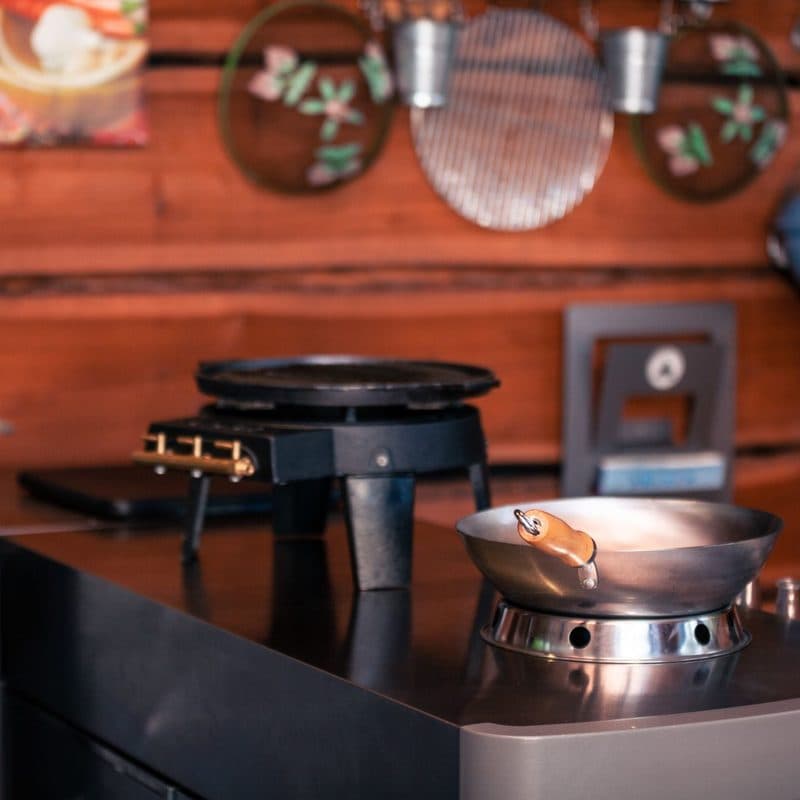 All-Clad D3 Stainless Fry PanA 12-inch clad skillet is the most-used object in most kitchens. Buy it at a level you could not justify across eight pieces. | Everything dry and hot | 9.1 | |
| 2 | 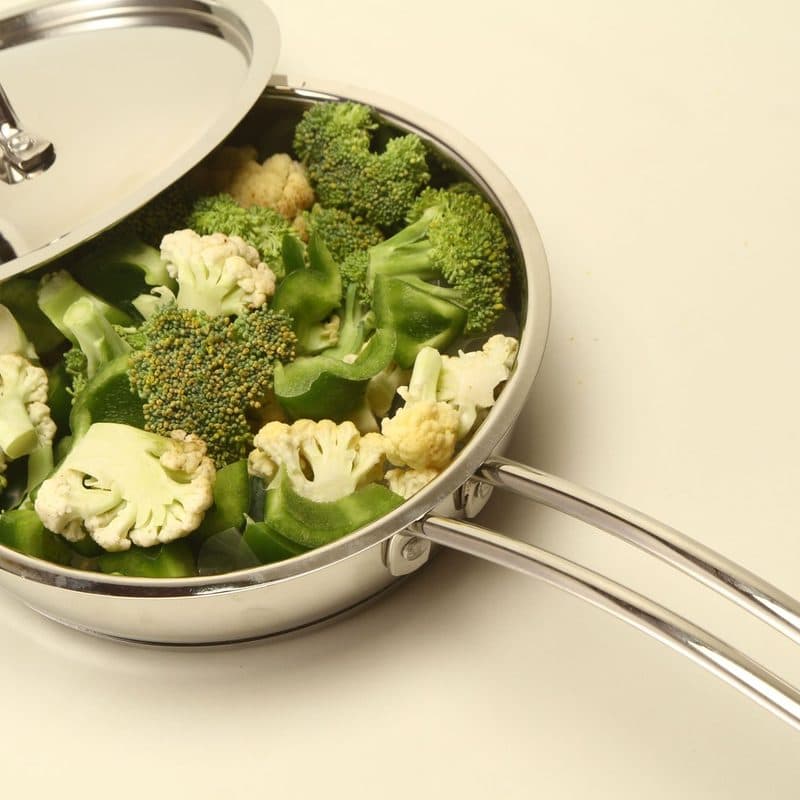 Made In Stainless Clad SaucierThree quarts of rounded-wall clad steel. The pan that covers the other half of what you cook. | Everything wet and stirred | 8.9 | |
| 3 |  Tramontina Signature Tri-Ply Clad Cookware SetSometimes the cheapest route to a stockpot is a budget set. That is a legitimate hybrid. | Adding a stockpot without buying it individually | 8.7 |
#ad Buy links are affiliate links. We never print a price — prices change weekly and a printed one is wrong within a month, so every link goes to the live Amazon listing. How we are funded.
The argument in four lines
A 12-inch skillet and a 3-quart saucier will cover something close to 80% of what a home cook makes. Everything else is occasional. So buy those two at a quality level you could never justify across eight pieces, and add a third pan only after you have genuinely missed it twice. You will spend the same money and cook better.
The distribution nobody measures
Cookware sets implicitly assume you use pans roughly evenly. Watch a real kitchen for a month and the distribution is nothing like that: it is a steep curve with two pans doing most of the work, a third appearing weekly, and everything else monthly at best.
The two at the top are always the same shapes, because they divide cooking along its real fault line. The skillet does dry, hot, open work — searing, browning, frying, sauteing. The saucier does wet, stirred, contained work — sauces, grains, soups, reductions. Almost everything you cook is one or the other.
The third pan is a stockpot, and it is genuinely needed for pasta and stock and nothing else. The fourth pan onwards is where kitchens fill with objects.
Why a saucier, not a saucepan
Most people already own a saucepan, so this is about the marginal purchase. Between the two, the saucier has more range: it does everything a saucepan does except hold a very long simmer, and it does several things — anything whisked or stirred — that a saucepan does badly because of the right-angled corner a whisk cannot reach.
If you are building from nothing and can only have one, take the saucepan first, since boiling is daily. Then the saucier, which is a bigger upgrade than any second skillet. The full comparison is in saucier vs saucepan.
What the money buys
Take a typical ten-piece clad set budget. Spread across ten pieces it buys competent mid-tier cookware everywhere. Concentrated on two pieces it buys the best clad skillet and the best clad saucier available, with change.
The second arrangement is better in a way that compounds. The two pans you use constantly are the two whose gauge, handle comfort, oven rating and rivet quality you will notice every week — and the two most likely to fail, because they are run hottest and washed soonest. The stockpot you use monthly does not care about any of that.
A set forces the same quality level on the pan you use daily and the pan you use at Thanksgiving. That is the inefficiency, and it is structural rather than a matter of which set you pick.
What you actually give up
Honesty requires stating the costs.
You will cook in batches more. With one skillet, two things that both want the pan means two rounds.
You will wash up mid-cook. Occasionally.
Your kitchen will not match. Mixed brands, mixed finishes. If matched cookware matters to you aesthetically, that is a real preference and the two-pan route does not serve it.
You will need a stockpot fairly soon. Pasta and stock genuinely require volume. Buy a cheap fully-clad one — this is the piece where spending money returns the least.
The longevity argument
There is a durability case for this approach that is separate from the money, and it is the reason we hold it as a thesis rather than a budgeting tip.
Two pans used constantly get looked after. They live on the rack rather than at the back of a cupboard, they get washed properly because they are needed again tomorrow, and you notice immediately when something is wrong with them. Cookware that is stacked and semi-forgotten gets stacked unprotected, scratched, and eventually discarded in a move.
You are also buying, in those two pans, the specifications that actually extend life: heavier gauge, better rivets, a higher oven rating that keeps your cooking inside the warranty. Every warranty in this category excludes heat damage, so a pan rated 800F rather than 500F is a pan you are less likely to void. Spending on that for the two pans you run hottest is the efficient allocation.
Eight adequate pans will produce eight pans in mediocre condition in fifteen years. Two excellent pans will produce two pans in good condition, and you will still be using them.
The picks in full
1. Pan one: the skillet
All-Clad D3 Stainless Fry Pan
All-Clad
A 12-inch clad skillet is the most-used object in most kitchens. Buy it at a level you could not justify across eight pieces.
- Durability
- 9.6
- Heat
- 8.8
- Handling
- 7.8
- Value
- 7.2
- Tri-ply: stainless interior, aluminum core, magnetic stainless exterior
- Oven and broiler safe to 600F (All-Clad published spec)
- Induction compatible on any stovetop
- Handwash only, per the manufacturer
- Limited lifetime warranty; bonded, engineered and assembled in Canonsburg, PA
What it gets right
- Survived America's Test Kitchen's concrete-strike abuse testing with barely a ding
- Rivets and handle join are the sturdiest in the category
- Decades of parts and service history standing behind the warranty
Who should skip it
- Costs roughly three times a Tramontina that cooks nearly as evenly
- The stick handle is narrow and bites into your palm on a loaded 12-inch pan
- Handwash only, which is a real constraint if you hate washing up
Searing, browning, sauteing, frying, roasting, one-pan dinners. This is the pan that gets pulled off the rack five nights a week, and spending set money on it individually is the entire point of the argument.
2. Pan two: the saucier
Made In Stainless Clad Saucier
Made In
Three quarts of rounded-wall clad steel. The pan that covers the other half of what you cook.
- Shape
- 9.2
- Heat
- 9.0
- Durability
- 8.6
- Value
- 8.8
- Five-ply stainless clad construction
- Heat safe to 800F (Made In published spec)
- Induction compatible; handwash preferred
- Rounded walls with no corner for a whisk to miss
- Lifetime warranty on stainless cookware
What it gets right
- Cheapest route into a genuinely good saucier from a fully-clad brand
- The 800F rating makes oven-finishing a braise or a gratin uncomplicated
- Wide mouth reduces sauces faster than a straight-walled saucepan
Who should skip it
- That wide mouth is a liability if you mostly boil small quantities
- Rounded base means less contact area on a small induction ring
- Five plies are slower off the heat than a copper-core saucier
Sauces, rice, risotto, polenta, soup for two, reductions, blanching, reheating. Almost no cookware set includes one, which is why most kitchens have a redundant third saucepan instead of the pan that would actually change their cooking.
3. If you want the third pan too
Tramontina Signature Tri-Ply Clad Cookware Set
Tramontina
Sometimes the cheapest route to a stockpot is a budget set. That is a legitimate hybrid.
- Coverage
- 8.8
- Construction
- 8.6
- Durability
- 7.8
- Value
- 9.6
- Tri-ply clad throughout, not disc-bottomed on the pots
- 18/10 stainless interior over an aluminum core
- Oven safe to 500F; dishwasher safe; NSF-certified
- Induction compatible across the set
- Tramontina lifetime warranty
What it gets right
- Fully clad at a price where most sets quietly switch to disc bottoms
- The one set we would hand to someone furnishing a first kitchen
- The dishwasher-safe rating applies across the set, not just the skillets
Who should skip it
- Sets always include a piece or two you will never reach for
- The 500F ceiling limits oven work compared with buying pieces individually
- Lids are the weakest component; treat their rating as lower than the pans'
The honest hybrid: two excellent pans bought individually, plus a cheap fully-clad set for the stockpot and the pieces you use occasionally. Nothing about the two-pan argument requires you to refuse a cheap stockpot.
Frequently asked questions
How many pans do I actually need?
Two cover roughly 80% of home cooking: a 12-inch skillet and a 3-quart saucier. A stockpot is a genuine third. Beyond that, buy a pan because you have missed it twice, not because a set included it.
Why a saucier instead of a second skillet?
Because the two shapes divide cooking along its real fault line: the skillet does dry high-heat work, the saucier does wet stirred work. A second skillet duplicates half your capability.
Is it better to buy two expensive pans or a whole set?
Two expensive pans, for most people. A set forces the same quality level on the pan you use daily and the one you use at Thanksgiving. Concentrating the budget puts the quality where you notice it.
What is the third pan I should buy?
A stockpot, for pasta and stock. It is also the piece where spending money returns least, since stockpots lead easy lives, so a cheap fully-clad one is fine.
What are the downsides of a two-pan kitchen?
You will cook in batches more, wash up mid-cook occasionally, and your cookware will not match. Those are real costs and whether they matter is a genuine personal preference.
Does owning fewer pans make them last longer?
In practice, yes. Pans in constant use live on the rack, get washed properly and get noticed when something is wrong. Semi-forgotten cookware gets stacked unprotected and scratched.