Construction & Materials
Copper-Colored Stainless Steel Cookware: What Are You Actually Buying?
A copper-toned exterior tells you nothing about how a pan cooks. A copper layer inside the wall tells you everything. They are different products, often at similar prices.
Disclosure: Ply & Pan earns a commission on qualifying purchases made through links on this page. We take no free product and no sponsorship, and every price here is read from Amazon on the date shown. How we are funded.
Quick picks
The short answer. Tap any row for the full write-up.
| # | Product | Best for | Score | Price |
|---|---|---|---|---|
| 1 | 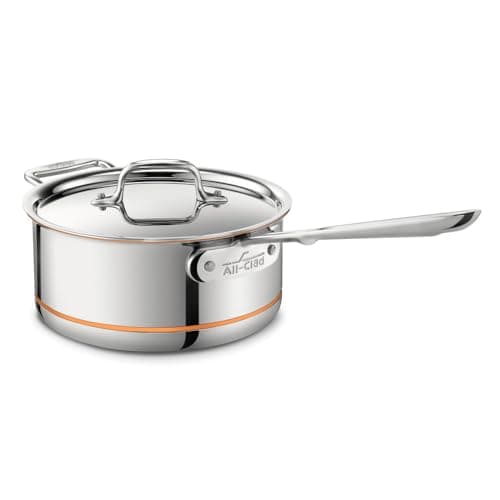 All-Clad Copper Core Stainless SaucepanFive plies with a genuine copper layer at the center and a visible copper band at the rim — the band is a wear indicator, not decoration. | Someone who wants copper's responsiveness, not copper's color | 8.6 | |
| 2 | 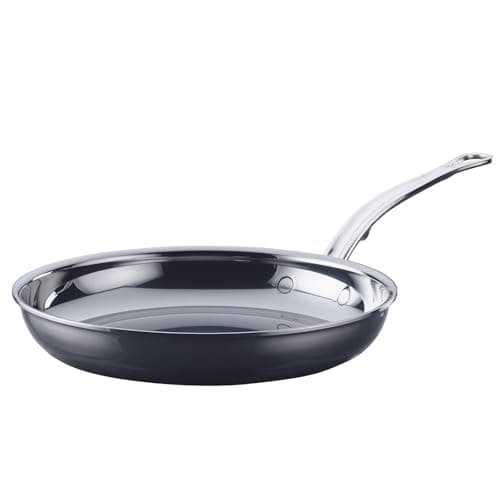 Hestan NanoBond Titanium SkilletTitanium alloys bonded to stainless in nano layers — a genuinely different surface, rated to 1050F, not a coating sprayed on for looks. | Someone drawn to a non-silver finish that does something | 8.0 | |
| 3 | 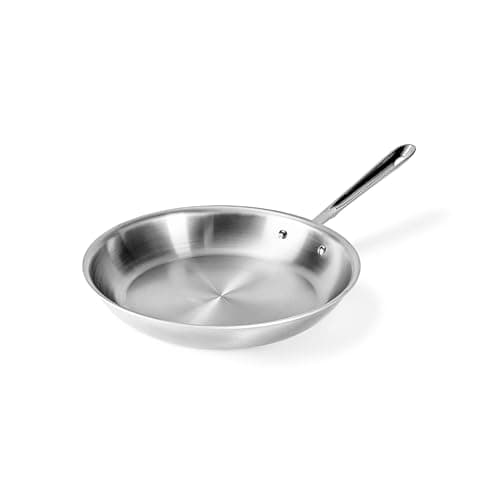 All-Clad D5 Stainless Brushed Fry PanFive alternating layers of aluminum and stainless, 600F and broiler safe, with a brushed exterior that ages better than any polished or plated finish. | Even heating without paying for copper or for a finish | 8.4 |
#ad Buy links are affiliate links. Prices come straight from Amazon, are stamped with the date they were read, and disappear rather than go stale if the feed stops. How we are funded.
Two different products, one color
When cookware looks copper, it is one of two completely different things.
Copper in the construction. A copper layer bonded inside the wall of the pan, where it conducts heat. All-Clad's Copper Core line is the mainstream example: five plies with copper at the center and a visible copper band at the exterior rim, which is the cut edge of the real layer. This changes how the pan cooks.
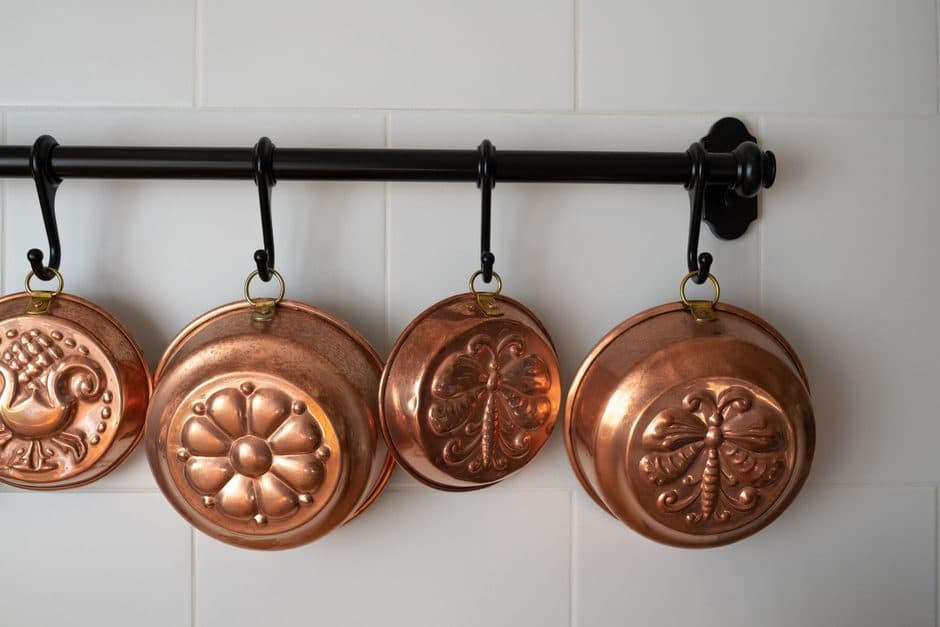
Copper on the surface. A copper-toned exterior finish over an ordinary stainless or aluminum body. This changes how the pan looks. It does not change how it cooks, because a few microns of coloring on the outside of the pan is not a heat path — the aluminum or steel underneath still does all the conducting.
Both are sold in the same aisle, sometimes at overlapping prices, and the listings for the second kind are frequently written to imply the first. That is the entire problem this page exists to solve.
How to tell which one you are looking at
Read the construction line, not the color word. A pan with a real copper layer says so in the construction: "five-ply with a copper core", "copper between aluminum and stainless". A cosmetic finish is described in the appearance: "copper exterior", "copper finish", "copper tone", "rose gold".
Look for the band at the rim. On a real copper-core pan the layer is visible as a line at the cut edge of the rim, sandwiched between the other layers. A surface-finished pan is uniform in color from rim to base, because the color is a coating rather than a layer.
Check the price against the physics. Copper is expensive. A pan with a genuine copper layer costs well over double an equivalent aluminum-core pan — that is why All-Clad's Copper Core sits at the top of its range. A copper-colored set at a value price does not contain meaningful copper, and no amount of listing language changes the arithmetic.
Watch for "copper-infused". This phrase usually belongs to coated nonstick cookware — a copper-tinted nonstick coating — not to clad stainless at all. It is a different category with a different lifespan, and it is not what this site covers.
Is copper-colored cookware safe?
The question that matters is what the interior is made of, because that is the only surface your food touches. An exterior finish, copper-toned or otherwise, never contacts food.
If the interior is 18/10 stainless — the standard for clad cookware — then it is the same food-contact surface as any other stainless pan, and the safety picture is the one we set out in is stainless steel cookware safe.
Bare copper interiors are a different matter, and they are rare in modern cookware for a reason: copper reacts with acidic food, so traditional copper pans are lined with tin or stainless. If you find a pan with an unlined copper cooking surface, that is a specialist item (and usually an antique), not a value buy.
The real risk with a colored exterior finish is cosmetic failure rather than safety: plated and coated finishes can discolor unevenly under high heat or in a dishwasher, and once they go patchy there is no restoring them. Bar Keepers Friend will strip heat tint off bare stainless; it will also strip a decorative finish.
Does copper actually cook better?
Yes, measurably, and less than its reputation suggests. Copper conducts heat roughly twice as well as aluminum, so a copper-core pan responds faster when you change the burner and stops cooking sooner when you take it off. For temperature-critical work — a hollandaise, a caramel, a reduction you are trying to stop at exactly the right moment — that responsiveness is worth real money.
For everything else it is not. Searing, braising, boiling, frying and roasting all care more about thermal mass and base flatness than about response speed, and an aluminum core delivers those for a fraction of the price. The full comparison is copper core vs aluminum core, and the case against buying copper pans outright is stainless vs copper.
What to buy instead, if you liked the look
There is nothing wrong with wanting cookware that does not look like everyone else's. Two honest routes to that.
A brushed finish instead of mirror polish. It is a different look, it hides scuffs rather than displaying them, and it costs nothing extra — All-Clad's D5 and Calphalon's brushed tri-ply both use it. Our comparison is brushed vs polished stainless steel.
A bonded surface alloy rather than a coating. Hestan NanoBond is darker than ordinary steel because titanium alloys are bonded into the surface, which is a material change rather than a cosmetic one — and it is published to 1050F. It is expensive, and it is at least honest about what the finish is.
What we would not do is pay a premium for a copper-colored exterior on an otherwise ordinary pan. You are buying paint on a tool, and the tool underneath is the part that decides whether dinner works.
The bottom line
Copper-colored and copper-core are not the same thing, and the price gap between them is enormous. If the construction line does not name a copper layer, there is not one. If you want copper's responsiveness, buy a copper-core pan and accept the cost. If you want the look, buy a brushed finish and spend the difference on a higher oven ceiling.
The picks in full
1. Real copper, in the right place
All-Clad Copper Core Stainless Saucepan
All-Clad
Five plies with a genuine copper layer at the center and a visible copper band at the rim — the band is a wear indicator, not decoration.
- Copper content
- 9.6
- Responsiveness
- 9.6
- Build
- 9.4
- Value
- 5.8
- Five-ply: copper core between two aluminum and two stainless layers
- Oven and broiler safe to 600F (All-Clad published spec)
- Induction compatible; handwash only
- Three quarts, supplied with a lid
- Limited lifetime warranty; handcrafted in Canonsburg, PA
What it gets right
- Copper reacts fast enough that you can actually rescue a breaking sauce
- Three quarts is the saucepan capacity most kitchens actually reach for
- The exposed copper band is a genuine wear indicator, not decoration
Who should skip it
- Costs well over double a five-ply aluminum-core pan of the same size
- Copper's advantage is invisible unless you cook temperature-critical sauces
- The copper band discolors and needs polishing if you care how it looks
This is what copper in cookware is supposed to mean: a real copper layer bonded between aluminum and stainless, where it can conduct. Copper reacts fast enough that you can actually rescue a breaking sauce, which is the only reason to pay for it.
The exposed copper band around the exterior is the useful part of the aesthetics. It is the edge of the actual layer, so it tells you the copper is structural rather than cosmetic. It also discolors and needs polishing if you care how it looks.
Three quarts, supplied with a lid, 600F and broiler safe, handwash only, handcrafted in Canonsburg. It costs well over double a five-ply aluminum-core pan of the same size, and copper's advantage is invisible unless you cook temperature-critical sauces — the trade-off we work through in copper core vs aluminum core.
#ad Price as of October 10, 2026. How we are funded
2. A colored surface that is actually a material
Hestan NanoBond Titanium Skillet
Hestan
Titanium alloys bonded to stainless in nano layers — a genuinely different surface, rated to 1050F, not a coating sprayed on for looks.
- Copper content
- 2.0
- Responsiveness
- 8.0
- Build
- 9.4
- Value
- 5.0
- Titanium-based alloys bonded to stainless in nano layers
- Oven, broiler and grill safe to 1050F (Hestan published spec)
- Dishwasher safe; induction compatible
- Made without PFAS, nickel, lead or cadmium
- Lifetime warranty; handcrafted in Italy
What it gets right
- The 1050F rating puts grill and broiler work genuinely in spec
- A nickel-free cooking surface matters if you react to nickel
- Hestan claims four times the durability of plain stainless, and the surface does resist scratching
Who should skip it
- The most expensive skillet in this category, and it is not close
- The titanium surface changes appearance, not stick behavior; food still sticks if you rush the preheat
- Repair is not realistic, so a damaged surface means a replacement claim
Worth including because it is the honest version of the thing a copper-toned pan pretends to be. The NanoBond surface changes color and hardness because titanium-based alloys are actually bonded into it — published as PFAS-, nickel-, lead- and cadmium-free, dishwasher safe, and rated to 1050F, the highest oven ceiling in clad cookware by a wide margin.
It is also the most expensive skillet in the category and it is not close. And be clear what the surface does and does not do: Hestan claims four times the durability of plain stainless and the surface does resist scratching, but food still sticks if you rush the preheat. A hard surface is not a nonstick surface.
#ad Price as of October 10, 2026. How we are funded
3. The better use of the money
All-Clad D5 Stainless Brushed Fry Pan
All-Clad
Five alternating layers of aluminum and stainless, 600F and broiler safe, with a brushed exterior that ages better than any polished or plated finish.
- Copper content
- 0.0
- Responsiveness
- 8.4
- Build
- 9.4
- Value
- 5.8
- Five-ply: alternating layers of aluminum and stainless steel
- Oven and broiler safe to 600F (All-Clad published spec)
- Induction compatible; handwash only
- Brushed exterior hides scuffs better than the polished D3
- Limited lifetime warranty; made in All-Clad's Pennsylvania factory
What it gets right
- The extra stainless layer genuinely damps hot spots on a weak or uneven burner
- Brushed finish still looks composed after a year; polished D3 shows every scratch
- Heavier gauge means less flexing at the base over a decade
Who should skip it
- Slower to respond when you pull heat, which is the wrong trait for a pan sauce
- Costs meaningfully more than D3 for a difference most cooks will not feel
- Noticeably heavier in a 12-inch, which matters when you are tossing food
If what you actually want is a pan that heats evenly and looks composed in two years, this is where the money should go. The extra stainless layer damps hot spots on a weak or uneven burner, and the brushed exterior hides the scratches a mirror-polished or copper-plated pan displays.
Slower to respond when you pull heat, which is the wrong trait for a pan sauce. Heavier in a 12-inch. Handwash only, and meaningfully more expensive than D3 for a difference most cooks will not feel.
#ad Price as of October 10, 2026. How we are funded
Frequently asked questions
What is copper-colored stainless steel cookware?
Usually an ordinary stainless or aluminum pan with a copper-toned exterior finish. The color is a surface treatment a few microns thick, so it does not affect how the pan conducts heat. It is a different product from copper-core cookware, which has a real copper layer bonded inside the wall where it conducts.
Is copper-colored stainless steel cookware safe?
Safety depends on the interior, because that is the only surface food touches, and an exterior finish never contacts food. If the cooking surface is 18/10 stainless the picture is the same as any stainless pan. The practical risk with a colored exterior is cosmetic: plated and coated finishes can discolor unevenly under high heat or in a dishwasher, and cannot be restored.
How can I tell if a pan has real copper in it?
Look at the cut edge of the rim for a visible copper line sandwiched between the other layers — on a real copper-core pan the exterior band is the edge of the actual layer. Read the construction line rather than the color word: 'five-ply with a copper core' is construction, 'copper finish' is appearance. And check the price, because copper is expensive enough that a cheap copper-colored pan does not contain meaningful copper.
Does copper cookware cook better than stainless?
Copper conducts roughly twice as well as aluminum, so a copper-core pan responds faster to burner changes and stops cooking sooner off the heat. That matters for temperature-critical work like hollandaise or caramel. For searing, braising, boiling and roasting, thermal mass and base flatness matter more, and an aluminum core delivers them for far less money.
What does copper-infused cookware mean?
The phrase usually describes a copper-tinted nonstick coating rather than clad stainless construction. It is a different category with a coating that wears out, not a bonded metal layer. Check whether the listing describes a cooking surface coating or a layer in the wall.
Sources
- All-Clad — Copper Core 5-Ply Bonded Saucier, published specification
- Hestan Culinary — NanoBond titanium skillet, published specification
- All-Clad — D5 Stainless Brushed 12-inch Fry Pan, published specification
- The Engineering ToolBox — Thermal conductivity of metals and alloys
- US FDA — Food contact substances and cookware safety