Saucepans & Sauciers
The Best Stainless Steel Saucepans of 2026
The pan almost every kitchen owns, usually in the wrong size and the wrong construction.
Disclosure: Ply & Pan earns a commission on qualifying purchases made through links on this page. We take no free product and no sponsorship, and we never print a price. How we are funded.
Quick picks
The short answer. Tap any row for the full write-up.
| # | Product | Best for | Score | Price |
|---|---|---|---|---|
| 1 | 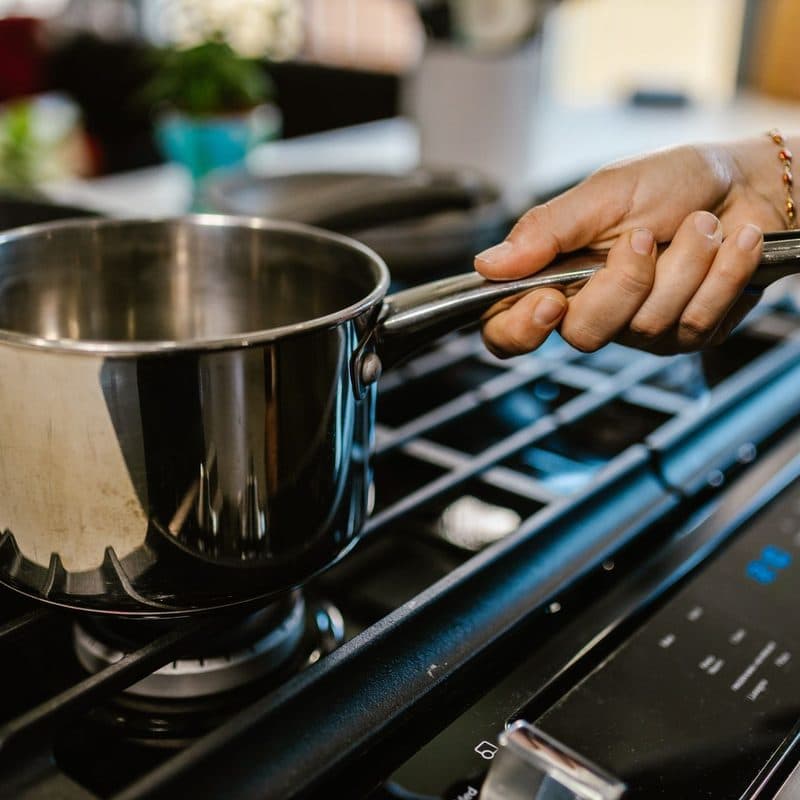 All-Clad D3 Stainless SaucepanTri-ply, 600F, stainless lid, lifetime warranty, and the rivets that survive abuse testing. | A saucepan you will still own in twenty years | 9.0 | |
| 2 |  Tramontina Signature Tri-Ply Clad Cookware SetTramontina's saucepans are genuinely clad, and the set is where they are cheapest. | Getting fully-clad saucepans without paying per piece | 8.5 | |
| 3 |  Demeyere Industry 5 Fry PanMass is what holds a steady simmer on a cycling burner, and this has the most of it. | Stock, stews and anything held at a simmer for hours | 8.4 |
#ad Buy links are affiliate links. We never print a price — prices change weekly and a printed one is wrong within a month, so every link goes to the live Amazon listing. How we are funded.
Who this is for
You want a pan for boiling, simmering and holding — rice, stock, pasta water, blanching, warming a sauce. That is the saucepan's job and it does it better than any other shape. If what you actually want is a pan for sauces you whisk, you want a saucier, and the difference is set out in saucier vs saucepan.
The lid trap
A saucepan is the one pan you will nearly always use covered, which makes the lid part of the product rather than an accessory. Glass lids look better and let you watch, and they are typically rated far below the pan — often 350F against a 500F or 600F body. Cover a 600F pan with a 350F lid and you own a 350F pan.
Stainless lids share the pan's rating, seal at least as well, and survive being dropped. If there is any chance you will finish something in the oven, insist on one. It is the cheapest upgrade in this category and nobody markets it.
What to look for
Three quarts. The size that does the most jobs. Two quarts is genuinely useful as a second pan for one or two servings; four quarts starts encroaching on stockpot territory without the capacity to be one.
Fully clad walls. The difference between a saucepan that scorches milk and one that does not.
A handle that stays cool. Saucepans live over heat for longer than skillets do, so handle design matters more. Hollow stainless handles run cooler than solid ones.
A flat, true base. Especially on induction, where a slight rock means uneven heating. Check on arrival.
How long will it last?
Longer than a skillet, usually by years. Saucepans are rarely run empty at searing temperatures, which removes the main cause of warping. They also get less physical abuse, because nobody tosses food in a saucepan.
Two failure modes specific to this shape. The first is chloride pitting from salt added to cold or still water and left to settle on the base — tiny dark spots that will not polish out. Add salt once the water is moving and it disappears as a problem. The second is lid failure: glass lids crack from thermal shock, knobs work loose, and a replacement lid is often disproportionately expensive or simply unavailable, which retires an otherwise perfect pan.
On warranties, expect the usual: defects covered, heat damage and misuse excluded. All-Clad's applies in the US and Canada only, and excludes discoloration and warping from high heat or heating empty.
What to avoid
Avoid disc-bottom saucepans for anything but boiling water. Avoid nonstick in this shape; there is nothing a coating adds to boiling and it removes your ability to deglaze. Avoid one-quart pans, which are too small for anything and duplicate a milk pan. And avoid sets chosen for their saucepan count — two saucepans is plenty and most sets ship three.
The picks in full
1. Best overall
All-Clad D3 Stainless Saucepan
All-Clad
Tri-ply, 600F, stainless lid, lifetime warranty, and the rivets that survive abuse testing.
- Simmer
- 9.2
- Durability
- 9.6
- Handling
- 7.8
- Value
- 7.0
- Tri-ply bonded construction with an aluminum core
- Oven and broiler safe to 600F
- Induction compatible; handwash only
- Straight walls and a tight-fitting stainless lid
- Limited lifetime warranty; made in Canonsburg, PA
What it gets right
- Straight walls and a narrow mouth hold a simmer with very little evaporation
- The same rivet and handle construction that survives ATK's abuse testing
- A stainless lid rather than glass, so the lid shares the 600F rating
Who should skip it
- A saucier does most of what this does, and does sauces better
- Handwash only, on a pan you will use several times a week
- Priced well above a Tramontina saucepan that boils water identically
The D3 saucepan is the skillet's virtues in a different shape: tri-ply bonded construction, a 600F oven and broiler rating, induction compatible, handwash only, limited lifetime warranty, made in Canonsburg. What it adds is a stainless lid rather than glass, which means the lid shares the pan's temperature rating instead of capping it.
That lid detail is the single most overlooked thing in this category. A pan rated to 600F with a glass lid rated to 350F is a 350F pan the moment you cover it. Brands rarely state the lid rating next to the pan rating, and buyers rarely think to ask.
Straight walls and a relatively narrow mouth mean this holds a low simmer with very little evaporation — the thing a saucepan is actually for and the thing a saucier is worse at. If you make stock, cook rice, or hold a sauce warm for an hour, this shape beats the rounded one.
2. Best value
Tramontina Signature Tri-Ply Clad Cookware Set
Tramontina
Tramontina's saucepans are genuinely clad, and the set is where they are cheapest.
- Simmer
- 8.4
- Durability
- 7.8
- Handling
- 7.2
- Value
- 9.6
- Tri-ply clad throughout, not disc-bottomed on the pots
- 18/10 stainless interior over an aluminum core
- Oven safe to 500F; dishwasher safe; NSF-certified
- Induction compatible across the set
- Tramontina lifetime warranty
What it gets right
- Fully clad at a price where most sets quietly switch to disc bottoms
- The one set we would hand to someone furnishing a first kitchen
- The dishwasher-safe rating applies across the set, not just the skillets
Who should skip it
- Sets always include a piece or two you will never reach for
- The 500F ceiling limits oven work compared with buying pieces individually
- Lids are the weakest component; treat their rating as lower than the pans'
Tramontina's saucepans are hard to buy individually and easy to buy as part of the Signature set, which is where the value sits. What matters is that they are fully clad rather than disc-bottomed — an aluminum core between 18/10 layers running up the walls — at a price where nearly every competitor switches to a welded base disc.
That distinction shows up immediately in this shape. A disc-bottom saucepan has single-layer stainless walls, so anything that climbs the sides scorches: milk, rice, a thickening sauce. It is fine for boiling water and bad at everything else.
Dishwasher safe and NSF-certified. The compromises are the familiar ones: 500F ceiling, lighter gauge, and lids that are the weakest part of the set.
3. Best for long cooking
Demeyere Industry 5 Fry Pan
Demeyere
Mass is what holds a steady simmer on a cycling burner, and this has the most of it.
- Simmer
- 9.4
- Durability
- 9.4
- Handling
- 6.8
- Value
- 6.4
- Five-ply construction from rim to rim
- Oven safe to 500F (Zwilling published spec)
- Dishwasher safe; induction compatible
- Patented Silvinox surface treatment resists fingerprints and acidic foods
- Lifetime warranty; made in Belgium
What it gets right
- Silvinox is the only surface treatment here that measurably slows cosmetic aging
- Built to a commercial-kitchen spec, and the gauge shows it
- Dishwasher safe despite the price bracket
Who should skip it
- A 500F ceiling is low for the money
- Heaviest pan on this site; genuinely tiring in the larger sizes
- Rare enough in US retail that replacing one piece takes effort
Electric and induction burners do not hold a constant output; they cycle on and off around a setpoint. A light pan follows that cycle and your simmer pulses. A heavy pan averages it out. That is the entire argument for Demeyere in this shape, and it is a real one if you make stock.
Five-ply rim to rim, dishwasher safe, induction compatible, lifetime warranty, made in Belgium, with the Silvinox surface treatment that resists acidic foods and harsh detergents. For a pan that will spend years holding tomato and wine reductions, that treatment is better matched here than in a skillet.
Against it: a 500F oven rating at a high price, and real weight. Pouring a full three-quart pan of hot stock from a pan this heavy is a two-handed operation.
Frequently asked questions
What size saucepan do I need?
Three quarts does the most jobs: rice for four, a batch of sauce, blanching vegetables, small stocks. Add a two-quart as a second pan if you often cook for one or two.
Are glass lids a problem on stainless saucepans?
In the oven, yes. Glass lids are often rated to around 350F against a pan rated to 500F or 600F, so the lid caps the pan. Stainless lids share the pan's rating.
Is a fully-clad saucepan worth the extra over disc-bottom?
For anything but boiling water, yes. A disc bottom leaves the walls as single-layer stainless, which scorches milk, rice and thickening sauces clinging to the sides.
Why does my saucepan have small dark pits?
Chloride pitting from salt settling on the base of still water. Add salt once the water is moving. It is permanent but cosmetic, and it does not affect how the pan cooks.
Saucepan or saucier: which should I buy?
A saucepan if you mostly boil and simmer, because straight walls lose less liquid. A saucier if you whisk, because it has no right-angled corner where food collects and scorches.
How many saucepans do I actually need?
Two: a three-quart as the main pan and a two-quart for small jobs. Most cookware sets include three, and the third generally goes unused.
Sources
- All-Clad — D3 Stainless 12-inch Fry Pan, published specification
- All-Clad — Cookware Limited Lifetime Warranty (PDF)
- Tramontina — Signature Tri-Ply Clad Stainless Steel Fry Pan, published specification
- Zwilling — Demeyere Industry 5 11-inch Frying Pan, published specification
- America's Test Kitchen — The Best Saucepans