Saucepans & Sauciers
The Best Stainless Steel Sauciers of 2026
A saucepan with the corners taken out. It sounds cosmetic and it changes what the pan can do.
Disclosure: Ply & Pan earns a commission on qualifying purchases made through links on this page. We take no free product and no sponsorship, and we never print a price. How we are funded.
Quick picks
The short answer. Tap any row for the full write-up.
| # | Product | Best for | Score | Price |
|---|---|---|---|---|
| 1 | 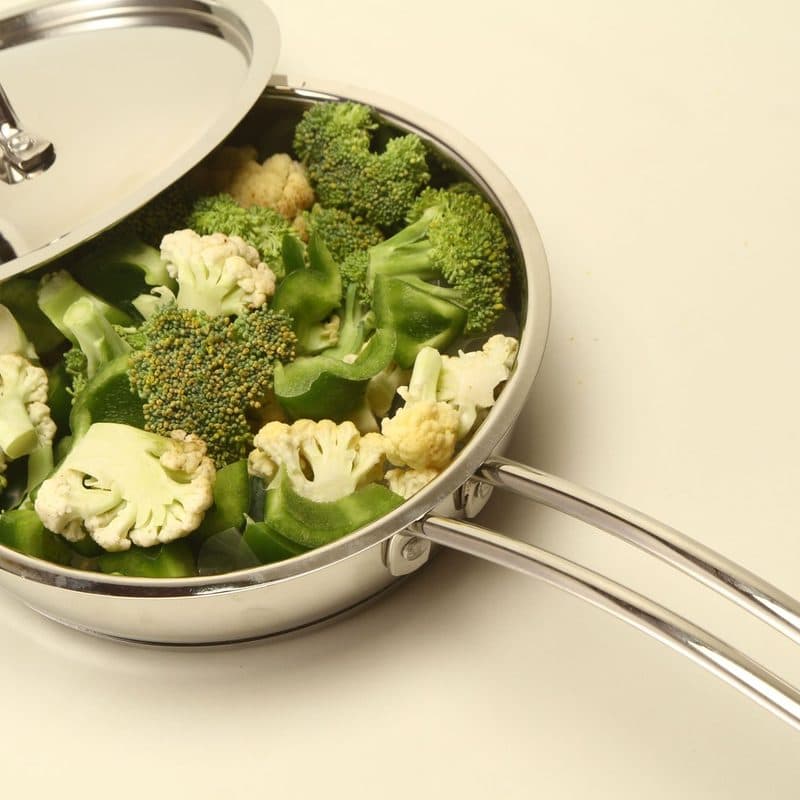 Made In Stainless Clad SaucierFive plies, an 800F oven rating and the best price-to-specification ratio in the shape. | The saucier most people should buy | 8.9 | |
| 2 | 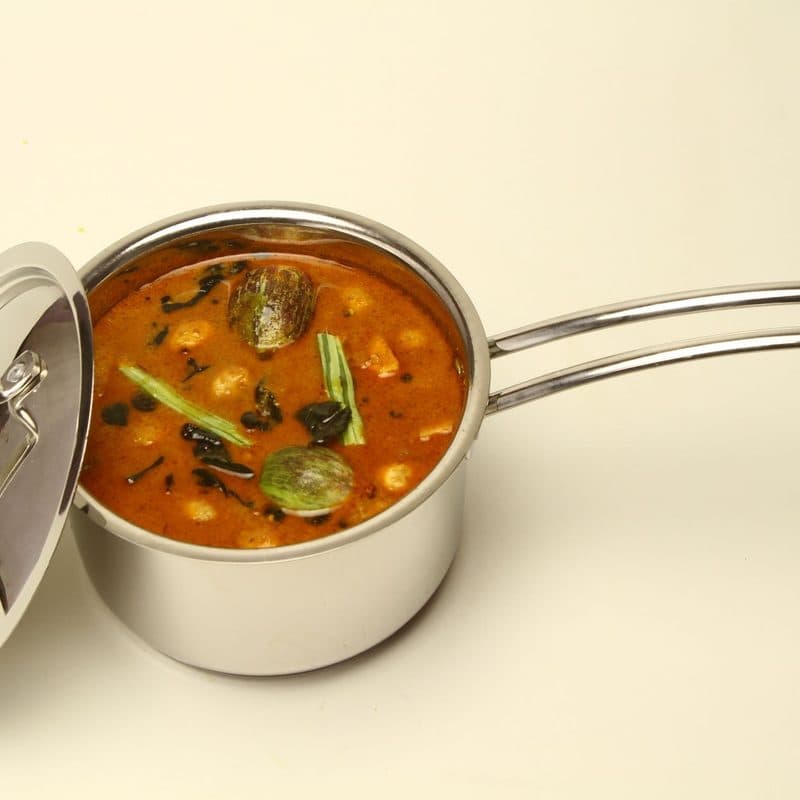 All-Clad Copper Core SaucierCopper reacts fast enough to rescue a sauce. A narrow advantage, and in this shape a real one. | Emulsions, custards and anything with a break point | 9.0 | |
| 3 | 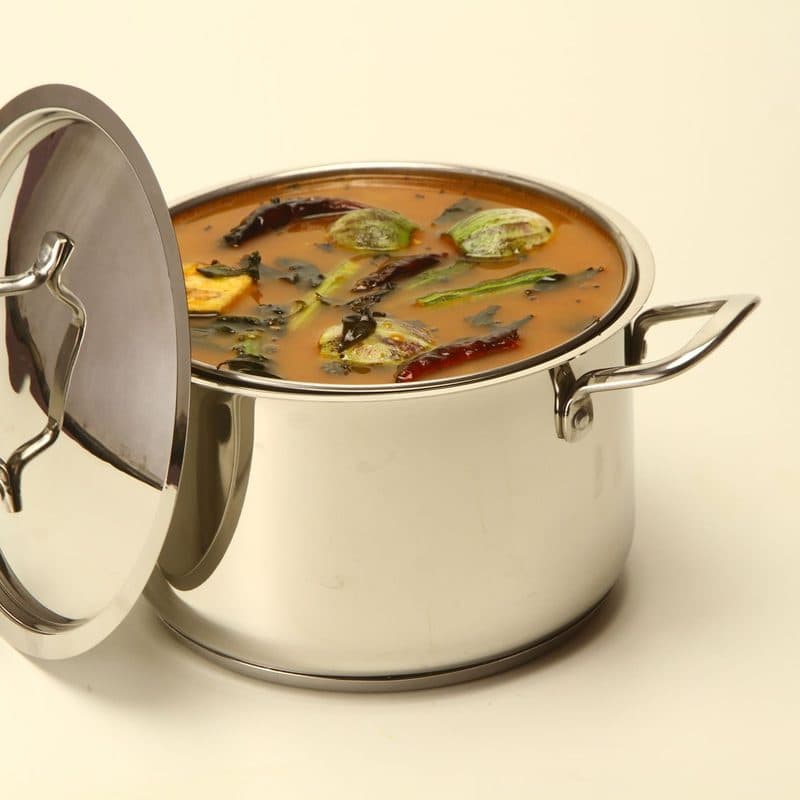 Misen Stainless SaucierGenuinely fully clad at the price disc-bottom pans usually occupy, and dishwasher safe. | Trying the shape without committing real money | 8.6 | |
| 4 |  Demeyere Industry 5 Fry PanRestaurant-gauge mass and the Silvinox surface, if you can live with a 500F ceiling. | Long, slow cooking on an uneven burner | 8.2 |
#ad Buy links are affiliate links. We never print a price — prices change weekly and a printed one is wrong within a month, so every link goes to the live Amazon listing. How we are funded.
Who this is for
You already own a skillet and probably a saucepan, and you are deciding what comes next. Almost every guide will point you at a sauté pan or a stockpot. We think the saucier is a better answer for most people, and the reason is a single design decision rather than a brand preference.
If you are not sure the shape is for you at all, read saucier vs saucepan first. It makes the case for the saucepan honestly, and for a meaningful minority of cooks the saucepan is the right pan.
What the shape actually changes
A saucepan has straight walls meeting the base at a right angle. A saucier has walls that curve up from the base in a continuous sweep. That corner is the entire difference, and it matters because a whisk is round and a right angle is not. Anything that needs constant agitation — roux, custard, polenta, risotto, pastry cream — will collect in a saucepan's corner where the whisk cannot reach, and that is where it scorches.
The second effect is evaporation. A saucier's wider mouth exposes more surface area, so reductions happen faster. That is an advantage when you are reducing and a disadvantage when you are trying to hold a long simmer without losing liquid.
How we evaluated these
We do not run a test kitchen. What we do is compare published manufacturer specifications — ply count, core material, oven rating, induction and dishwasher status, warranty terms — read the warranty documents themselves rather than the marketing summary, and weight everything toward long-term durability. Full method on how we evaluate.
For this shape we weight two things more heavily than we would for a skillet. Fully-clad construction, because liquid touches the walls constantly and a disc-bottom pan's single-layer walls will scorch. And responsiveness, because sauciers are used for the cooking where a few seconds of thermal lag changes the outcome.
What to look for
Three quarts. Two is too small for anything beyond two portions and is the size most often bought because it is the cheapest entry to a brand. Four and up starts behaving like a small Dutch oven and loses the responsiveness that made the shape worth buying. Detail in what size saucier do you need.
Fully clad, not disc-bottomed. Non-negotiable in this shape for the reason above. How to tell them apart: fully clad vs disc bottom.
A lid that matches the pan's rating. Glass lids are usually rated far lower than the pan. If you finish in the oven, a stainless lid is worth insisting on.
A helper handle on anything over three quarts. A full four-quart saucier poured one-handed is how wrists get hurt and floors get burned.
How long will it last?
Sauciers generally outlive skillets, for an unglamorous reason: they are rarely run empty at high heat. Most of what kills a skillet — hard empty preheats, searing temperatures, thermal shock at the sink — happens less in a pan that spends its life holding liquid at a simmer.
The failure that does show up here is chemical rather than mechanical: pitting from salt and acid. Salt added to an unstirred pan settles and concentrates against the base, and chloride attack on stainless is the one thing that genuinely erodes the surface over decades. It looks like tiny dark dots that will not polish out. Stirring salt in rather than dumping it into still liquid essentially eliminates it, and a 316Ti surface like Heritage Steel's resists it better than standard 18/10.
Warranty terms here are the same across the category, and worth reading before you assume: All-Clad's excludes warping and discoloration from high heat, normal wear and abrasive-cleaner damage; Made In's excludes warping from excessive heat or thermal shock, normal wear and dishwasher staining. Side by side in warranties compared.
What to avoid
Avoid two-quart sauciers unless you genuinely cook for one. Avoid disc-bottom construction entirely in this shape. Avoid nonstick sauciers, because the whole point of the pan is deglazing and building fond, which a coating prevents. And avoid buying a saucier to replace a saucepan — they are different tools and the saucepan is better at boiling.
The picks in full
1. Best overall
Made In Stainless Clad Saucier
Made In
Five plies, an 800F oven rating and the best price-to-specification ratio in the shape.
- Shape
- 9.2
- Heat
- 9.0
- Durability
- 8.6
- Value
- 8.8
- Five-ply stainless clad construction
- Heat safe to 800F (Made In published spec)
- Induction compatible; handwash preferred
- Rounded walls with no corner for a whisk to miss
- Lifetime warranty on stainless cookware
What it gets right
- Cheapest route into a genuinely good saucier from a fully-clad brand
- The 800F rating makes oven-finishing a braise or a gratin uncomplicated
- Wide mouth reduces sauces faster than a straight-walled saucepan
Who should skip it
- That wide mouth is a liability if you mostly boil small quantities
- Rounded base means less contact area on a small induction ring
- Five plies are slower off the heat than a copper-core saucier
The saucier is a shape where most brands either do not compete or charge a premium for the privilege. Made In does neither. You get the same five-ply stainless clad body as the frying pan, the same published 800F heat rating, and the same lifetime warranty, at a price that makes buying a saucier as a second pan an easy decision rather than an indulgence.
The 800F figure matters more here than it does in a skillet, because sauciers get used for things that finish in the oven: polenta, a gratin, a braise you started on the hob. A 500F pan puts a broiler finish out of spec, and every warranty in this category excludes heat damage.
The trade against a copper-core saucier is response time. Five plies hold temperature well and give it up slowly, so when you pull a butter emulsion off the heat it keeps cooking for a few seconds longer than you want. For most cooking that is irrelevant. For a beurre blanc at the break point, it is the whole game — and that is the one argument for spending three times more.
2. Best for sauces
All-Clad Copper Core Saucier
All-Clad
Copper reacts fast enough to rescue a sauce. A narrow advantage, and in this shape a real one.
- Shape
- 9.4
- Heat
- 9.8
- Durability
- 9.4
- Value
- 6.2
- Five-ply: copper core between two aluminum and two stainless layers
- Oven and broiler safe to 600F (All-Clad published spec)
- Induction compatible; handwash only
- Rounded saucier walls take a whisk into the corner
- Limited lifetime warranty; handcrafted in Canonsburg, PA
What it gets right
- Copper reacts fast enough that you can actually rescue a breaking sauce
- Rounded interior means no square corner for a roux or risotto to seize in
- The exposed copper band is a genuine wear indicator, not decoration
Who should skip it
- The most expensive pan on this site by a wide margin
- Copper's advantage is invisible unless you cook temperature-critical sauces
- The copper band discolors and needs polishing if you care how it looks
This is the one place on the site where we think a copper core earns its price, and the reasoning is specific. In a skillet you cook hot and fast and copper's responsiveness is largely invisible. In a saucier holding a hollandaise or a beurre blanc just below the temperature at which it splits, the two or three seconds a copper-cored pan saves when you pull it off the heat is the difference between a sauce and a bowl of separated butter.
The construction is five-ply with a genuine copper layer between two aluminum and two stainless layers, oven and broiler safe to 600F, induction compatible, handwash only, limited lifetime warranty, handcrafted in Canonsburg, Pennsylvania. The exposed copper band around the exterior is All-Clad's signature and is also an honest wear indicator — it discolors, and how it looks tells you how the pan has been treated.
If you do not make emulsified sauces, do not buy this. That is not false modesty; it is the whole point of the recommendation. For soup, rice, reheating and reductions, the Made In or the Misen will produce identical results for a fraction of the money.
3. Best value
Misen Stainless Saucier
Misen
Genuinely fully clad at the price disc-bottom pans usually occupy, and dishwasher safe.
- Shape
- 8.6
- Heat
- 8.8
- Durability
- 8.0
- Value
- 9.4
- Five-ply stainless construction
- Oven safe to 800F (Misen published spec)
- Dishwasher safe; induction compatible
- Lifetime warranty against defects
- Manufactured in China
What it gets right
- The cheapest genuinely fully-clad saucier we would recommend
- The dishwasher-safe rating removes the main reason people avoid steel
- Rounded interior does the job a saucier exists to do
Who should skip it
- No long service history behind the lifetime claim
- Handle geometry is less comfortable than Made In's
- Overseas manufacture rules it out for buy-American shoppers
If the saucier is a shape you are curious about rather than committed to, this is the sensible way to find out. Five-ply construction, an 800F published oven rating, dishwasher safe, and a lifetime warranty against defects, at a price that undercuts every American-made option.
The dishwasher rating is worth more in this shape than elsewhere. Sauciers get used for starchy, sticky things — risotto, polenta, custard — and being able to put one straight in the machine removes the main friction that stops people using a pan they own.
The reservations are the same as for Misen's skillet: manufactured in China, which matters to some buyers, and a lifetime promise from a company that has not yet been around for one. The handle geometry is also a step behind Made In's.
4. Best built
Demeyere Industry 5 Fry Pan
Demeyere
Restaurant-gauge mass and the Silvinox surface, if you can live with a 500F ceiling.
- Shape
- 8.4
- Heat
- 8.8
- Durability
- 9.4
- Value
- 6.4
- Five-ply construction from rim to rim
- Oven safe to 500F (Zwilling published spec)
- Dishwasher safe; induction compatible
- Patented Silvinox surface treatment resists fingerprints and acidic foods
- Lifetime warranty; made in Belgium
What it gets right
- Silvinox is the only surface treatment here that measurably slows cosmetic aging
- Built to a commercial-kitchen spec, and the gauge shows it
- Dishwasher safe despite the price bracket
Who should skip it
- A 500F ceiling is low for the money
- Heaviest pan on this site; genuinely tiring in the larger sizes
- Rare enough in US retail that replacing one piece takes effort
Demeyere's Industry 5 line includes rounded shapes, and heavy five-ply construction suits them: a saucier spends a lot of its life holding a steady low simmer, and mass is what holds a simmer steady on a burner that cycles. Dishwasher safe, induction compatible, lifetime warranty, made in Belgium.
Silvinox is the differentiator again. Sauciers see acidic food — tomato, wine, lemon — more than any other pan in the kitchen, and Silvinox is specifically claimed to resist acidic foods and harsh detergents over years of use. That is the right pan for the right treatment.
The 500F oven rating remains hard to justify at this price, and the weight that helps at a simmer is a nuisance when you are pouring from a full pan one-handed.
Frequently asked questions
What is the best stainless steel saucier?
The Made In Stainless Clad saucier for most people: five-ply, an 800F published oven rating and a lifetime warranty at a reasonable price. The All-Clad Copper Core is better specifically for emulsified sauces.
What size saucier should I buy?
Three quarts for almost everyone. Two quarts is too small beyond two portions; four quarts and above starts behaving like a small Dutch oven and loses the responsiveness the shape exists for.
Is a saucier better than a saucepan?
For anything you whisk or stir constantly, yes, because there is no right-angled corner for food to collect and scorch in. For long simmering and boiling, the saucepan's straight walls lose less liquid.
Is a copper core worth it in a saucier?
Only for temperature-critical sauces. Copper responds fast enough to rescue an emulsion about to break. For soup, rice and reductions, an aluminum core performs identically for far less money.
Can a saucier go in the dishwasher?
Depends on the brand. Misen and Demeyere publish dishwasher-safe ratings; All-Clad specifies handwash only and Made In prefers handwashing, with dishwasher staining excluded from its warranty.
Why do my sauciers get tiny dark pits?
Chloride pitting, usually from salt added to still liquid and left to settle against the base. Stir salt in rather than dumping it in unstirred. A 316Ti surface resists it better than standard 18/10.
Do I need a lid for a saucier?
Yes, and prefer a stainless one. Glass lids are typically rated far below the pan's oven temperature, which turns a stovetop-to-oven pan back into a stovetop-only one.
Sources
- Made In — Stainless Clad Frying Pan, published specification
- Made In — Warranty policy
- All-Clad — Copper Core 5-Ply Bonded Saucier, published specification
- All-Clad — Cookware Limited Lifetime Warranty (PDF)
- Misen — Stainless Steel Skillet, published specification
- Misen — Lifetime warranty
- Zwilling — Demeyere Industry 5 11-inch Frying Pan, published specification
- Heritage Steel — Titanium Series 10.5-inch Fry Pan, published specification