Construction & Materials
Stainless Steel vs HexClad
One of these is a pan. The other is a pan with a coating on it, and the coating decides how the story ends.
Disclosure: Ply & Pan earns a commission on qualifying purchases made through links on this page. We take no free product and no sponsorship, and we never print a price. How we are funded.
Quick picks
The short answer. Tap any row for the full write-up.
| # | Product | Best for | Score | Price |
|---|---|---|---|---|
| 1 | 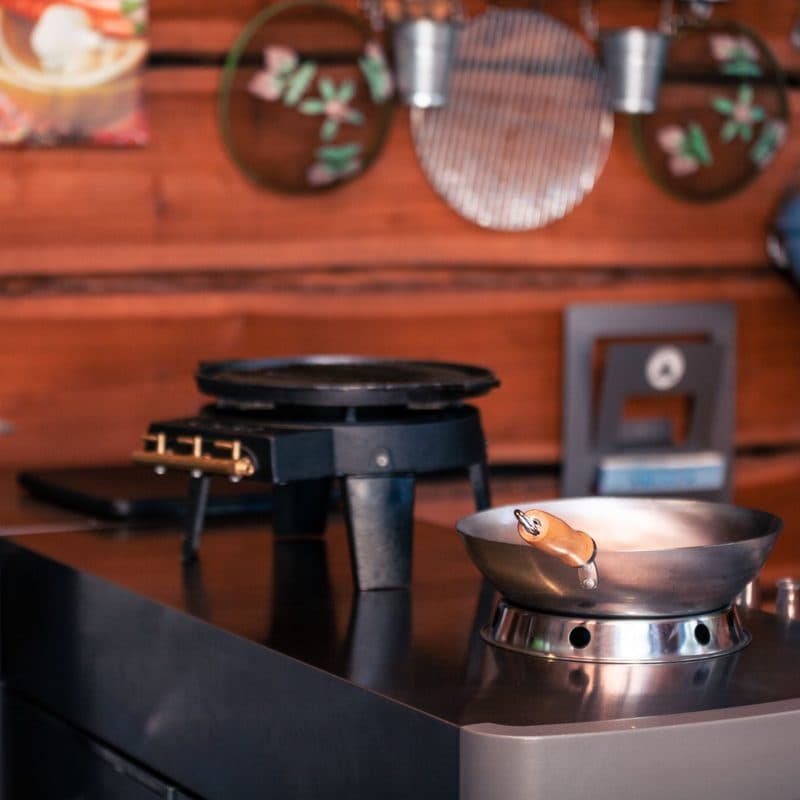 All-Clad D3 Stainless Fry PanSolid metal with nothing to wear off. The surface you cook on is the pan, so there is no coating lifespan to plan around. | Anyone whose objection to coated pans is replacing them | 8.9 | |
| 2 | 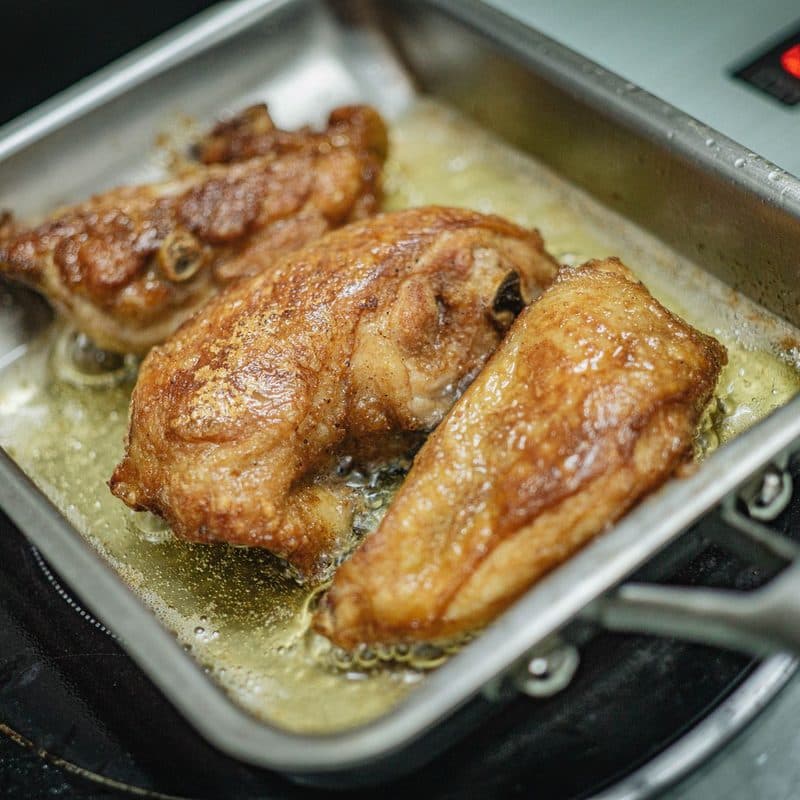 Tramontina Signature Tri-Ply Clad Fry PanFully clad, NSF-certified, dishwasher safe, and typically well under the price of a single hybrid pan. The real alternative to consider. | Buyers weighing a hybrid pan against value clad steel | 8.6 | |
| 3 | 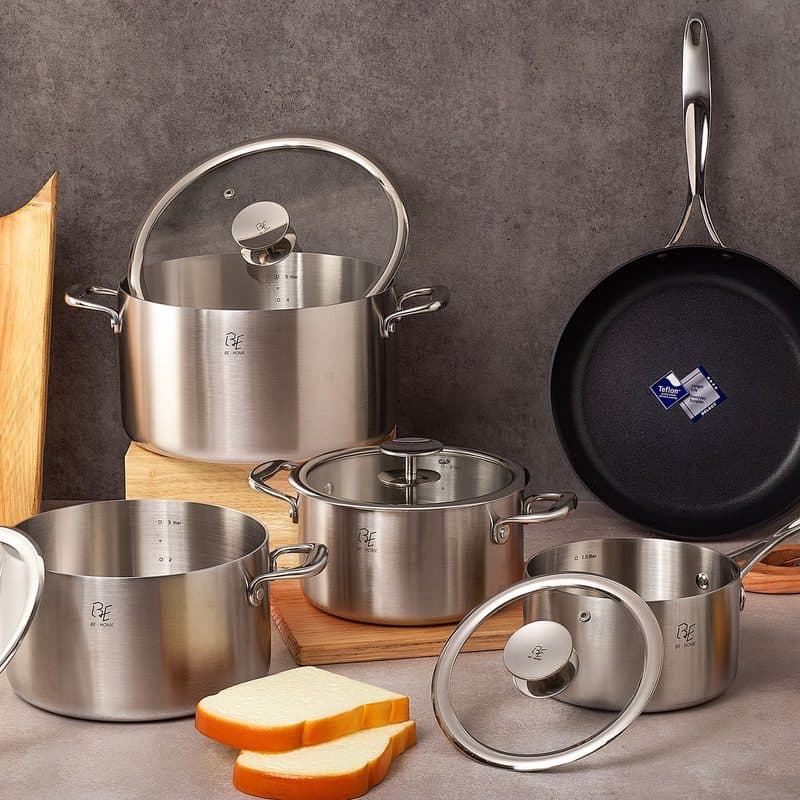 Hestan NanoBond Titanium SkilletTitanium bonded into the steel rather than laid on top of it, rated to 1050F. A surface that cannot peel, at a price that stings. | Buyers drawn to a treated surface that is not a coating | 8.2 |
#ad Buy links are affiliate links. We never print a price — prices change weekly and a printed one is wrong within a month, so every link goes to the live Amazon listing. How we are funded.
The short answer
Buy stainless if you want a pan that lasts decades; buy a hybrid pan like HexClad if you want nonstick convenience and accept that the cooking surface is a consumable. HexClad's own FAQ describes a tri-ply clad body — magnetic stainless on the outside, so it works on induction — with a proprietary TerraBond ceramic nonstick coating on the cooking surface. The body is comparable to any clad pan. The surface is not.
What each one actually is
| Property | Clad stainless steel | HexClad hybrid |
|---|---|---|
| Cooking surface | 18/10 stainless — solid metal | TerraBond ceramic nonstick coating (PTFE-free, PFAS-free) |
| Body | Fully clad, aluminum core | Tri-ply clad style, magnetic stainless exterior |
| Induction | Yes | Yes |
| Abrasive cleaning | Fine on the cooking surface | Not on the cooking surface; HexClad advises abrasives only on the exposed stainless rim and base |
| Dishwasher | Brand-dependent | Stated dishwasher safe, with a caution that it may dull or blacken the finish over time |
| Lifespan limit | The base warping, after decades | The coating, which is finite by design |
Every HexClad claim above is taken from HexClad's own published FAQ, linked in the Sources block at the foot of this page. We have not tested their pans and do not pretend to have.
The difference that decides it
A coated pan and an uncoated pan fail in categorically different ways. Stainless degrades gradually and cosmetically: it stains, it scratches, it discolours, and none of that affects how it cooks. Its real end-of-life is structural — a base that has gone slightly convex and rocks on a flat hob, which takes a long time and usually requires abuse.
A coated pan degrades functionally. However good the coating, it is a layer applied to metal, it is softer than the metal, and the pan becomes worse at the one job you bought it for as it wears. The manufacturer's own care advice is the tell: HexClad specifically warns against abrasive sponges on the cooking surface while recommending them for the exposed stainless.
For a buyer whose stated priority is not rebuying, that asymmetry is the whole answer. The same logic applies to every coated pan, which is why we reach the same conclusion in stainless vs nonstick and stainless vs ceramic.
The fair case for the hybrid pan
It would be dishonest to pretend there is no argument on the other side. A nonstick surface releases eggs, fish and pancakes with no technique at all, and the number of people who give up on stainless because their first three attempts stuck is not small.
A hybrid pan also has a clad stainless body, which means it is induction compatible and better built than a cheap coated pan stamped from aluminum. If you were otherwise going to buy a supermarket nonstick pan every two years, a better-built coated pan is a real improvement.
What it is not is a way to avoid the trade. The coating is still the limiting component, and the price is in premium-clad territory — which means you are paying buy-once money for a pan that is not a buy-once object.
If sticking is the problem, fix the preheat
Nearly every complaint about stainless steel is a preheat complaint. Food bonds to steel when the surface is below the temperature at which proteins sear and contract away from it. Heat the dry pan on medium for two to three minutes, test it with a drop of water — it should bead and skitter rather than hiss — then add oil, then the food.
That is the whole technique, and once it is habitual the practical gap between stainless and nonstick shrinks dramatically. Why food sticks to stainless steel explains the mechanism, the water test is the two-minute version, and cooking eggs in stainless is the hardest case.
The verdict
If you are on this site, buy the stainless. The premise of buy-it-for-life cookware is that the object outlasts your interest in replacing it, and a coated surface cannot make that promise regardless of how the body underneath is built.
Keep one cheap coated pan for eggs and pancakes if you want — that is what most cooks who own good stainless actually do, and it costs almost nothing. What we would not do is pay clad-steel prices for a pan whose best feature expires. Non-toxic stainless cookware covers the coating-free options if that is the angle you came from.
The picks in full
1. Best buy-once answer
All-Clad D3 Stainless Fry Pan
All-Clad
Solid metal with nothing to wear off. The surface you cook on is the pan, so there is no coating lifespan to plan around.
- Longevity
- 9.8
- Browning
- 9.2
- Convenience
- 6.4
- Value
- 6.6
- Tri-ply: stainless interior, aluminum core, magnetic stainless exterior
- Oven and broiler safe to 600F (All-Clad published spec)
- Induction compatible on any stovetop
- Handwash only, per the manufacturer
- Limited lifetime warranty; bonded, engineered and assembled in Canonsburg, PA
What it gets right
- Survived America's Test Kitchen's concrete-strike abuse testing with barely a ding
- Rivets and handle join are the sturdiest in the category
- Decades of parts and service history standing behind the warranty
Who should skip it
- Costs roughly three times a Tramontina that cooks nearly as evenly
- The stick handle is narrow and bites into your palm on a loaded 12-inch pan
- Handwash only, which is a real constraint if you hate washing up
The structural argument for stainless is simple: there is no coating, so there is nothing to degrade. A clad pan's cooking surface is 18/10 stainless all the way through, and a scratch in it is cosmetic rather than terminal. That is the whole reason a buy-it-for-life buyer ends up here.
The D3 is the strongest version of the argument. Tri-ply, oven and broiler safe to 600F, induction compatible, limited lifetime warranty, bonded in Pennsylvania, and the only pan in its class to come through America's Test Kitchen's concrete-strike abuse testing essentially undamaged.
What it asks of you: a proper preheat before food goes in, handwashing, and three times the price of a Tramontina that cooks nearly as evenly. The handle is narrow and bites under load.
2. The honest price comparison
Tramontina Signature Tri-Ply Clad Fry Pan
Tramontina
Fully clad, NSF-certified, dishwasher safe, and typically well under the price of a single hybrid pan. The real alternative to consider.
- Longevity
- 8.4
- Browning
- 8.6
- Convenience
- 8.2
- Value
- 9.8
- Tri-ply: aluminum core between two layers of 18/10 stainless
- Oven safe to 500F (Tramontina published spec)
- Dishwasher safe; works on gas, electric, ceramic glass and induction
- NSF-certified for commercial kitchens
- Mirror-polished exterior, riveted stainless handle
What it gets right
- Cooks close enough to All-Clad that most people could not pick them apart blind
- Dishwasher safe and NSF-certified, neither of which All-Clad's tri-ply is
- Cheap enough that replacing it in fifteen years still costs less than one D3
Who should skip it
- The 500F oven rating is 100F below All-Clad and 300F below Made In
- Handle is less comfortable and the polished finish scuffs faster
- Lighter gauge base is more prone to warping under thermal shock
Most people comparing a hybrid pan with stainless are implicitly comparing it with an expensive stainless pan. They should not be. Tramontina Signature is genuinely fully clad — aluminum core between two layers of 18/10, carried up the walls — and sits well below the hybrid price bracket.
It is also NSF-certified for commercial kitchens and dishwasher safe, which removes the main day-to-day advantage the coated pan has. Induction compatible, lifetime warranty.
The trade-offs are a 500F oven ceiling, a lighter base that is more prone to warping under thermal shock, a less comfortable handle and a finish that scuffs faster than premium pans.
3. If you want a surface treatment, buy this kind
Hestan NanoBond Titanium Skillet
Hestan
Titanium bonded into the steel rather than laid on top of it, rated to 1050F. A surface that cannot peel, at a price that stings.
- Longevity
- 9.4
- Browning
- 9.0
- Convenience
- 7.8
- Value
- 5.6
- Titanium-based alloys bonded to stainless in nano layers
- Oven, broiler and grill safe to 1050F (Hestan published spec)
- Dishwasher safe; induction compatible
- Made without PFAS, nickel, lead or cadmium
- Lifetime warranty; handcrafted in Italy
What it gets right
- The 1050F rating puts grill and broiler work genuinely in spec
- A nickel-free cooking surface matters if you react to nickel
- Hestan claims four times the durability of plain stainless, and the surface does resist scratching
Who should skip it
- The most expensive skillet in this category, and it is not close
- The titanium surface changes appearance, not stick behavior; food still sticks if you rush the preheat
- Repair is not realistic, so a damaged surface means a replacement claim
If the appeal of a hybrid pan is "stainless, but with something done to the surface", NanoBond is the version of that idea which does not involve a coating that can wear through. Titanium-based alloys are bonded into the steel in nano layers, so the surface is metallurgical rather than applied.
Published specification: oven, broiler and grill safe to 1050F — the highest rating in clad cookware by a wide margin — dishwasher safe, induction compatible, made without PFAS, nickel, lead or cadmium, lifetime warranty, handcrafted in Italy.
Be clear about what it does not do: the titanium surface changes hardness and appearance, not stick behaviour. Food still sticks if you rush the preheat. It is also the most expensive skillet on this site by a distance, and a damaged surface means a warranty claim rather than a repair.
Frequently asked questions
Is HexClad stainless steel?
Partly. HexClad's own FAQ describes a tri-ply clad body starting with a layer of magnetic stainless steel, but the cooking surface carries a TerraBond ceramic nonstick coating rather than being bare steel.
Does HexClad have PTFE?
HexClad states its TerraBond ceramic nonstick coating is PTFE-free and PFAS-free. It is still a coating, which is the property that limits lifespan.
Will HexClad last as long as stainless steel?
No coated pan will. Clad stainless has no coating to wear through, so its lifespan is limited by the base warping after decades. A coating is finite by design, which is why abrasives are not advised on the cooking surface.
Can you use metal utensils on HexClad?
HexClad markets metal-utensil tolerance, but its own care advice warns against abrasive sponges on the cooking surface. On bare clad stainless, metal utensils are genuinely harmless.
Is HexClad worth the money?
Only if you value nonstick release at a premium price. For the same money you can buy clad stainless that lasts decades, plus a cheap nonstick pan for eggs, which is what most cooks with good cookware actually do.
Is HexClad dishwasher safe?
HexClad states it is dishwasher safe but cautions that machine washing may make the cookware look dull or black over time.
Sources
- HexClad — Frequently asked questions: construction, coating and care
- All-Clad — D3 Stainless 12-inch Fry Pan, published specification
- Tramontina — Signature Tri-Ply Clad Stainless Steel Fry Pan, published specification
- Hestan Culinary — NanoBond titanium skillet, published specification
- America's Test Kitchen — The Best Stainless-Steel Skillets
- US FDA — Food contact substances and cookware safety