Care & Technique
Why Does My Stainless Steel Pan Smoke?
A steel pan that smokes is almost always telling you one of five things, and they need different fixes. The quickest way to diagnose it is to notice when the smoke starts - before the oil goes in, as it goes in, or minutes later.
Disclosure: Ply & Pan earns a commission on qualifying purchases made through links on this page. We take no free product and no sponsorship, and every price here is read from Amazon on the date shown. How we are funded.
Quick picks
The short answer. Tap any row for the full write-up.
| # | Product | Best for | Score | Price |
|---|---|---|---|---|
| 1 | 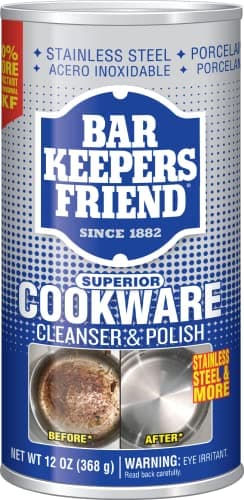 Bar Keepers Friend Cookware CleanserIf the pan smokes while it is still dry, the smoke is last week's polymerised oil burning off. An oxalic-acid cleanser dissolves it rather than grinding at it. | A pan that smokes before any oil goes in | 9.0 | $3.89 · View on Amazon $8.08 · 52% off |
| 2 | 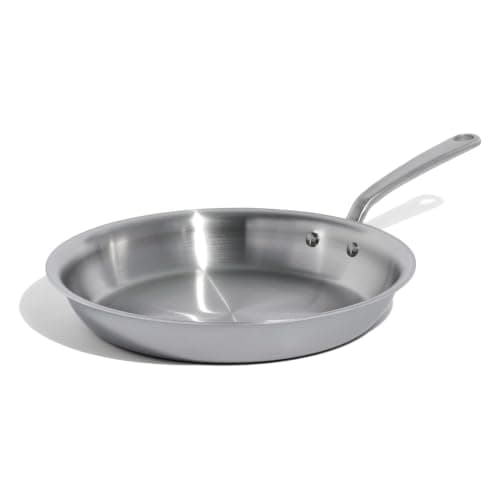 Made In Stainless Clad Frying PanPublished to 800F, so the pan is never what is smoking - at searing temperature the oil is the only variable, which is the right way round. | Searing hard without worrying about the pan's limit | 8.6 | $129.99 · View on Amazon $149.00 · 13% off |
| 3 | 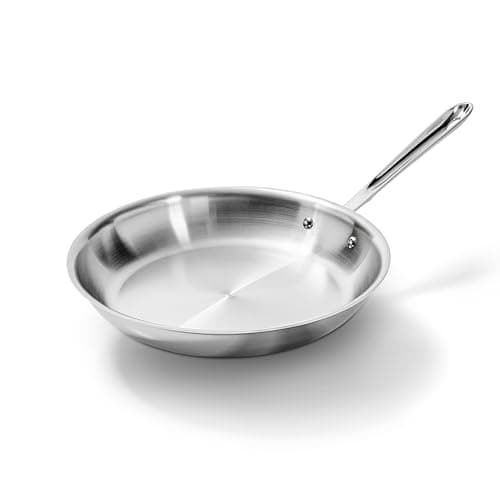 All-Clad D3 Stainless Fry PanThree plies lose heat faster than any five-ply pan here, which is exactly what you want when a pan starts smoking and you need it to stop now. | A cook who wants the pan to cool the instant it is lifted | 8.8 |
#ad Buy links are affiliate links. Prices come straight from Amazon, are stamped with the date they were read, and disappear rather than go stale if the feed stops. How we are funded.
Diagnose it by timing
Before you change anything, notice when the smoke starts. That alone usually identifies the cause.
| When it smokes | Almost certainly | What to do |
|---|---|---|
| Dry pan, before any oil | Old polymerised residue burning off | Clean it with an oxalic-acid cleanser |
| The instant the oil hits | Pan well past the oil's smoke point | Lower the heat, or switch to a refined oil |
| A minute after the oil | Oil sitting in an empty hot pan too long | Add the food sooner |
| First ever use | Factory oils and packing residue | Wash it before first use |
| Throughout, with acrid smell | Burner too high for the job | Medium heat is enough for almost everything |
1. The oil is past its smoke point
This is the commonest cause by a wide margin. Every fat has a temperature at which it starts to break down and smoke, and unrefined fats — butter, extra-virgin olive oil, anything cold-pressed — reach it well below searing temperature.
Two fixes, and you can use either. Lower the burner: most home cooking wants medium, not high, and people habitually overshoot. Or switch the oil: refined avocado, grapeseed, vegetable or canola oil tolerate far more heat, and ghee gives you butter flavour without the milk solids that burn. Full guidance is in what oil to use in a stainless steel pan.
2. The pan smokes before the oil goes in
A dry pan should not smoke. Steel does not burn, and a genuinely clean pan at 400F produces nothing. If a dry pan smokes, there is old oil residue on it that has polymerised into a thin brown or invisible varnish, and that is what is burning.
This happens to pans that look spotless, because the layer is thin and roughly the colour of the steel. Detergent does not remove it — it is no longer oil, it is a cross-linked polymer. An oxalic-acid cleanser dissolves it. Do the inside of the pan, rinse thoroughly, and the smoke goes away. Our method is in how to clean stainless steel cookware.
3. Oil left sitting in an empty hot pan
Oil in a hot empty pan has nothing to cook and nothing to cool it, so it climbs straight to its smoke point and stays there. People do this while finishing their prep. The pan was ready, the oil went in, then two minutes passed.
Oil is the last thing in before the food, not the first. Get the food to the hob, then heat the pan, then add the oil, then add the food within a few seconds of the oil shimmering.
4. It is brand new
A new pan carries manufacturing oils, polishing compound and packing residue, and heating it burns those off with a distinctive sharp smell. This is normal and it is also a reason to wash a new pan before using it — which many people skip. The first-use routine is in stainless steel pan first use.
5. The burner is simply too high
Stainless cookware gets a reputation for needing high heat, and the opposite is closer to true. Clad pans conduct well, so medium heat delivers more than most people expect, and the common failure is a pan run far hotter than the job needs — which smokes, burns the fond, and creates the residue that causes cause number two next week.
Preheat on medium for two to four minutes and use the water test rather than guessing: drops that ball and skate mean ready, drops that sizzle mean not yet. Details in the stainless steel water test.
On gas specifically, a flame that licks up the sides of the pan heats the walls directly, which both scorches whatever is climbing them and makes the handle hot — the same mechanism as why pan handles get hot. Keep the flame under the base.
Is some smoke supposed to happen?
Yes. A real sear takes place above the smoke point of most oils, so a wisp of smoke when a steak hits the pan is the process working, not a mistake. What is wrong is continuous heavy smoke, smoke before food goes in, or an acrid rather than nutty smell.
The practical test is the result. If the crust is brown and the fond in the pan is amber and dissolves when you deglaze, your heat was right. If the fond is black and bitter and will not lift, it was too high — and you will be cleaning rather than making a pan sauce.
A note on ventilation and smoke alarms
Searing in a steel pan produces more smoke than cooking in a nonstick pan at lower heat, and that is inherent to the method rather than a fault. Turn the extractor on before you start rather than after the alarm goes off, and open a window if the hob is near a smoke detector. This is the one problem on the page that is not about technique.
The bottom line
Work from the timing. Smoke before the oil means residue, and needs an oxalic-acid cleanser rather than a change of technique. Smoke the instant oil hits means the pan is too hot for that oil — lower the burner or use a refined one. Smoke a minute later means the oil sat in an empty pan. On a new pan it is factory residue and will pass. And if none of those fit, the burner is on too high, which is the default answer for almost everything that goes wrong in a steel pan.
The picks in full
1. Fixes the smoke that is actually old residue
Bar Keepers Friend Cookware Cleanser
Bar Keepers Friend
If the pan smokes while it is still dry, the smoke is last week's polymerised oil burning off. An oxalic-acid cleanser dissolves it rather than grinding at it.
- Effectiveness
- 9.4
- Safety
- 8.6
- Availability
- 9.6
- Value
- 9.4
- Oxalic acid based: dissolves heat tint rather than grinding it off
- Powder and liquid formulations; the liquid is gentler on polished finishes
- Safe on stainless, not on anodized aluminum or nonstick coatings
- Rinse thoroughly and never leave it sitting on the surface
- Sold nearly everywhere, which matters more than it sounds
What it gets right
- The only product that reliably removes rainbow heat tint
- Cheap enough that there is no reason to tolerate a stained pan
- Restores the surface rather than polishing metal away
Who should skip it
- The abrasive powder will dull a mirror-polished exterior over time
- Does nothing for warping, which is the failure that actually matters
- Needs a thorough rinse; residue left on steel can pit it
A dry pan cannot smoke on its own — steel does not burn at cooking temperature. If a clean-looking pan smokes before any fat goes in, there is invisible polymerised residue on it from previous cooks, and it is that residue burning. Detergent will not touch it, because it is no longer oil.
Oxalic acid dissolves the deposit instead of abrading it, which is why this works where a scouring pad does not. It also removes heat tint — the amber and rainbow staining that is in the steel rather than on it. Cheap, and sold nearly everywhere, which matters more than it sounds when you want the pan fixed tonight.
Against it: the abrasive powder will dull a mirror-polished exterior over time, so use the liquid on the outside of a polished pan. Rinse thoroughly — residue left sitting on steel can pit it. And it does nothing for warping, which is the failure that actually matters.
2. Most heat headroom before the pan is the problem
Made In Stainless Clad Frying Pan
Made In
Published to 800F, so the pan is never what is smoking - at searing temperature the oil is the only variable, which is the right way round.
- Effectiveness
- 8.8
- Safety
- 9.4
- Availability
- 8.0
- Value
- 8.4
- Five-ply construction, 2.7mm thick (Made In published spec)
- Heat safe to 800F / 430C, 200F above All-Clad's rating
- Gas, electric and induction; handwash preferred
- Lifetime warranty on stainless; the frying pans are made in Italy
- Flared rim pours cleanly, which sounds trivial until you deglaze
What it gets right
- The 800F rating puts broiler work and hard oven finishes in spec rather than in hope
- Longer, flatter handle is more comfortable than All-Clad's stick handle
- Direct-to-consumer pricing undercuts All-Clad at an equivalent ply count
Who should skip it
- No decades-long warranty service record yet; the company is young
- Five plies make it slower to respond than a tri-ply of the same size
- Warranty excludes warping from thermal shock, same as everyone else's
Some smoke is correct. A proper sear happens above the smoke point of most oils, so a little smoke at the moment food hits the pan is the process working. What you do not want is a pan that is itself being pushed past its rating while that happens.
Made In publishes 800F, 200F above All-Clad and 300F above the value clads, which means hard searing and broiler finishing sit comfortably inside the specification. Five plies at a published 2.7mm also hold temperature when cold food lands, so you can run the burner lower for the same result — less heat, less smoke.
Against it: handwash preferred, which is awkward on a pan you sear in. Five plies are slow to respond when you pull heat, which matters if you are trying to stop something smoking quickly. And the lifetime warranty has no long service record behind it yet.
3. Easiest to stop smoking quickly
All-Clad D3 Stainless Fry Pan
All-Clad
Three plies lose heat faster than any five-ply pan here, which is exactly what you want when a pan starts smoking and you need it to stop now.
- Effectiveness
- 8.6
- Safety
- 9.0
- Availability
- 9.4
- Value
- 7.6
- Tri-ply: stainless interior, aluminum core, magnetic stainless exterior
- Oven and broiler safe to 600F (All-Clad published spec)
- Induction compatible on any stovetop
- Handwash only, per the manufacturer
- Limited lifetime warranty; bonded, engineered and assembled in Canonsburg, PA
What it gets right
- Survived America's Test Kitchen's concrete-strike abuse testing with barely a ding
- Rivets and handle join are the sturdiest in the category
- Decades of parts and service history standing behind the warranty
Who should skip it
- Costs roughly three times a Tramontina that cooks nearly as evenly
- The stick handle is narrow and bites into your palm on a loaded 12-inch pan
- Handwash only, which is a real constraint if you hate washing up
Smoke control is temperature control, and a thinner, lighter pan is more controllable. Lift a tri-ply pan off the burner and it starts cooling immediately; lift a heavy five-ply pan and it carries on cooking, and carries on smoking, for a minute or more. If you tend to overshoot, the responsive pan is the forgiving one.
600F and broiler safe is more ceiling than any cooking oil needs, and the build quality is the best documented here — through America's Test Kitchen's concrete-strike abuse testing with barely a ding.
Against it: handwash only, which is the care instruction most likely to leave residue on a pan — and residue is one of the five causes of smoke on this page. It also costs roughly three times a Tramontina that cooks nearly as evenly.
#ad Price as of October 17, 2026. How we are funded
Frequently asked questions
Why does my stainless steel pan smoke with nothing in it?
Because there is polymerised oil residue on it from previous cooking, and that residue is burning. Steel itself does not smoke at cooking temperature. The layer is thin and close to the colour of the pan, so a pan that looks clean can still carry it, and detergent will not remove it - use an oxalic-acid cleanser like Bar Keepers Friend, then rinse thoroughly.
Is it normal for a stainless steel pan to smoke when searing?
A wisp of smoke when food hits the pan is normal, because a proper sear happens above the smoke point of most cooking oils. What is not normal is continuous heavy smoke, smoke before the food goes in, or an acrid smell. Judge it by the fond: amber fond that dissolves when you deglaze means the heat was right, black bitter fond means it was too high.
How do I stop my stainless steel pan from smoking so much?
Lower the burner to medium, switch to a refined high-smoke-point oil such as avocado or grapeseed, add the oil only once the pan is already hot, and get the food in within a few seconds of the oil shimmering. If it still smokes dry, clean off the old residue with an oxalic-acid cleanser.
Why does my new stainless steel pan smoke?
New pans carry manufacturing oils, polishing compound and packing residue, and heating them burns those off with a sharp smell. It passes after the first use or two. Washing the pan in hot soapy water before you cook in it removes most of it in advance.
Does smoking damage a stainless steel pan?
The smoke does not, but what causes it can. Running a pan far above the temperature the job needs builds polymerised residue that is hard to remove, and thermal shock from a very hot pan meeting cold water is what warps bases. Heat tint - amber, blue or rainbow staining - is cosmetic and harmless.