Care & Technique
How to Cook Eggs in Stainless Steel Without Sticking
The one food where stainless genuinely asks more of you. It is doable, and a nonstick pan is also a legitimate answer.
Disclosure: Ply & Pan earns a commission on qualifying purchases made through links on this page. We take no free product and no sponsorship, and we never print a price. How we are funded.
Quick picks
The short answer. Tap any row for the full write-up.
| # | Product | Best for | Score | Price |
|---|---|---|---|---|
| 1 | 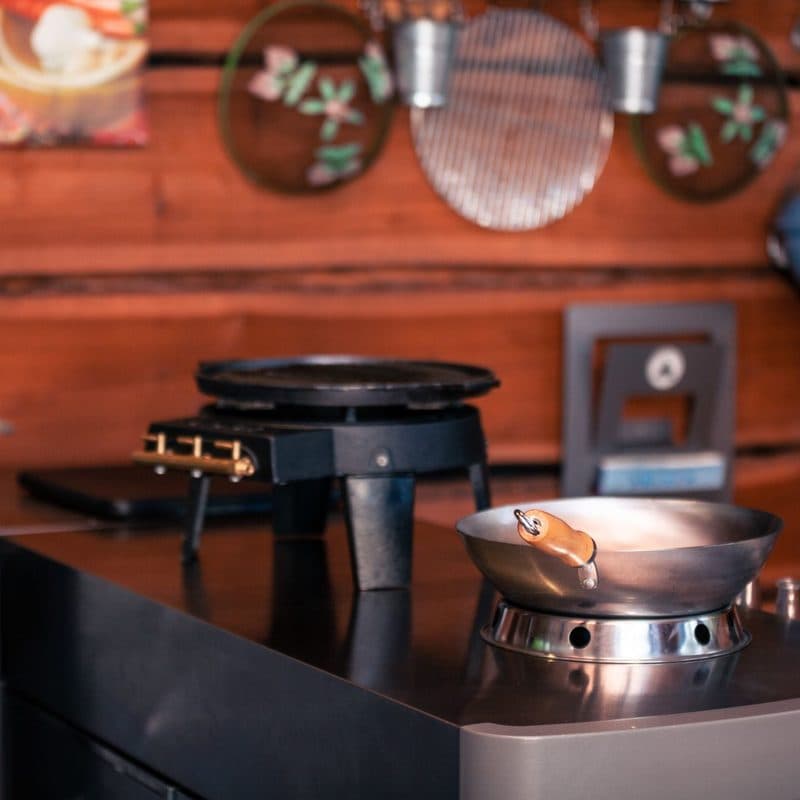 All-Clad D3 Stainless Fry PanEggs need a narrow temperature band held evenly. Tri-ply responds fast enough to keep you in it. | Even heat at the moderate temperatures eggs need | 9.0 | |
| 2 | 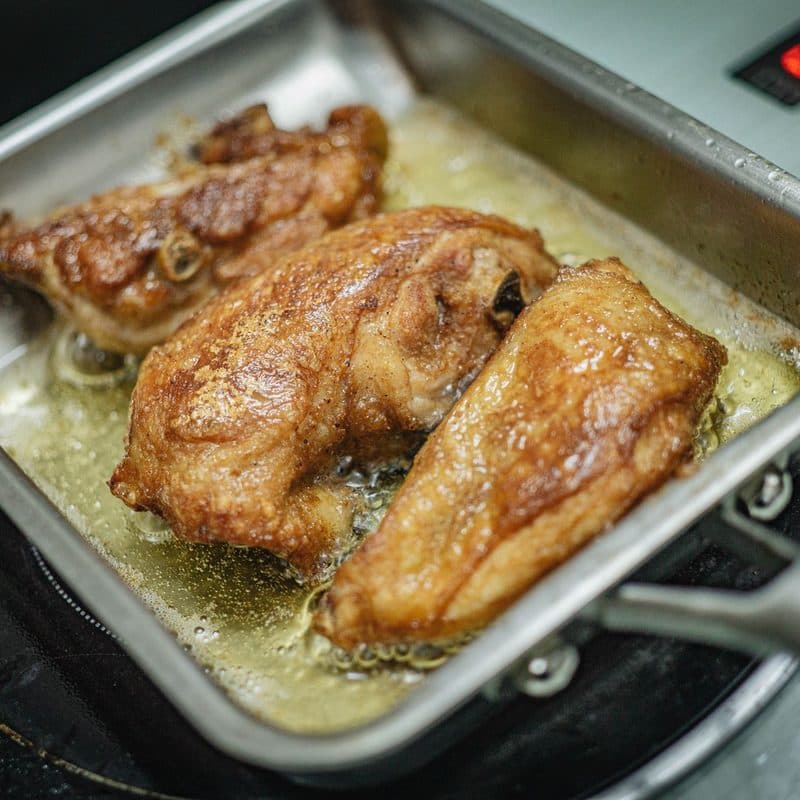 Tramontina Signature Tri-Ply Clad Fry PanFully clad and inexpensive. The technique matters far more than the pan here. | Learning the technique without spending much | 8.6 |
#ad Buy links are affiliate links. We never print a price — prices change weekly and a printed one is wrong within a month, so every link goes to the live Amazon listing. How we are funded.
Why eggs are the hard case
Egg protein coagulates at a low temperature and bonds readily to metal — that is chemistry, and it is why eggs stick to things that release steak without complaint.
Worse, the temperature window is narrow in both directions. Too cool and the protein settles into the surface and grips. Too hot and the whites set instantly on contact, seize, and turn rubbery. Steak forgives a wide range; eggs do not.
So the technique below is about hitting and holding a moderate temperature, not about getting the pan as hot as possible. It is the opposite of the searing advice elsewhere on this site.
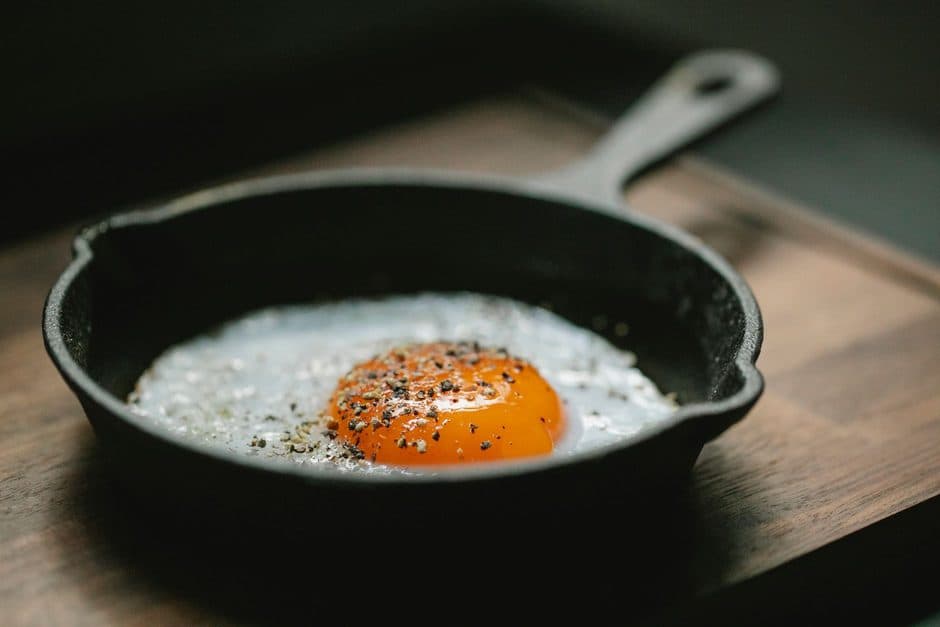
The method for fried eggs
- Heat the dry pan on medium until it passes the water test — one gliding ball, not scattering beads.
- Take the pan off the heat for about thirty seconds. You want it below searing temperature.
- Return it to low-to-medium heat and add a generous knob of butter or a tablespoon of oil.
- Swirl to coat the base completely, edge to edge. Patchy coverage means patchy sticking.
- Crack the egg in low, close to the surface, so the white does not splash up the sides.
- Leave it entirely alone for about a minute. Do not nudge it.
- Tilt the pan and spoon hot fat over the top to set the white, or cover briefly.
- Slide a thin spatula underneath only once the edges have set and lifted.
Step two is the one people skip. The water test gets you to a temperature that is right for steak and too hot for eggs, so the pause off the heat is deliberate. Full explanation of the test in the water test.
The method for scrambled eggs
Scrambled eggs are easier in stainless than fried, because you are moving them constantly and never letting a surface set against the metal.
- Preheat on medium-low, well below searing temperature.
- Add butter and let it foam without browning.
- Add beaten eggs and stir continuously with a silicone spatula, scraping the base.
- Pull the pan off the heat while the eggs still look slightly underdone; residual heat finishes them.
A saucier is genuinely better than a skillet for this, because the curved wall means your spatula reaches everywhere and nothing sets in a corner.
How much fat
More than you would use in nonstick, and that is not a failure of the pan. Stainless needs a continuous film between the protein and the metal; nonstick supplies its own barrier.
A knob of butter for one or two eggs is about right. Butter also gives you a visual cue — when the foaming subsides, the water has cooked off and the pan is at a sensible temperature. If you are frying at a slightly higher heat, use oil or clarified butter, because butter solids brown quickly.
The honest answer about nonstick
You can cook excellent eggs in stainless and it takes practice. You can cook excellent eggs in a nonstick pan with no practice at all.
Our recommendation, unchanged from stainless vs nonstick, is to own one inexpensive nonstick pan for eggs and delicate fish, treat it as a consumable with a three-to-five-year life, and use clad stainless for everything else. That is not a defeat for stainless. It is using the right tool and refusing to pay premium money for a disposable one.
What egg cooking does to a pan
Almost nothing, if you clean it correctly. Egg residue is protein, and protein comes off easily while it is fresh and becomes stubborn once it dries.
Do this: while the pan is still warm, run in enough water to cover the base, bring it to a simmer for a minute, and lift the residue with a wooden spoon. It releases almost immediately.
Not this: leave it to dry, then attack it with steel wool. Abrasive damage from scouring pads and steel wool is explicitly excluded from All-Clad's warranty, and it dulls the surface permanently — which then makes the next egg stick slightly more, which is a genuinely self-reinforcing problem.
One more, because eggs tempt people into it: do not run the pan under a cold tap to cool it before washing. Thermal shock is the leading cause of warping and it is excluded from every warranty in this category. Warm water into a warm pan is the correct move. Cleaning methods in full in how to clean a burnt pan.
The picks in full
1. Best pan for the method
All-Clad D3 Stainless Fry Pan
All-Clad
Eggs need a narrow temperature band held evenly. Tri-ply responds fast enough to keep you in it.
- Evenness
- 8.8
- Response
- 9.2
- Durability
- 9.6
- Value
- 7.2
- Tri-ply: stainless interior, aluminum core, magnetic stainless exterior
- Oven and broiler safe to 600F (All-Clad published spec)
- Induction compatible on any stovetop
- Handwash only, per the manufacturer
- Limited lifetime warranty; bonded, engineered and assembled in Canonsburg, PA
What it gets right
- Survived America's Test Kitchen's concrete-strike abuse testing with barely a ding
- Rivets and handle join are the sturdiest in the category
- Decades of parts and service history standing behind the warranty
Who should skip it
- Costs roughly three times a Tramontina that cooks nearly as evenly
- The stick handle is narrow and bites into your palm on a loaded 12-inch pan
- Handwash only, which is a real constraint if you hate washing up
Eggs want moderate, even heat rather than high heat, and they want a pan that responds when you pull it off. Three plies react faster than five, which makes tri-ply the better egg pan.
2. Cheapest pan that will do it
Tramontina Signature Tri-Ply Clad Fry Pan
Tramontina
Fully clad and inexpensive. The technique matters far more than the pan here.
- Evenness
- 8.2
- Response
- 8.8
- Durability
- 7.8
- Value
- 9.7
- Tri-ply: aluminum core between two layers of 18/10 stainless
- Oven safe to 500F (Tramontina published spec)
- Dishwasher safe; works on gas, electric, ceramic glass and induction
- NSF-certified for commercial kitchens
- Mirror-polished exterior, riveted stainless handle
What it gets right
- Cooks close enough to All-Clad that most people could not pick them apart blind
- Dishwasher safe and NSF-certified, neither of which All-Clad's tri-ply is
- Cheap enough that replacing it in fifteen years still costs less than one D3
Who should skip it
- The 500F oven rating is 100F below All-Clad and 300F below Made In
- Handle is less comfortable and the polished finish scuffs faster
- Lighter gauge base is more prone to warping under thermal shock
Nothing about eggs requires an expensive pan. A fully clad base and correct technique is the whole requirement, and this is the cheapest way to satisfy the first half.
Frequently asked questions
How do you cook eggs in stainless steel without sticking?
Preheat until the pan passes the water test, take it off the heat for thirty seconds to drop below searing temperature, add generous butter, crack the egg in low, and do not move it for about a minute.
Why do eggs stick to stainless steel more than steak?
Egg protein coagulates at a low temperature and bonds readily to metal, and the workable temperature window is narrow in both directions. Too cool and it grips; too hot and it seizes.
How much butter do you need for eggs in stainless?
More than in nonstick: a knob for one or two eggs. Stainless needs a continuous film between the protein and the metal, where a coating supplies its own barrier.
Are scrambled eggs easier than fried in stainless?
Yes, because constant stirring never lets a surface set against the metal. A saucier is better than a skillet for scrambling, since the curved wall leaves no corner for eggs to set in.
Should I just use a nonstick pan for eggs?
It is a perfectly sensible choice. Keep one inexpensive nonstick pan as a consumable for eggs and delicate fish, and use clad stainless for everything else.
How do I clean egg off a stainless pan?
While the pan is still warm, cover the base with water, simmer for a minute and lift the residue with a wooden spoon. Do not let it dry and then use steel wool, which dulls the surface.
Sources
- All-Clad — Cooking on stainless steel for beginners (brand blog)
- Encyclopaedia Britannica — Leidenfrost effect
- All-Clad — Cookware Limited Lifetime Warranty (PDF)
- All-Clad — D3 Stainless 12-inch Fry Pan, published specification
- Tramontina — Signature Tri-Ply Clad Stainless Steel Fry Pan, published specification