Care & Technique
What Oil to Use in a Stainless Steel Pan
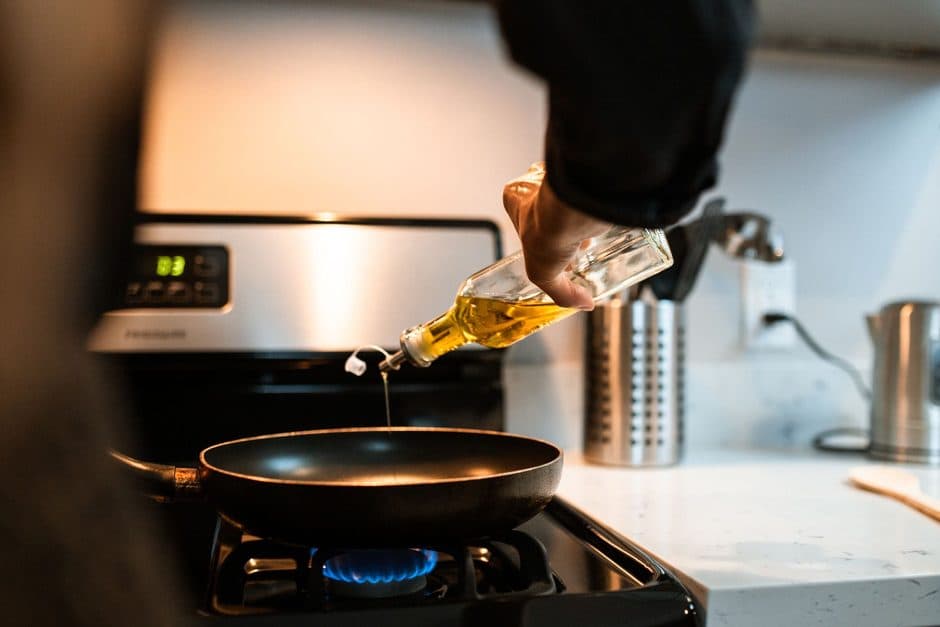
Use a refined, neutral, high-smoke-point oil - refined avocado, grapeseed, or a plain vegetable oil - and add it after the pan is hot, not before. Which oil you pick matters. When you add it matters more.
Disclosure: Ply & Pan earns a commission on qualifying purchases made through links on this page. We take no free product and no sponsorship, and every price here is read from Amazon on the date shown. How we are funded.
Quick picks
The short answer. Tap any row for the full write-up.
| # | Product | Best for | Score | Price |
|---|---|---|---|---|
| 1 | 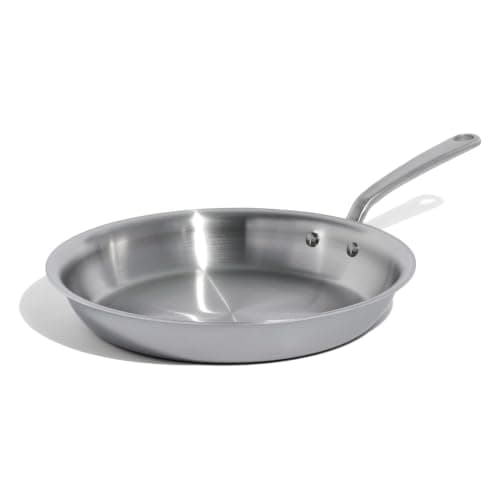 Made In Stainless Clad Frying PanA published 800F rating means the pan is never the limiting factor - the oil is. That is the right way round, and it is 200F more headroom than All-Clad gives you. | Searing hard, where the pan goes hotter than most oils like | 8.8 | $129.99 · View on Amazon $149.00 · 13% off |
| 2 | 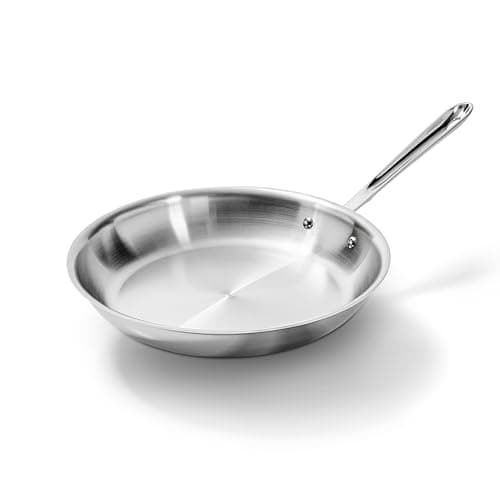 All-Clad D3 Stainless Fry PanThree plies respond faster than any five-ply pan here, which is what you want when butter is in the pan and the margin between nutty and burnt is about fifteen seconds. | Butter sauces and anything where you want the pan to stop on command | 8.8 | |
| 3 | 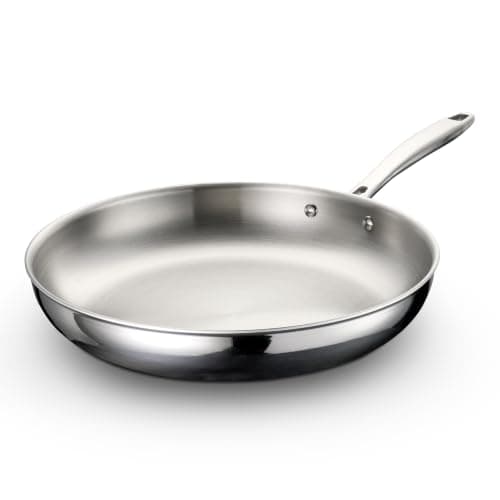 Tramontina Signature Tri-Ply Clad Fry PanDishwasher safe and NSF-certified, which is exactly what you want on the pan that does the oily jobs. The 500F ceiling is below the pans above but still above any cooking oil. | Frying, where you want to put the pan in the dishwasher afterward | 8.4 |
#ad Buy links are affiliate links. Prices come straight from Amazon, are stamped with the date they were read, and disappear rather than go stale if the feed stops. How we are funded.
The short answer
For general cooking and all searing, use a refined neutral oil with a high smoke point: refined avocado oil, grapeseed oil, refined sunflower or a plain vegetable or canola oil. Add it to a pan that is already preheated, swirl to coat, and wait for it to shimmer before food goes in. Use butter and extra-virgin olive oil late in the cook for flavour, not at the start for heat.
Why refined matters more than the type
The number that decides whether an oil belongs in a hot steel pan is its smoke point — the temperature at which it starts to break down and send up acrid smoke. Past that point the oil tastes bitter, and the breakdown products polymerise into the sticky brown varnish that welds food to the pan.
Refining is the single biggest lever on smoke point. The particles that give unrefined oils their flavour and colour — free fatty acids, plant solids, water — are also what starts smoking first. Refined avocado oil has one of the highest smoke points available to a home cook; extra-virgin olive oil, which is the same fat unrefined and unfiltered, is much lower. Same plant, different oil, completely different behaviour in a pan at searing temperature.
So the practical rule is not "olive oil bad". It is: refined for heat, unrefined for flavour, and never ask an unrefined oil to carry the heat.
The oils that work
Refined avocado oil. The highest smoke point in common use and almost flavourless. The expensive option, and the one to use if you sear steak regularly.
Grapeseed oil. High, neutral, and widely available. The default recommendation for stainless.
Plain vegetable, canola or refined sunflower oil. High enough for anything a home hob does, cheap, and genuinely fine. Do not let the premium oils talk you out of these.
Refined peanut oil. High smoke point and a faint sweetness that suits stir-frying.
Ghee or clarified butter. Butter with the water and milk solids removed, which is precisely what was burning. It tolerates far more heat than butter and tastes like butter, which makes it the best answer if you want butter flavour at searing temperature.
The oils that burn
Butter, on its own, at the start. The milk solids in butter brown and then burn well below searing temperature. Butter is for basting at the end, when the heat is down and the fond is already built.
Extra-virgin olive oil, for searing. Excellent for gentle sautéing, dressing, and finishing. Not for a pan hot enough to brown a steak.
Unrefined and cold-pressed anything. Flaxseed, walnut, toasted sesame, unrefined coconut. All of these are flavour oils. Add toasted sesame oil off the heat at the end of a stir-fry, not at the start.
Cooking spray. Aerosol sprays contain propellants and lecithin that polymerise into a gummy residue which is genuinely hard to remove, and several manufacturers advise against them. We cover it specifically in can you use cooking spray on stainless steel.
When to add the oil — the part people get wrong
Oil goes into a hot pan, not a cold one. This is the single most common mistake with stainless and it causes most sticking.
The reason is time at temperature. Oil in a pan heating from cold spends several minutes climbing slowly through its own temperature range, and in that window it starts to break down and polymerise onto the steel. By the time the pan is hot enough to cook, the oil in it is already degraded and partly varnished to the surface, and food will grip that varnish.
The sequence that works:
1. Heat the dry pan over medium heat. Two to four minutes for most pans.
2. Test it with water. Flick in a few drops. If they sizzle and evaporate, the pan is not ready. If they form a ball that skates across the surface, it is. That is the Leidenfrost effect, and it is the most reliable readiness test there is — we explain it in the stainless steel water test.
3. Add the oil and swirl. Enough to coat, no more.
4. Wait for it to shimmer, then add the food. A few seconds. If it smokes hard, the pan is too hot — take it off the heat for ten seconds rather than carrying on.
5. Leave the food alone. It will grip for the first thirty to ninety seconds and then release itself when a crust forms. Moving it early is the other half of sticking: why food sticks to stainless steel.
How much oil
Enough for a continuous thin film across the base, which in a 10-inch pan is roughly a tablespoon. Too little leaves dry patches where food welds on. Too much shallow-fries rather than sears, and steams the underside of the food in its own moisture.
A useful tell: tip the pan. If the oil runs as one sheet, you have enough. If it breaks into islands, add a little more.
Does oil season a stainless pan?
Not durably, no. You can heat oil to its smoke point in a steel pan and create a thin slick film that behaves a bit like seasoning for one cook, but it comes off with detergent or anything acidic. Stainless is not porous the way cast iron is and will not hold a polymerised layer. The full explanation is in how to season a stainless steel pan.
What that means practically is that there is no reward for being precious about which oil touches the pan. You are not building anything. Each cook starts from bare steel, which is why the preheat is the technique that matters rather than any ritual.
Cleaning up oil that has gone too far
Oil taken past its smoke point leaves a brown or amber varnish that detergent will not shift, because it is no longer oil — it has cross-linked into something closer to a plastic. Soaking helps a little. What actually removes it is an oxalic-acid cleanser like Bar Keepers Friend, which dissolves the residue rather than grinding it off.
The staining that is not residue — amber, blue or rainbow patches — is heat tint in the steel itself and is harmless. Both are covered in stainless steel pan discoloration and how to clean a burnt stainless steel pan.
The bottom line
Refined and neutral for heat: avocado, grapeseed, vegetable, canola, refined peanut, or ghee if you want butter flavour. Butter and extra-virgin olive oil go in late or stay off the heat. Skip aerosol sprays. And remember the order — hot pan, then oil, then food — because the oil you choose is a smaller factor than the two minutes you spend heating the pan before it goes in.
The picks in full
1. Best pan for high-heat oil work
Made In Stainless Clad Frying Pan
Made In
A published 800F rating means the pan is never the limiting factor - the oil is. That is the right way round, and it is 200F more headroom than All-Clad gives you.
- Heat headroom
- 9.8
- Evenness
- 8.8
- Release
- 8.4
- Value
- 8.4
- Five-ply construction, 2.7mm thick (Made In published spec)
- Heat safe to 800F / 430C, 200F above All-Clad's rating
- Gas, electric and induction; handwash preferred
- Lifetime warranty on stainless; the frying pans are made in Italy
- Flared rim pours cleanly, which sounds trivial until you deglaze
What it gets right
- The 800F rating puts broiler work and hard oven finishes in spec rather than in hope
- Longer, flatter handle is more comfortable than All-Clad's stick handle
- Direct-to-consumer pricing undercuts All-Clad at an equivalent ply count
Who should skip it
- No decades-long warranty service record yet; the company is young
- Five plies make it slower to respond than a tri-ply of the same size
- Warranty excludes warping from thermal shock, same as everyone else's
When you sear properly, the pan goes well past the smoke point of most cooking oils — that is why the oil smokes. The useful thing about a pan rated to 800F is that it removes itself from the equation: you can run it as hot as the food needs and the only thing you have to manage is which oil is in it.
Five plies at a published 2.7mm also means the pan holds its temperature when cold food lands in it, which is the other half of not sticking. A pan that drops sixty degrees the moment a steak hits it will stick no matter which oil you used.
Against it: handwash preferred, which is a real consideration on the pan you sear in — seared-on oil residue is the hardest thing to clean. Five plies respond slowly off the heat. And the lifetime warranty comes from a young company, so it is a stated intention rather than a long record.
2. Best for oil you need to control
All-Clad D3 Stainless Fry Pan
All-Clad
Three plies respond faster than any five-ply pan here, which is what you want when butter is in the pan and the margin between nutty and burnt is about fifteen seconds.
- Heat headroom
- 8.6
- Evenness
- 9.0
- Release
- 8.8
- Value
- 7.6
- Tri-ply: stainless interior, aluminum core, magnetic stainless exterior
- Oven and broiler safe to 600F (All-Clad published spec)
- Induction compatible on any stovetop
- Handwash only, per the manufacturer
- Limited lifetime warranty; bonded, engineered and assembled in Canonsburg, PA
What it gets right
- Survived America's Test Kitchen's concrete-strike abuse testing with barely a ding
- Rivets and handle join are the sturdiest in the category
- Decades of parts and service history standing behind the warranty
Who should skip it
- Costs roughly three times a Tramontina that cooks nearly as evenly
- The stick handle is narrow and bites into your palm on a loaded 12-inch pan
- Handwash only, which is a real constraint if you hate washing up
Oil management is mostly temperature management, and a tri-ply pan is the more controllable tool. Pull it off the heat and it stops cooking sooner than a five-ply pan does, which is the difference between beurre noisette and a pan of burnt milk solids. If you cook with butter at all, responsiveness is worth more than thermal mass.
600F and broiler safe covers any oil-based cooking a home kitchen does, and the build is the sturdiest in the category — it came through America's Test Kitchen's concrete-strike abuse testing with barely a ding.
Against it: handwash only, which is the single worst care instruction to pair with a frying pan. It costs roughly three times a Tramontina that cooks nearly as evenly. And the narrow stick handle bites into your palm on a loaded 12-inch.
#ad Price as of October 17, 2026. How we are funded
3. Best value for a pan you will cook oily food in
Tramontina Signature Tri-Ply Clad Fry Pan
Tramontina
Dishwasher safe and NSF-certified, which is exactly what you want on the pan that does the oily jobs. The 500F ceiling is below the pans above but still above any cooking oil.
- Heat headroom
- 7.0
- Evenness
- 8.4
- Release
- 8.2
- Value
- 9.6
- Tri-ply: aluminum core between two layers of 18/10 stainless
- Oven safe to 500F (Tramontina published spec)
- Dishwasher safe; works on gas, electric, ceramic glass and induction
- NSF-certified for commercial kitchens
- Mirror-polished exterior, riveted stainless handle
What it gets right
- Cooks close enough to All-Clad that most people could not pick them apart blind
- Dishwasher safe and NSF-certified, neither of which All-Clad's tri-ply is
- Cheap enough that replacing it in fifteen years still costs less than one D3
Who should skip it
- The 500F oven rating is 100F below All-Clad and 300F below Made In
- Handle is less comfortable and the polished finish scuffs faster
- Lighter gauge base is more prone to warping under thermal shock
The pan you fry in is the pan you least want to handwash, and this is the one that does not ask you to. Fully clad tri-ply with an 18/10 interior, dishwasher safe, and NSF-certified for commercial kitchens — a construction and cleanability standard, which is relevant to a pan that accumulates oil residue.
500F sounds low next to the pans above, and for oil work it is not a real constraint: no cooking oil you would use in a home kitchen is still usable at 500F, so the oil fails long before the pan does.
Against it: the 500F ceiling does rule out broiler finishing. The polished exterior scuffs faster than a brushed one. And the lighter gauge base is more prone to warping under thermal shock, so do not run it under a cold tap straight off a sear.
#ad Price as of October 17, 2026. How we are funded
Frequently asked questions
What is the best oil for a stainless steel pan?
A refined, neutral, high-smoke-point oil: refined avocado oil, grapeseed, or a plain vegetable or canola oil. Refined peanut oil works well for stir-frying, and ghee or clarified butter gives you butter flavour at searing temperature because the water and milk solids that burn have been removed.
Should you put oil in a stainless steel pan before or after heating it?
After. Heat the dry pan first, test it with a few drops of water - they should ball up and skate rather than sizzle - then add the oil, swirl, wait a few seconds for it to shimmer and add the food. Oil that heats slowly from cold alongside the pan starts breaking down and varnishing onto the steel before the pan is ready to cook.
Can you use olive oil in a stainless steel pan?
Yes for gentle sauteing, finishing and dressing; no for searing. Extra-virgin olive oil is unrefined, so it smokes and turns bitter well below searing temperature. Refined or light olive oil has a higher smoke point and is a reasonable general-purpose choice, but refined avocado or grapeseed oil goes hotter.
Why does my oil burn in a stainless steel pan?
Usually because the pan went past the oil's smoke point - either the burner was too high or you were using an unrefined oil like extra-virgin olive oil or butter at searing heat. Switch to a refined neutral oil, and if it smokes hard the moment it hits the pan, take the pan off the heat for ten seconds rather than carrying on.
How much oil should you use in a stainless steel pan?
Enough for a continuous thin film - roughly a tablespoon in a 10-inch pan. Tip the pan: if the oil runs as one sheet you have enough, and if it breaks into islands add a little more. Dry patches are where food welds on; too much oil shallow-fries and steams the food instead of searing it.
Can you use cooking spray on stainless steel?
It is best avoided. Aerosol sprays contain propellants and lecithin that polymerise into a gummy residue which detergent will not remove, and several cookware manufacturers advise against them. Pour oil from a bottle, or use an oil mister filled with plain oil if you want a fine coat.
Sources
- All-Clad — Care and use instructions for stainless cookware
- Encyclopaedia Britannica — Leidenfrost effect
- America's Test Kitchen — The Best Stainless-Steel Skillets
- Made In — Stainless Clad Frying Pan, published specification
- Tramontina — Signature Tri-Ply Clad Stainless Steel Fry Pan, published specification