Care & Technique
What to Cook in a Stainless Steel Pan
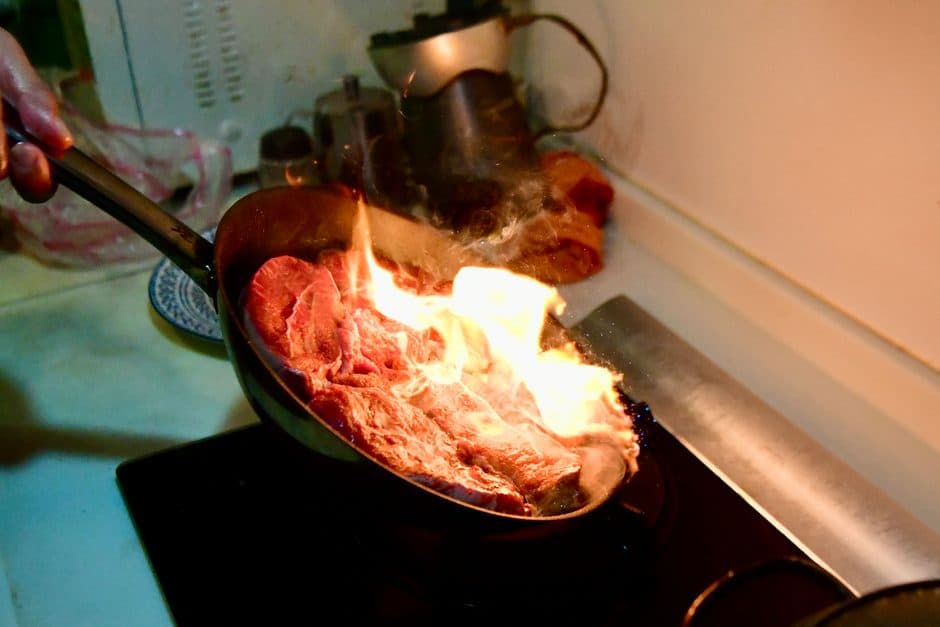
Stainless is the best pan in the kitchen for anything you want to brown and then turn into a sauce, and the worst for two or three specific things. Knowing which is which is most of what makes people like cooking on steel.
Disclosure: Ply & Pan earns a commission on qualifying purchases made through links on this page. We take no free product and no sponsorship, and every price here is read from Amazon on the date shown. How we are funded.
Quick picks
The short answer. Tap any row for the full write-up.
| # | Product | Best for | Score | Price |
|---|---|---|---|---|
| 1 | 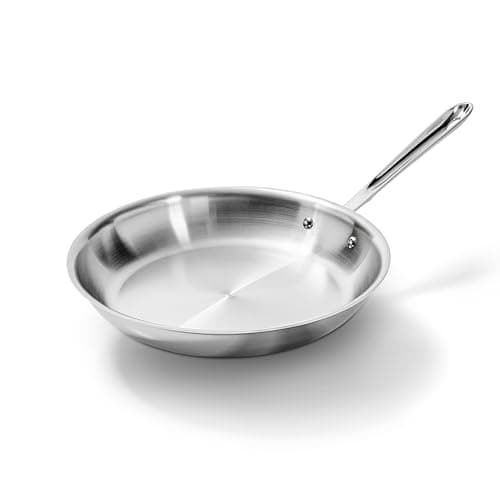 All-Clad D3 Stainless Fry PanTri-ply responds fast enough to stop a pan sauce at the right moment, and 600F plus broiler safe covers anything that starts on the hob and finishes in the oven. | The browning-then-deglazing jobs steel exists for | 8.8 | |
| 2 | 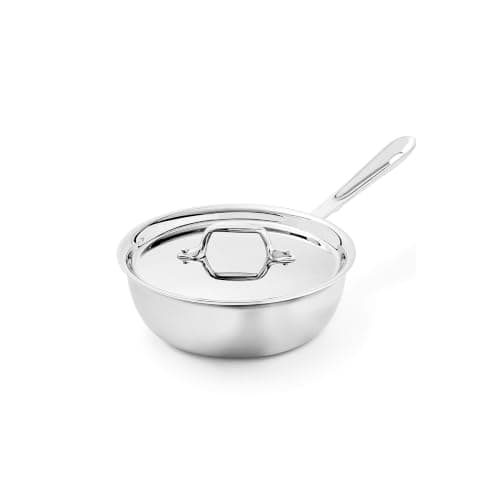 All-Clad D3 Stainless SaucierRounded walls leave no corner for a roux or a risotto to seize in, which is the one shortcoming of a straight-walled pan for everything you stir. | Risotto, custard, polenta, any sauce you whisk | 8.4 | |
| 3 | 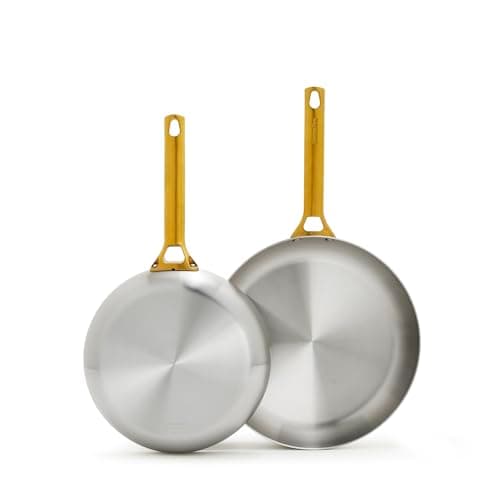 GreenPan Reserve Tri-Ply Stainless 10- and 12-Inch Frypan SetA 10-inch and a 12-inch together, both 600F and broiler safe, both dishwasher safe and metal-utensil safe - which is what you want on the pans doing the everyday work. | Covering both the small and the large jobs in one purchase | 8.4 |
#ad Buy links are affiliate links. Prices come straight from Amazon, are stamped with the date they were read, and disappear rather than go stale if the feed stops. How we are funded.
What stainless is the best pan for
Searing meat. Steak, chops, chicken thighs, duck breast. Steel browns hard, takes high heat, and builds the fond that becomes the sauce. Our roundup is best skillet for searing steak.
Anything you want to deglaze. This is the headline argument. Brown something, pour in wine or stock, scrape up the fond, and you have a sauce that a nonstick pan could never have produced because nothing stuck to it in the first place.
Browning onions, mushrooms and vegetables. Mushrooms in particular: they release water, and a steel pan at proper heat drives it off and browns them rather than stewing them.
Pan sauces, gravies and reductions. Steel is unreactive enough for wine, stock and tomato, and conducts evenly enough to reduce without scorching.
Shallow frying and sautéing. High heat, metal utensils, no coating to damage.
Anything that starts on the hob and finishes in the oven. A frittata, a chicken thigh browned then roasted, a cobbler. Check the pan's published ceiling first: oven-safe temperatures by brand.
Boiling, blanching and reducing. Unglamorous, and steel is the right tool: inert, scratch-tolerant, and you can put a metal whisk in it.
What steel does badly until you learn one thing
Two foods account for nearly all the frustration people have with stainless, and neither is actually a material problem. Both are solved by the same technique.
Eggs. Scrambled, fried or omelette, eggs will weld to a steel pan that was not properly preheated and release cleanly from one that was. This is the Leidenfrost threshold, not luck. The method is in how to cook eggs in stainless steel, and if eggs are your main job there is a dedicated roundup at best stainless steel skillet for eggs.
Delicate fish skin. Thin, soft-skinned fillets want a very well preheated pan, enough oil, and to be left completely alone for the first ninety seconds. Done right, the skin crisps and lifts. Done impatiently, it stays in the pan. Our picks are in best stainless steel skillet for fish.
The underlying mechanism for both is the same, and it is worth understanding once rather than memorising recipes: why food sticks to stainless steel.
What not to cook in a stainless steel pan
Pancakes and crêpes. Not because they stick — they will behave in a well-heated pan — but because they need a long run at steady moderate heat with repeated batches, and the margin for error is unforgiving. This is the one job where a nonstick or a well-seasoned carbon steel pan is genuinely the better tool.
Very sticky sugar work. Caramel and candy are fine chemically, but a thin steel saucepan scorches sugar in the ring where the cladding ends if it is disc-bottomed, and cleanup is tedious. A heavy fully clad pan handles it; a cheap one does not.
Long acidic simmers, if you have a nickel sensitivity. Hours of tomato or wine in a steel pan will leach a very small amount of nickel and chromium — irrelevant for almost everybody, worth knowing if you react. The evidence is summarised in is stainless steel cookware safe.
Deep frying, in a thin pan. Possible but unwise in anything lightweight: a litre of hot oil in a light pan with a long stick handle is a tipping hazard. Use a heavy pot with two handles.
Storing food. Not a safety issue, a practical one — salty and acidic food left sitting in a steel pan causes pitting, small permanent dots of corrosion. Decant leftovers. See does stainless steel cookware rust.
Two things people avoid unnecessarily
Tomato sauce. You will read that acidic food ruins stainless. It does not. Clad stainless is specified for exactly this and the discoloration a long tomato simmer can leave is cosmetic. Cast iron and unlined copper are the materials with a genuine acid problem.
Metal utensils. Entirely fine, and one of the main reasons to own steel. A metal spatula will scratch the finish over years and scratches have no effect on performance: can you use metal utensils on stainless steel.
Which pan for which job
| Job | Shape | Why |
|---|---|---|
| Searing, browning, frying | Skillet, 10 or 12 inch | Sloped sides let moisture escape and a spatula get under |
| Braising, shallow stews | Saute pan | Straight sides hold more liquid for the same base area |
| Risotto, custard, gravy | Saucier | No corner for a whisk to miss |
| Rice, reductions, boiling | Saucepan | Narrow mouth loses less to evaporation |
| Stock, pasta, big batches | Stock pot | Depth and volume; cladding matters less |
If you are deciding what to buy rather than what to cook, the shortest version is in the two-pan kitchen: a 12-inch skillet and a 3-quart saucepan cover most of this list, and a saucier is the best third purchase.
The bottom line
Cook anything in steel that you want to brown, deglaze, reduce or finish in the oven — which is most savoury cooking. Learn the preheat once and eggs and fish stop being exceptions. Use something else for pancakes, keep deep frying in a heavy two-handled pot, and do not store salty leftovers in the pan. Everything else people tell you to avoid in stainless, including tomatoes and metal spatulas, is fine.
The picks in full
1. Best for searing and pan sauces
All-Clad D3 Stainless Fry Pan
All-Clad
Tri-ply responds fast enough to stop a pan sauce at the right moment, and 600F plus broiler safe covers anything that starts on the hob and finishes in the oven.
- Searing
- 9.4
- Pan sauces
- 9.6
- Versatility
- 9.0
- Value
- 7.6
- Tri-ply: stainless interior, aluminum core, magnetic stainless exterior
- Oven and broiler safe to 600F (All-Clad published spec)
- Induction compatible on any stovetop
- Handwash only, per the manufacturer
- Limited lifetime warranty; bonded, engineered and assembled in Canonsburg, PA
What it gets right
- Survived America's Test Kitchen's concrete-strike abuse testing with barely a ding
- Rivets and handle join are the sturdiest in the category
- Decades of parts and service history standing behind the warranty
Who should skip it
- Costs roughly three times a Tramontina that cooks nearly as evenly
- The stick handle is narrow and bites into your palm on a loaded 12-inch pan
- Handwash only, which is a real constraint if you hate washing up
The single thing a stainless pan does better than any other material is build fond — the browned layer that sticks to the base when you sear meat — and then give it back to you when you deglaze. Nonstick cannot do it because nothing sticks; cast iron does it but holds so much heat that it is hard to stop. Tri-ply steel browns hard and then cools when you lift it, which is exactly the control a pan sauce needs.
600F and broiler safe means the obvious extension of that — sear on the hob, finish in the oven, make the sauce in the same pan — is all inside the published rating. The build is the best documented in the category.
Against it: handwash only, on the pan you will use for the messiest jobs. Roughly three times a Tramontina that cooks nearly as evenly. And the narrow stick handle bites into your palm on a loaded 12-inch.
#ad Price as of October 17, 2026. How we are funded
2. Best for the stirred, thickening jobs
All-Clad D3 Stainless Saucier
All-Clad
Rounded walls leave no corner for a roux or a risotto to seize in, which is the one shortcoming of a straight-walled pan for everything you stir.
- Searing
- 6.0
- Pan sauces
- 9.8
- Versatility
- 8.4
- Value
- 6.6
- Tri-ply bonded: stainless interior, aluminum core, stainless exterior
- Oven and broiler safe to 600F (All-Clad published spec)
- Induction compatible; handwash only
- Two quarts, supplied with a lid
- Limited lifetime warranty; bonded and assembled in Canonsburg, PA
What it gets right
- Rounded walls leave no corner for a roux or a risotto to seize in
- Three plies answer the burner faster than any five-ply saucier here
- The only All-Clad saucier you can currently buy, and it is US-made
Who should skip it
- Two quarts is tight if you reduce stock or cook for more than four
- Handwash only, on a pan sauces will have you using constantly
- Costs more than a five-ply Misen or Made In saucier of greater capacity
Half of what goes wrong in a steel pan happens in the corner where the base meets the wall — the spot a whisk cannot reach and a flour-based sauce catches in. A saucier has no such corner. For risotto, custard, polenta, gravy, béchamel and anything you stir continuously, it is a materially better pan than a saucepan of the same capacity.
Two quarts with a lid, 600F and broiler safe, handwash only, bonded in Canonsburg. Three plies answer the burner faster than any five-ply saucier, which is what you want when a sauce is close to breaking.
Against it: two quarts is tight if you reduce stock or cook for more than four. Handwash only, on a pan sauces will have you using constantly. And it costs more than a five-ply Misen or Made In saucier of greater capacity. The shape argument is in saucier vs saucepan.
#ad Price as of October 17, 2026. How we are funded
3. Best value pair for everyday steel cooking
GreenPan Reserve Tri-Ply Stainless 10- and 12-Inch Frypan Set
GreenPan
A 10-inch and a 12-inch together, both 600F and broiler safe, both dishwasher safe and metal-utensil safe - which is what you want on the pans doing the everyday work.
- Searing
- 8.6
- Pan sauces
- 8.4
- Versatility
- 9.0
- Value
- 9.2
- 10-inch and 12-inch frypans; tri-ply clad, stainless over an aluminum core
- Oven and broiler safe to 600F; glass lids rated to 425F (GreenPan published spec)
- Uncoated cooking surface, rated safe for metal utensils
- Dishwasher safe; works on every cooktop including induction
- Limited lifetime warranty against manufacturing defects
What it gets right
- 600F and broiler safe matches All-Clad D3 and beats every value clad on this site
- Dishwasher safe and metal-utensil safe, so nothing about it needs babying
- The 10-and-12 pair covers nearly all skillet work in one purchase
Who should skip it
- GreenPan publishes neither a steel grade nor a plate thickness for the line
- The glass lids stop at 425F, well below the pans they sit on
- The line is recent, so there is no decade-long warranty-service record behind it
Most of what this page recommends needs two sizes, not one. The 10-inch handles two portions, eggs and anything attentive; the 12-inch browns dinner for four without crowding, which is the difference between searing and steaming. Buying the pair at once is considerably cheaper than buying them separately from a premium brand.
The specification is right for everyday use: 600F and broiler safe matches All-Clad D3, the cooking surfaces are uncoated and rated safe for metal utensils, and both pans are dishwasher safe. On the pans you use daily, dishwasher-safe is worth more than ply count.
Against it: tri-ply with no published steel grade or plate thickness, so gauge is unverifiable. The glass lids are rated 425F, well below the pans. And the line is recent, so there is no long warranty-service record behind it.
#ad Price as of October 17, 2026. How we are funded
Frequently asked questions
What is a stainless steel pan best for?
Anything you want to brown and then turn into a sauce. Searing meat, browning mushrooms and onions, shallow frying, reducing, and any dish that starts on the hob and finishes in the oven. Steel's advantage over nonstick is precisely that food sticks a little - the fond it leaves is what a pan sauce is made from.
What should you not cook in a stainless steel pan?
Pancakes and crepes are genuinely better in nonstick or seasoned carbon steel. Avoid deep frying in a thin pan with a long handle, and do not store salty or acidic leftovers in the pan, because sitting salt causes pitting. Tomato sauce and metal utensils, which people often avoid, are both fine.
Can you cook eggs in a stainless steel pan?
Yes, and they release cleanly if the pan is properly preheated. Heat the dry pan on medium, test it with water - drops should ball up and skate across the surface rather than sizzle - then add oil or butter and the eggs. Eggs stick to an underheated steel pan almost every time, which is a technique problem rather than a pan problem.
Can you cook tomato sauce in stainless steel?
Yes. Clad stainless is specified for acidic food and a long tomato simmer will not harm it; any discoloration left behind is cosmetic and comes off with an oxalic-acid cleanser. The materials with a real acid problem are bare cast iron and unlined copper.
Can you use a stainless steel pan for deep frying?
You can, but use a heavy pot with two handles rather than a skillet. A litre of hot oil in a lightweight pan with a single long handle is easy to tip, which is the actual risk - not anything about the material. A fully clad stock pot or a deep saute pan with a helper handle is the right choice.
Sources
- All-Clad — D3 Stainless 12-inch Fry Pan, published specification
- All-Clad — Care and use instructions for stainless cookware
- Encyclopaedia Britannica — Leidenfrost effect
- America's Test Kitchen — The Best Stainless-Steel Skillets
- US FDA — Food contact substances and cookware safety
- National Institutes of Health — Nickel fact sheet for health professionals