Care & Technique
Does Stainless Steel Cookware Rust?
Stainless resists rust because of a layer five nanometres thick. Three kitchen habits strip it, and all three are avoidable.
Disclosure: Ply & Pan earns a commission on qualifying purchases made through links on this page. We take no free product and no sponsorship, and we never print a price. How we are funded.

Quick picks
The short answer. Tap any row for the full write-up.
| # | Product | Best for | Score | Price |
|---|---|---|---|---|
| 1 | 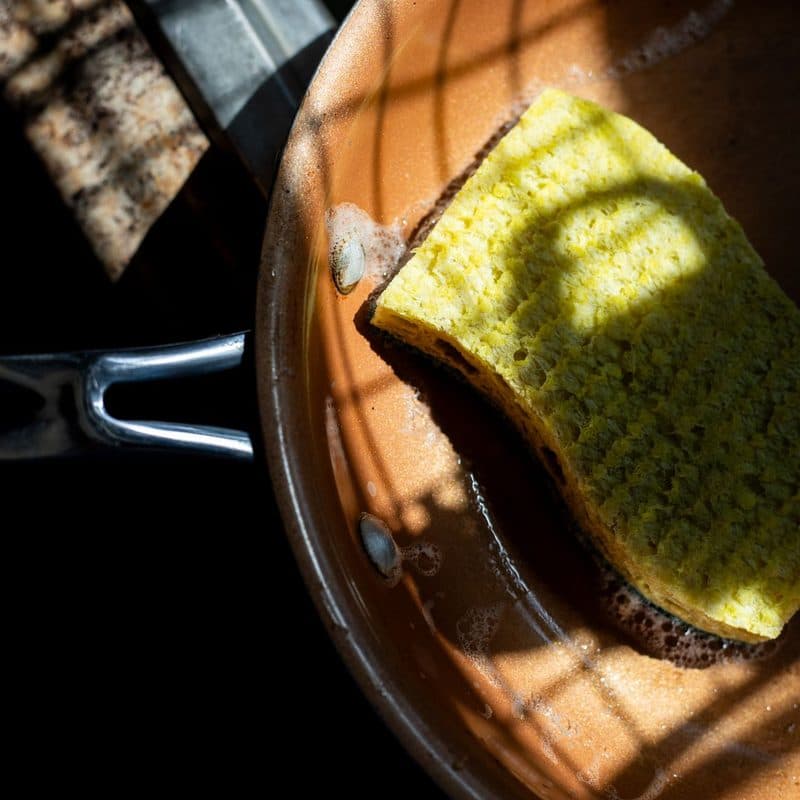 Bar Keepers Friend Cookware CleanserOxalic acid dissolves iron staining and heat tint instead of abrading it off. Rinse thoroughly, because residue left on steel pits it. | Removing orange spots and rainbow tint without grinding metal away | 9.2 | |
| 2 | 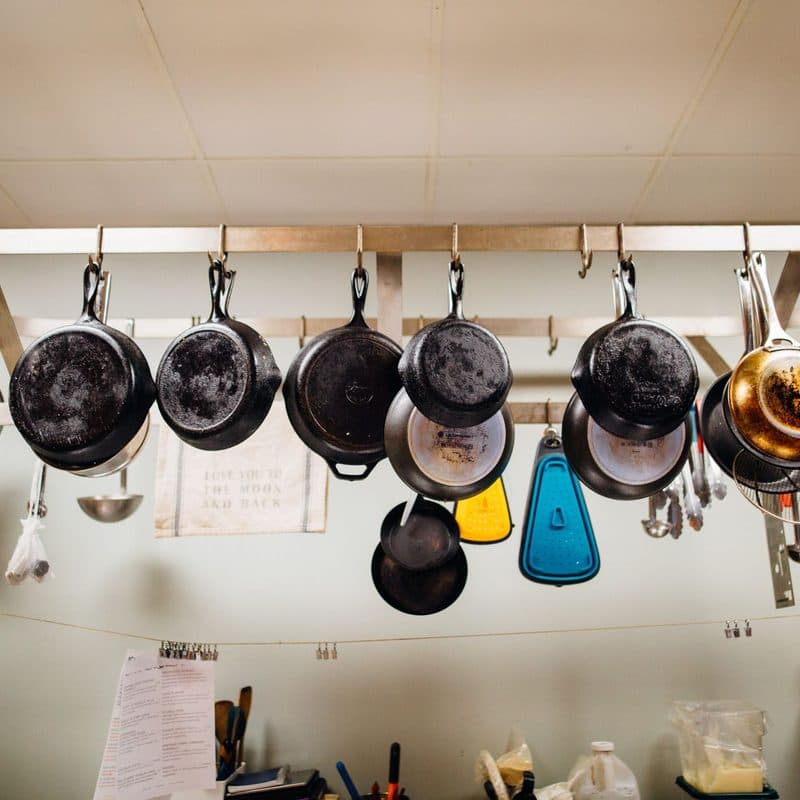 Heritage Steel Titanium Series Fry Pan316Ti adds molybdenum and titanium to the steel, and molybdenum is the element that stabilises the passive layer against chloride. | A cooking surface that resists pitting from salt and acid | 9.0 | |
| 3 | 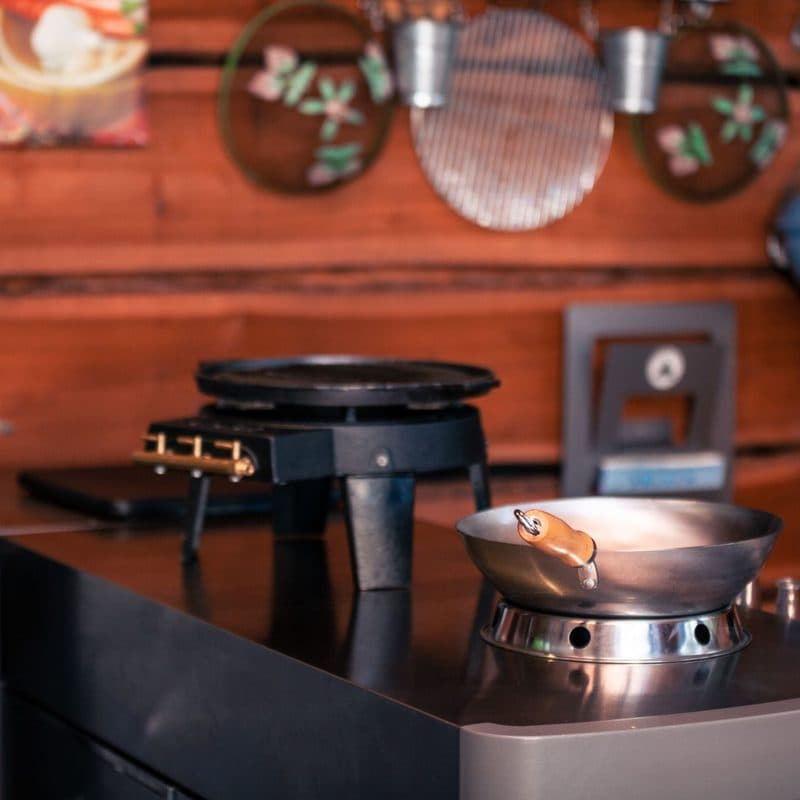 All-Clad D3 Stainless Fry PanHandwash only and dry immediately, and All-Clad says so in print. The instructions are the feature here. | A brand that publishes exactly how to avoid pitting | 9.1 |
#ad Buy links are affiliate links. We never print a price — prices change weekly and a printed one is wrong within a month, so every link goes to the live Amazon listing. How we are funded.
The short answer
Yes, stainless steel cookware can corrode, but it almost never rusts the way plain steel does. Stainless resists rust because chromium in the alloy forms a chromium-oxide passive film only a few nanometres thick, and that film reforms by itself whenever it is scratched in the presence of oxygen. What you usually see on a stainless pan is one of three other things: free iron transferred onto the surface, chloride pitting from salt, or harmless staining mistaken for corrosion.
Why stainless resists rust at all
A stainless alloy contains enough chromium — at least 10.5% — that chromium atoms at the surface react with oxygen and form a thin, inert oxide film. That film is the entire mechanism. It is self-repairing, which is why a scratch in a stainless pan is cosmetic rather than the start of a failure, and it is why metal utensils are fine in steel and fatal in a coated pan.
The film has one serious enemy: chloride. Chloride ions break the passive film at discrete points, and once bare metal is exposed the chemistry inside that tiny pit prevents the film reforming, so attack concentrates in one spot instead of spreading. That is pitting corrosion, and in a kitchen the chloride source is salt.
Telling corrosion from staining
| What you see | What it is | Permanent? | Fix |
|---|---|---|---|
| Orange or brown specks | Free iron on the surface, rusting where it sits | No | Oxalic-acid cleanser, then rinse and dry |
| Small dark pinprick dots | Chloride pitting from salt | Yes | Nothing. Prevent it instead |
| Rainbow sheen | Heat tint, an inert oxide layer | No | Oxalic-acid cleanser |
| White chalky patches | Calcium from hard water | No | Vinegar |
| Cloudy grey film | Detergent or mineral residue | No | Wash, rinse, dry immediately |
Only one row of that table is permanent, and it is the one caused by a habit rather than by the pan. The cosmetic rows are covered in full in pan discoloration explained.
The three habits that cause it
1. Salting cold, still water. Salt dropped into water that is not moving sinks and sits on the base in a concentrated layer before it dissolves. That is a chloride concentration against bare metal, which is exactly the condition pitting needs. All-Clad's own instruction is to bring liquids to a boil, or wait until food starts to cook, before adding salt — and it says the purpose is to avoid small white dots or pits forming in the pan.
2. Steel wool, scouring pads and chlorine bleach. Steel wool leaves iron particles embedded on the surface, and those particles rust. Bleach supplies the chloride that destroys the passive film directly. All-Clad specifies a nonabrasive, non-chlorine cleanser and excludes damage from scouring pads, steel wool, abrasive cleaners and bleach from its warranty by name. In abrasives engineering the same rule holds: products intended for stainless are required to be effectively free of chloride, iron and sulphur, because any of the three prevents the passive layer reforming.
3. Leaving food or water standing in the pan. Acidic or salty food left overnight, or a wet pan air-drying with mineral-rich tap water pooled in it, both give chloride time to work. All-Clad publishes the countermeasure as rinse with warm water and dry immediately. More on the machine-washing question in is stainless dishwasher safe.
What to look for when you are buying
The alloy of the cooking surface, not the exterior. 18/10 is the normal answer and it is fine. 316Ti is better against salt. 18/0 is the magnetic exterior layer and is the least corrosion-resistant of the three, which is why it faces the hob rather than the food — 18/10 vs 18/8 vs 18/0.
Published care instructions. A brand that tells you when to add salt is a brand that has thought about the failure mode. Several do not publish anything at all.
No chlorine in the cleaner you buy alongside it. The cleaners we would actually use are in best stainless cookware cleaners.
Non-toxic claims do not change this. An uncoated pan is uncoated whatever the listing says; corrosion resistance is a function of the alloy. The picks there are in best non-toxic stainless cookware.
Recovering a pan that has already gone
- Wash normally and dry it, so you can see what you are actually looking at under the residue.
- Work an oxalic-acid cleanser over the marks with a soft pad, not steel wool. Orange specks and rainbow tint will lift.
- Rinse thoroughly. Residue left on steel can itself pit it.
- Dry immediately rather than letting it air-dry.
- Whatever remains as small dark dots is pitting, and it is permanent. Pitted steel is still stainless steel and still safe to cook in — it looks worse than it performs.
What this means for longevity
Corrosion is not what ends a clad stainless pan. Geometry is: a warped base from thermal shock, or rivets working loose after many years. A pitted interior is ugly and permanent, and it will outlive a nonstick coating several times over.
It is worth knowing that pitting also sits outside warranty coverage. All-Clad names misuse including overheating and pitting among its exclusions, so a pitted pan is not a claim — which is another reason the thirty-second habit change is the whole answer. The full exclusion lists are in cookware lifetime warranties compared, and the failure that does retire pans is covered in warped stainless steel pans.
The picks in full
1. Best fix for surface rust and staining
Bar Keepers Friend Cookware Cleanser
Bar Keepers Friend
Oxalic acid dissolves iron staining and heat tint instead of abrading it off. Rinse thoroughly, because residue left on steel pits it.
- Effectiveness
- 9.4
- Gentleness
- 8.4
- Value
- 9.6
- Availability
- 9.8
- Oxalic acid based: dissolves heat tint rather than grinding it off
- Powder and liquid formulations; the liquid is gentler on polished finishes
- Safe on stainless, not on anodized aluminum or nonstick coatings
- Rinse thoroughly and never leave it sitting on the surface
- Sold nearly everywhere, which matters more than it sounds
What it gets right
- The only product that reliably removes rainbow heat tint
- Cheap enough that there is no reason to tolerate a stained pan
- Restores the surface rather than polishing metal away
Who should skip it
- The abrasive powder will dull a mirror-polished exterior over time
- Does nothing for warping, which is the failure that actually matters
- Needs a thorough rinse; residue left on steel can pit it
Most orange marks on a stainless pan are not the pan rusting. They are free iron sitting on the surface — transferred from a steel wool pad, a cast iron pan stored on top, or a chipped sink — and that iron rusts where it lies. An oxalic-acid cleanser dissolves it and the steel underneath is untouched.
All-Clad names this class of product in its own care instructions: clean with a nonabrasive, non-chlorine cleanser, specifying its own cookware cleaner, Bar Keepers Friend or Bon Ami. Note "non-chlorine" — bleach is the one household cleaner that attacks stainless directly, because chloride is precisely what breaks the passive layer.
Two cautions from the label. The powder will dull a mirror-polished exterior over time, so use the liquid on finishes you care about. And rinse properly: cleanser residue left sitting on steel can pit it, which is the problem you were trying to fix.
2. Best alloy if corrosion worries you
Heritage Steel Titanium Series Fry Pan
Heritage Steel
316Ti adds molybdenum and titanium to the steel, and molybdenum is the element that stabilises the passive layer against chloride.
- Materials
- 9.6
- Heat
- 9.0
- Durability
- 9.0
- Value
- 7.6
- 316Ti cooking surface: stainless strengthened with titanium and molybdenum
- Five-ply fully clad construction
- Oven safe to 800F and broiler safe (Heritage Steel published spec)
- Induction compatible; handwashing recommended
- Lifetime warranty; manufactured in Clarksville, TN
What it gets right
- 316Ti resists pitting from salt and acid better than the 18/10 everyone else uses
- The 800F oven rating matches Made In and beats All-Clad by 200F
- Made in a family-owned Tennessee factory, not assembled from imported bodies
Who should skip it
- Least-known brand here, so resale and second-hand parts are thin
- Priced against All-Clad without All-Clad's service history
- The clad steel is sourced from South Korea, so made-in-USA means built, not mined
If you want to buy your way out of this problem rather than change a habit, the alloy is the only lever that exists. Heritage Steel builds its cooking surface from 316Ti rather than the 18/10 the rest of the category uses. Molybdenum in 316-series stainless stabilises the chromium oxide passive layer against chloride attack, which is why those alloys resist salt pitting better.
The rest is five-ply fully clad, an 800F oven and broiler rating, induction compatible, lifetime warranty, made in Clarksville, Tennessee. It is the least-known brand we cover and priced against All-Clad without All-Clad's decades of warranty service, so buy it for the alloy rather than the badge.
3. If you want the care instructions in writing
All-Clad D3 Stainless Fry Pan
All-Clad
Handwash only and dry immediately, and All-Clad says so in print. The instructions are the feature here.
- Durability
- 9.6
- Heat
- 8.8
- Handling
- 7.8
- Value
- 7.2
- Tri-ply: stainless interior, aluminum core, magnetic stainless exterior
- Oven and broiler safe to 600F (All-Clad published spec)
- Induction compatible on any stovetop
- Handwash only, per the manufacturer
- Limited lifetime warranty; bonded, engineered and assembled in Canonsburg, PA
What it gets right
- Survived America's Test Kitchen's concrete-strike abuse testing with barely a ding
- Rivets and handle join are the sturdiest in the category
- Decades of parts and service history standing behind the warranty
Who should skip it
- Costs roughly three times a Tramontina that cooks nearly as evenly
- The stick handle is narrow and bites into your palm on a loaded 12-inch pan
- Handwash only, which is a real constraint if you hate washing up
All-Clad publishes the salt rule, the cleanser list and the rinse-and-dry-immediately instruction on its own care page, which is more than most of the category bothers to do. It is also handwash only, which is less convenient and happens to be the gentler regime for the passive layer.
Frequently asked questions
Does stainless steel cookware rust?
Rarely in the way plain steel does. Chromium forms a self-repairing oxide film that prevents it. Orange marks on a stainless pan are usually free iron sitting on the surface from steel wool or a cast iron pan, and an oxalic-acid cleanser removes them.
Why does my stainless steel pan have little dark spots?
That is chloride pitting, almost always from salt added to cold, still water. The salt settles on the base in a concentrated layer and breaks the passive film. It is permanent but cosmetic, and the pan is still safe to use.
How do I stop my stainless pan from pitting?
Add salt only once the liquid is boiling or the food has started to cook, do not leave salty or acidic food standing in the pan, and rinse and dry it rather than letting it air-dry. All-Clad publishes the same instruction.
Can I use steel wool or bleach on a stainless pan?
No. Steel wool embeds iron particles that rust on the surface, and chlorine bleach supplies the chloride that destroys the passive film. All-Clad specifies a nonabrasive, non-chlorine cleanser and excludes both from its warranty.
How do you remove rust spots from a stainless steel pan?
Use an oxalic-acid cleanser such as Bar Keepers Friend with a soft pad, rinse thoroughly, then dry immediately. Rinsing matters: cleanser residue left on steel can itself cause pitting.
Is a pitted stainless steel pan safe to cook in?
Yes. Pitted stainless is still stainless and remains non-reactive. The damage is cosmetic and permanent, not a hazard.
Which stainless alloy resists rust best in cookware?
316-series alloys such as Heritage Steel's 316Ti, because molybdenum stabilises the passive layer against chloride. 18/10 is the normal cooking surface and is fine; 18/0 is the magnetic exterior and the least resistant of the three.
Sources
- All-Clad — Care and use instructions for stainless cookware
- All-Clad — Cookware Limited Lifetime Warranty (PDF)
- Klingspor — The passive layer on stainless steel (abrasives technical reference)
- Xometry — 18/8 vs 18/10 vs 18/0 stainless steels compared
- Heritage Steel — Titanium Series 10.5-inch Fry Pan, published specification
- All-Clad — D3 Stainless 12-inch Fry Pan, published specification