Care & Technique
Can You Use Cooking Spray on Stainless Steel?
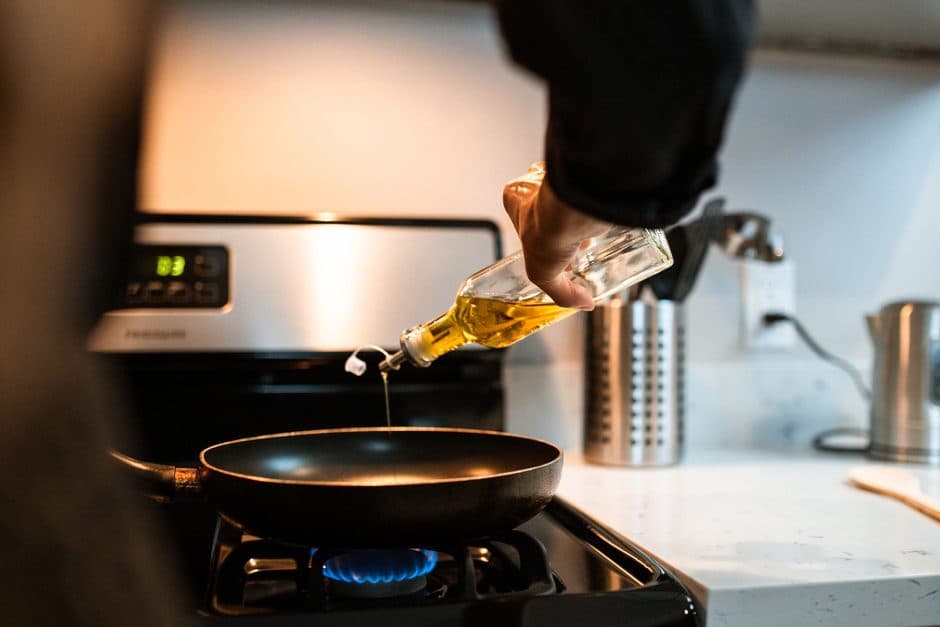
Nothing will break. But aerosol spray leaves a residue that bakes into a brown varnish, and on bare steel that varnish is the thing that makes people think their pan is ruined.
Disclosure: Ply & Pan earns a commission on qualifying purchases made through links on this page. We take no free product and no sponsorship, and every price here is read from Amazon on the date shown. How we are funded.
Quick picks
The short answer. Tap any row for the full write-up.
| # | Product | Best for | Score | Price |
|---|---|---|---|---|
| 1 | 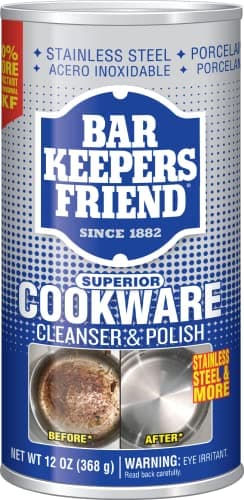 Bar Keepers Friend Cookware CleanserOxalic acid dissolves polymerized residue and heat tint rather than grinding them off, which is why it works where scrubbing does not. | Removing the brown varnish spray leaves behind | 9.0 | |
| 2 | 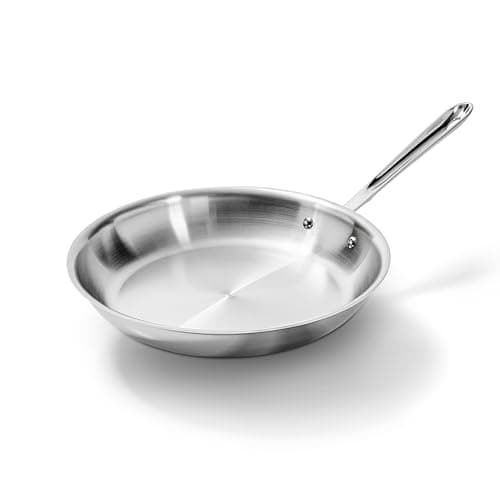 All-Clad D3 Stainless Fry PanTri-ply heats evenly and responds fast, which is the actual solution to sticking. Preheat it properly and a teaspoon of oil outperforms any spray. | A properly preheated pan where food releases on its own | 8.8 | |
| 3 | 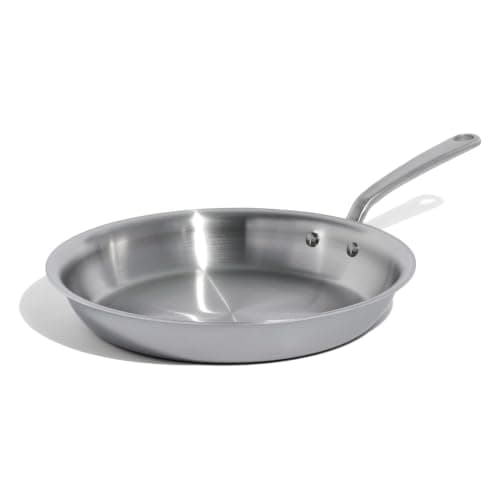 Made In Stainless Clad Frying PanFive plies at 2.7mm with a published 800F rating — at the temperatures this pan is built for, aerosol spray would smoke before the food hit the surface. | Cooking hot enough that spray would burn anyway | 8.6 |
#ad Buy links are affiliate links. Prices come straight from Amazon, are stamped with the date they were read, and disappear rather than go stale if the feed stops. How we are funded.
The direct answer
You can. Nothing about cooking spray damages stainless steel in any structural sense — there is no coating to wreck, the steel is inert, and you will not void a warranty.
What you will do is build a residue. Aerosol cooking sprays contain more than oil: emulsifiers, anti-foaming agents and propellants, usually with lecithin among them. Those additives polymerize at cooking temperature into a thin, cross-linked brown film that bonds to the surface. On a nonstick pan it is a known problem because it destroys the coating's release. On bare steel it does not destroy anything, but it builds up into a sticky varnish that makes food stick worse than the bare pan did.
Which is the irony worth stating plainly: using spray to stop food sticking eventually makes food stick more.
Why spray behaves differently from oil
Poured oil sits in a layer thick enough to conduct heat and to be carried away with the food and the wash-up. Sprayed oil lands as a micro-thin film — that is the point of the aerosol — and a micro-thin film of oil plus additives is exactly the condition for polymerization. It is the same chemistry that makes a deliberate seasoning layer work on carbon steel, and the same chemistry that makes it unwanted here.
A thin film also has nowhere to go. It bakes on where it landed, which on a sprayed pan includes the flared walls above the food line where nothing ever gets scrubbed. That is why a spray-used pan develops a brown ring on the upper wall first.
And the additives matter more than the oil. If you spray a pan with nothing but oil from a refillable mister and keep the pan clean, you get far less of this. The varnish is substantially an additive problem.
What to use instead
Preheat the pan properly, then add fat. This is the actual solution and it costs nothing. Heat the empty pan over medium until a flicked bead of water skitters across the surface rather than sizzling in place, then add fat, then add food, then leave it alone until it releases. The method is the stainless steel water test, and the physics is in why food sticks to stainless steel.
Use a teaspoon of real oil. Pour it, swirl it, and it will outperform a spray on a hot pan every time because it has enough body to conduct heat between the pan and the food.
Use a refillable oil mister if you want the spray format. Filled with plain oil, no additives, it gives you the control of a spray without the lecithin. Clean the pan properly afterwards and the build-up problem largely disappears.
Pick the right fat for the heat. At searing temperatures, a low-smoke-point oil breaks down whether it arrived from a can or a bottle. This is particularly relevant on high-ceiling pans like Made In's 800F line, where the whole point is heat.
How to strip spray residue off a pan
If a pan has a brown, slightly tacky film that soap and a sponge will not touch, that is polymerized residue and it comes off like this.
1. Hot water and a long soak. Fifteen minutes of hot water softens the edges of the film. Not enough on its own.
2. An oxalic-acid cleanser. Bar Keepers Friend, made into a paste, worked over the film with a nylon pad. This dissolves the bond rather than abrading the film, which is why it succeeds where scrubbing fails. Rinse completely.
3. Baking soda and a simmer for the stubborn cases. Two tablespoons in enough water to cover the affected area, simmered for ten minutes, loosens films that have been building for months.
4. Do not reach for steel wool. It will work and it will leave a permanently scratched interior that holds residue even more readily. The ranked cleaner comparison is the best stainless steel cookware cleaners, and the heavy-duty version of this process is how to clean a burnt stainless steel pan.
Is this the same as seasoning a pan?
Chemically, it is related. Both are polymerized oil. The difference is control and intent: a seasoning layer is built deliberately from a thin coat of a suitable oil, cured at a known temperature, in even layers. Spray residue is accumulated accidentally, unevenly, with additives in it, mostly in the places you do not cook.
On stainless the whole exercise is optional in a way it is not on carbon steel or cast iron, because stainless does not need a seasoning layer to avoid rusting. Our position on whether it is worth doing at all is in how to season a stainless steel pan.
The bottom line
Cooking spray will not harm a stainless pan, and it will gradually make it worse to cook on. Use a teaspoon of poured oil in a properly preheated pan instead — it works better, it costs less per use, and it leaves nothing behind. If you already have the varnish, an oxalic-acid cleanser removes it in one session.
The picks in full
1. Best for stripping the residue
Bar Keepers Friend Cookware Cleanser
Bar Keepers Friend
Oxalic acid dissolves polymerized residue and heat tint rather than grinding them off, which is why it works where scrubbing does not.
- Effectiveness
- 9.4
- Gentleness
- 8.0
- Availability
- 9.8
- Value
- 9.6
- Oxalic acid based: dissolves heat tint rather than grinding it off
- Powder and liquid formulations; the liquid is gentler on polished finishes
- Safe on stainless, not on anodized aluminum or nonstick coatings
- Rinse thoroughly and never leave it sitting on the surface
- Sold nearly everywhere, which matters more than it sounds
What it gets right
- The only product that reliably removes rainbow heat tint
- Cheap enough that there is no reason to tolerate a stained pan
- Restores the surface rather than polishing metal away
Who should skip it
- The abrasive powder will dull a mirror-polished exterior over time
- Does nothing for warping, which is the failure that actually matters
- Needs a thorough rinse; residue left on steel can pit it
Polymerized spray residue is not burnt food, and attacking it like burnt food does not work. It is a thin cross-linked film, and what removes it is chemistry: an oxalic-acid cleanser dissolves the bond instead of trying to abrade the film away.
The liquid formulation is gentler on a polished exterior; the powder is more effective on an interior you do not mind dulling slightly. Either way, rinse thoroughly — residue left sitting on steel can pit it.
It does nothing for warping, it is not safe on anodized aluminum or nonstick, and the powder will dull a mirror-polished finish over time.
#ad Price as of October 10, 2026. How we are funded
2. The pan that does not need spray
All-Clad D3 Stainless Fry Pan
All-Clad
Tri-ply heats evenly and responds fast, which is the actual solution to sticking. Preheat it properly and a teaspoon of oil outperforms any spray.
- Effectiveness
- 9.4
- Gentleness
- 9.0
- Availability
- 8.6
- Value
- 6.6
- Tri-ply: stainless interior, aluminum core, magnetic stainless exterior
- Oven and broiler safe to 600F (All-Clad published spec)
- Induction compatible on any stovetop
- Handwash only, per the manufacturer
- Limited lifetime warranty; bonded, engineered and assembled in Canonsburg, PA
What it gets right
- Survived America's Test Kitchen's concrete-strike abuse testing with barely a ding
- Rivets and handle join are the sturdiest in the category
- Decades of parts and service history standing behind the warranty
Who should skip it
- Costs roughly three times a Tramontina that cooks nearly as evenly
- The stick handle is narrow and bites into your palm on a loaded 12-inch pan
- Handwash only, which is a real constraint if you hate washing up
Sticking is a temperature problem, not a lubrication problem. A responsive tri-ply pan brought to the right temperature releases food without help, and that is a more reliable fix than any spray.
600F and broiler safe, induction compatible, the sturdiest handle join in the category, bonded in Pennsylvania.
Handwash only — which matters here, because handwashing is also when you would notice spray residue building up before it becomes a project.
#ad Price as of October 10, 2026. How we are funded
3. Best high-heat pan
Made In Stainless Clad Frying Pan
Made In
Five plies at 2.7mm with a published 800F rating — at the temperatures this pan is built for, aerosol spray would smoke before the food hit the surface.
- Effectiveness
- 9.0
- Gentleness
- 8.6
- Availability
- 8.4
- Value
- 8.6
- Five-ply construction, 2.7mm thick (Made In published spec)
- Heat safe to 800F / 430C, 200F above All-Clad's rating
- Gas, electric and induction; handwash preferred
- Lifetime warranty on stainless; the frying pans are made in Italy
- Flared rim pours cleanly, which sounds trivial until you deglaze
What it gets right
- The 800F rating puts broiler work and hard oven finishes in spec rather than in hope
- Longer, flatter handle is more comfortable than All-Clad's stick handle
- Direct-to-consumer pricing undercuts All-Clad at an equivalent ply count
Who should skip it
- No decades-long warranty service record yet; the company is young
- Five plies make it slower to respond than a tri-ply of the same size
- Warranty excludes warping from thermal shock, same as everyone else's
Worth including to make the temperature point concrete. The whole appeal of this pan is high-heat work, and aerosol sprays are built around low-smoke-point oils and propellants. At searing temperatures, spray breaks down on contact with the surface.
Published at 2.7mm with an 800F rating, a longer flatter handle than All-Clad's, and a flared rim that pours cleanly.
Handwashing preferred, five plies respond more slowly than three, and the brand has no long warranty-service record yet.
#ad Price as of October 10, 2026. How we are funded
Frequently asked questions
Can you use cooking spray on stainless steel pans?
Yes, it will not damage the steel — there is no coating to harm. But aerosol sprays contain emulsifiers and additives alongside the oil, and in a micro-thin film those polymerize into a sticky brown varnish that bakes onto the pan. Over time that residue makes food stick more than the bare pan did.
Why does cooking spray leave a sticky residue?
Because it lands as an extremely thin film, which is the ideal condition for polymerization, and because sprays contain additives such as lecithin as well as oil. The film bakes on where it lands, including the upper walls above the food line where nothing gets scrubbed, which is why a brown ring appears there first.
How do you remove cooking spray residue from a stainless pan?
Soak in hot water for fifteen minutes, then work an oxalic-acid cleanser such as Bar Keepers Friend over the film as a paste with a nylon pad, and rinse completely. For stubborn build-up, simmer two tablespoons of baking soda in enough water to cover the area for ten minutes first. Avoid steel wool, which permanently scratches the interior.
What should I use instead of cooking spray on stainless steel?
Preheat the empty pan over medium until a flicked bead of water skitters across the surface, then add a teaspoon of poured oil, then the food. Poured oil has enough body to conduct heat between pan and food, which a spray film does not. A refillable mister filled with plain oil gives you the spray format without the additives.
Is spray residue the same as seasoning a pan?
It is the same chemistry — polymerized oil — but not the same thing. Seasoning is built deliberately in even layers from a suitable oil at a known temperature. Spray residue accumulates unevenly, with additives in it, mostly where you do not cook. Stainless does not need a seasoning layer the way carbon steel does.