Saucepans & Sauciers
Misen vs Made In Saucier
Nearly identical on paper. The decision comes down to three things the spec sheets barely mention.
Disclosure: Ply & Pan earns a commission on qualifying purchases made through links on this page. We take no free product and no sponsorship, and we never print a price. How we are funded.
Quick picks
The short answer. Tap any row for the full write-up.
| # | Product | Best for | Score | Price |
|---|---|---|---|---|
| 1 | 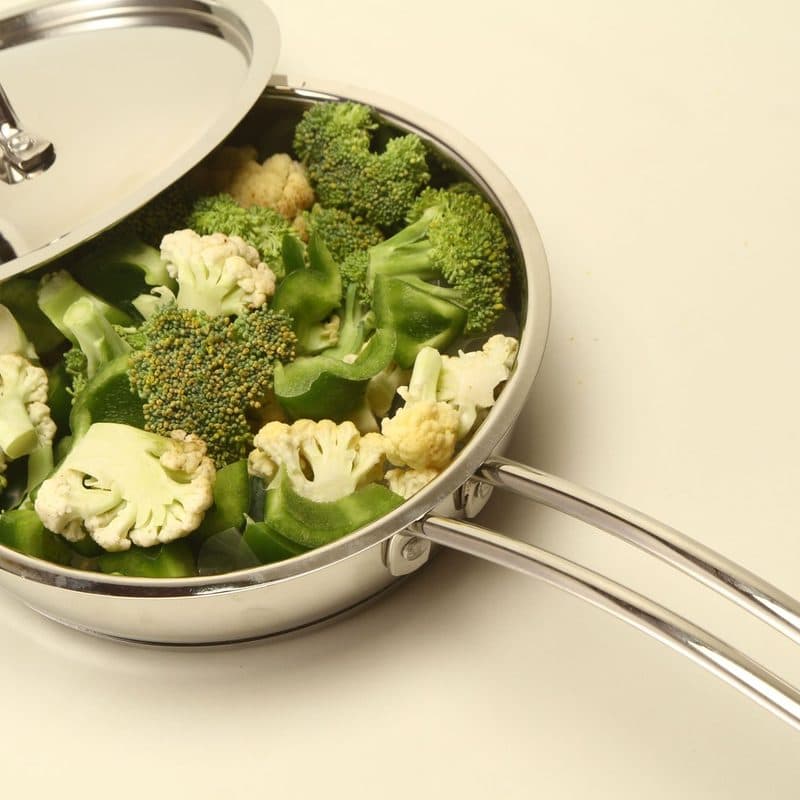 Made In Stainless Clad SaucierThe nicer object of the two, and the one we would buy if the price gap is small. | Buyers who want European manufacture and a better grip | 8.9 | |
| 2 | 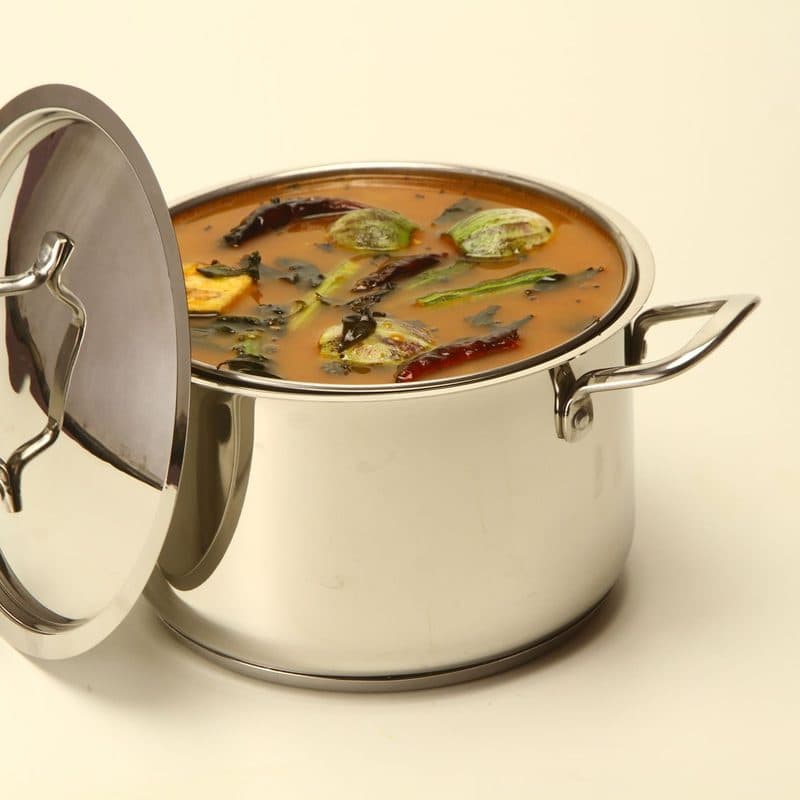 Misen Stainless SaucierThe same headline specs for less, plus a dishwasher rating Made In does not publish. | Buyers who will actually use the dishwasher | 8.6 |
#ad Buy links are affiliate links. We never print a price — prices change weekly and a printed one is wrong within a month, so every link goes to the live Amazon listing. How we are funded.
The short version
On the numbers these two are the same pan. Both are five-ply fully clad stainless. Both publish an 800F oven rating. Both carry a lifetime warranty against defects. Both are induction compatible. If you were choosing from a spec sheet alone you would flip a coin.
Three things actually differ: where they are made, whether the manufacturer permits the dishwasher, and how the handle feels. None of those appear in a comparison table unless someone puts them there.
Side by side
| Made In | Misen | |
|---|---|---|
| Construction | 5-ply fully clad | 5-ply fully clad |
| Published thickness | 2.7mm (frying pan spec) | 3.0mm (skillet spec) |
| Oven rating | 800F | 800F |
| Dishwasher | Handwash preferred; staining excluded from warranty | Published dishwasher safe |
| Warranty | Lifetime on stainless | Lifetime against defects |
| Made in | Italy (frying pans) | China |
| Handle | Long, flat, comfortable | Adequate |
| Price | Higher | Lower |
About that thickness difference
Misen publishes 3.0mm and Made In 2.7mm. Treat that gap with care: the figures come from each brand's skillet and frying-pan specifications respectively, and gauge can vary by piece within a line. It is a real but small difference, and 0.3mm of additional laminate is not something you will feel in a saucier holding liquid.
Where thickness does matter is weight, and there Misen's extra gauge is a mild negative rather than a positive: a heavier saucier is harder to pour from one-handed.
The dishwasher question is the real one
Misen publishes its stainless as dishwasher safe. Made In prefers handwashing, and its warranty specifically excludes staining resulting from dishwasher use. That is not an equivalent position dressed differently — it is a genuine divergence in what the manufacturer will stand behind.
And it matters more in this shape than in any other. Sauciers cook risotto, polenta, grits, custard and reduced sauces: the stickiest, most labor-intensive things to wash in a kitchen. A pan you can put in the machine is a pan you will use for those dishes. A pan you cannot is a pan that quietly stops being chosen.
How long will each last?
Structurally, both should last decades. Five-ply clad construction from either brand has no coating to fail and a cooking surface harder than anything you will put in it. The realistic failure modes are warping from thermal shock and, over a very long horizon, chloride pitting — and both brands are equally exposed to both.
The asymmetry is in the warranties, and it is not about the wording. Both promise a lifetime. Made In and Misen are both young companies relative to that promise, which is the honest discount to apply — the same one we apply on every page where a lifetime claim comes from a brand that has not lived one. Neither has All-Clad's decades of warranty-service history, and if that specific reassurance is what you want, neither of these pans is the answer.
One real difference: Made In's exclusion of dishwasher staining means that if you do use a dishwasher and the finish dulls, you have no recourse. Misen's published dishwasher rating means the same outcome would be a conversation worth having. That is a small difference in practice and a meaningful one in principle.
Which should you buy?
Buy the Made In if the price gap is modest, you care about European manufacture, and you will handwash. The handle is better, the finish is better, and it is the nicer object.
Buy the Misen if you want a saucier you can put in the dishwasher, or if the price difference is large. For the dishes a saucier is actually for, the washing question decides more about whether the pan gets used than the handle does.
Buy neither if you make emulsified sauces regularly — go to the All-Clad Copper Core instead, because copper's response time is the one thing five plies of aluminum cannot give you.
The picks in full
1. Better handle, better finish
Made In Stainless Clad Saucier
Made In
The nicer object of the two, and the one we would buy if the price gap is small.
- Build
- 8.8
- Heat
- 9.0
- Handling
- 9.0
- Value
- 8.6
- Five-ply stainless clad construction
- Heat safe to 800F (Made In published spec)
- Induction compatible; handwash preferred
- Rounded walls with no corner for a whisk to miss
- Lifetime warranty on stainless cookware
What it gets right
- Cheapest route into a genuinely good saucier from a fully-clad brand
- The 800F rating makes oven-finishing a braise or a gratin uncomplicated
- Wide mouth reduces sauces faster than a straight-walled saucepan
Who should skip it
- That wide mouth is a liability if you mostly boil small quantities
- Rounded base means less contact area on a small induction ring
- Five plies are slower off the heat than a copper-core saucier
Same five-ply construction, same published 800F rating, same lifetime warranty on stainless. What Made In adds is a longer, flatter handle that is genuinely more comfortable, a better-finished rim, and European manufacture. What it takes away is the dishwasher rating.
2. Cheaper and dishwasher safe
Misen Stainless Saucier
Misen
The same headline specs for less, plus a dishwasher rating Made In does not publish.
- Build
- 8.2
- Heat
- 8.8
- Handling
- 7.6
- Value
- 9.4
- Five-ply stainless construction
- Oven safe to 800F (Misen published spec)
- Dishwasher safe; induction compatible
- Lifetime warranty against defects
- Manufactured in China
What it gets right
- The cheapest genuinely fully-clad saucier we would recommend
- The dishwasher-safe rating removes the main reason people avoid steel
- Rounded interior does the job a saucier exists to do
Who should skip it
- No long service history behind the lifetime claim
- Handle geometry is less comfortable than Made In's
- Overseas manufacture rules it out for buy-American shoppers
Five-ply, 800F, lifetime warranty against defects, dishwasher safe, and cheaper. For a pan used for risotto and polenta — the stickiest things in a kitchen — the dishwasher rating is a bigger practical win than the handle difference is a loss.
Frequently asked questions
Is Misen or Made In better for a saucier?
Made In has the better handle, finish and European manufacture; Misen is cheaper and published as dishwasher safe. Both are five-ply, rated to 800F, with lifetime warranties.
Is Misen cookware dishwasher safe?
Yes, Misen publishes its stainless cookware as dishwasher safe. Made In prefers handwashing and excludes dishwasher staining from its warranty.
Where is Made In cookware made?
It varies by line. Made In's Stainless Clad frying pans are made in Italy according to the product specification. The brand sources across the US and Europe depending on the product.
Where is Misen cookware made?
China. That is neutral for quality but decisive if buying American or European manufacture is part of your reason for choosing a brand.
Is 3.0mm meaningfully thicker than 2.7mm?
Barely, and the figures come from different product pages within each brand. In a saucier holding liquid you will not feel 0.3mm. It does add a little weight.
Do either come with a lifetime warranty?
Both do, against defects. Both companies are young relative to a lifetime promise, which is the honest discount to apply to either claim compared with a manufacturer that has decades of service history.