Saucepans & Sauciers
The Best Pan for Rice and Risotto
They sound like the same job. They are opposite requirements, which is why one pan disappoints at one of them.
Disclosure: Ply & Pan earns a commission on qualifying purchases made through links on this page. We take no free product and no sponsorship, and we never print a price. How we are funded.
Quick picks
The short answer. Tap any row for the full write-up.
| # | Product | Best for | Score | Price |
|---|---|---|---|---|
| 1 | 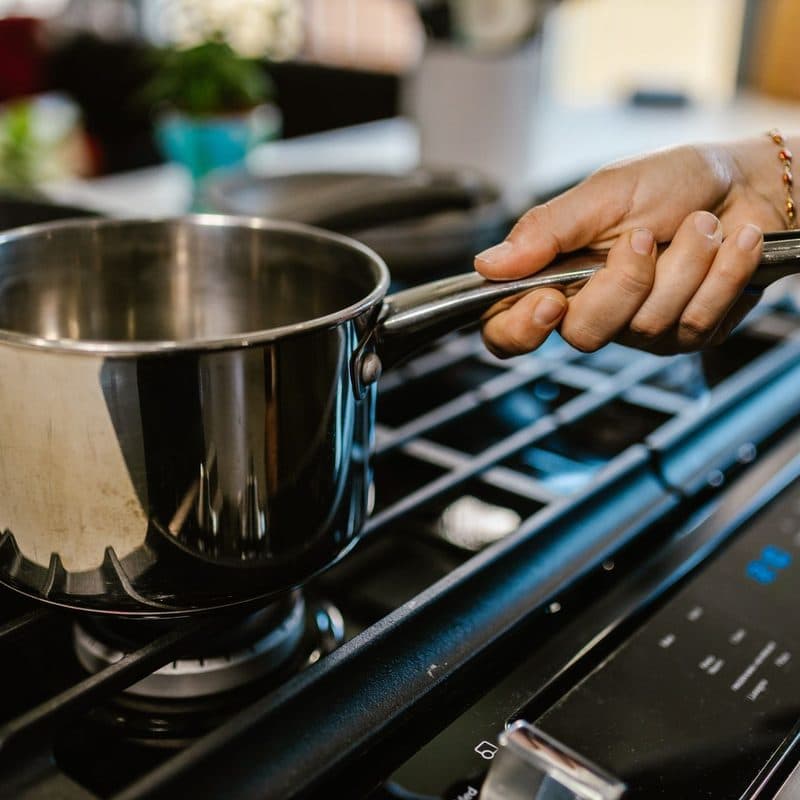 All-Clad D3 Stainless SaucepanStraight walls, narrow mouth and a stainless lid. Rice is a sealed-environment problem and this is the right box. | Absorption-method rice with a tight lid | 9.0 | |
| 2 | 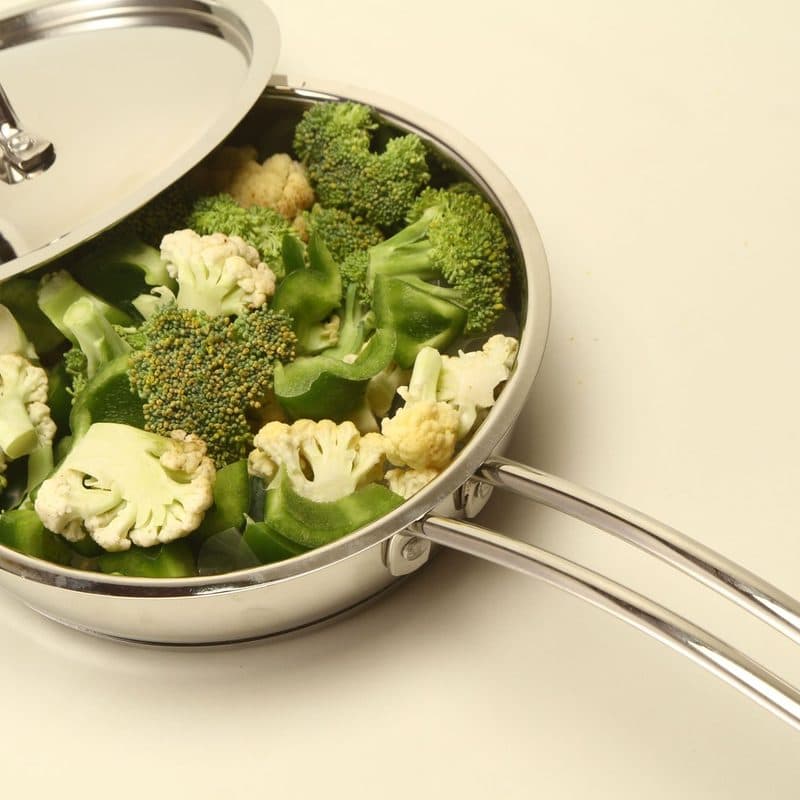 Made In Stainless Clad SaucierNo corner for starch to catch in, and a wide base that keeps the grains moving. | Stirred grains that release starch | 9.0 |
#ad Buy links are affiliate links. We never print a price — prices change weekly and a printed one is wrong within a month, so every link goes to the live Amazon listing. How we are funded.
Two dishes, opposite requirements
Plain rice cooked by absorption is a sealed-environment problem. You add a measured quantity of liquid, and every drop that escapes as steam is a drop the rice does not get. You want a narrow mouth, a tight lid, and as little evaporation as possible. Stirring is actively harmful, because it breaks up grains and releases starch.
Risotto is an open-evaporation problem. You add liquid in stages, stir constantly to release starch into the liquid, and want controlled reduction between additions. You want a wide base, an open mouth, and complete stirring access. A lid would ruin it.
Those are opposite specifications. Any pan that is excellent at one will be mediocre at the other, which is why a single "best rice pan" recommendation is not a real answer.
What plain rice actually needs
A tight-fitting lid. The single most important feature. A loose lid means variable evaporation, which means the liquid ratio you measured is no longer the ratio the rice receives. Prefer stainless: it seals as well as glass and shares the pan's oven rating.
A thick, even base. Rice sits still for the entire cook, so any hot spot burns a patch. Fully-clad construction spreads heat well enough that a domestic burner does not scorch the base.
Straight walls. Less surface area per volume, so less steam lost around the lid.
A 3-quart clad saucepan is the right tool, and it wants to be roughly the correct size for the quantity — rice in an oversized pan spreads into a thin layer and cooks unevenly. Sizing in best stainless saucepans.
What risotto actually needs
No corner. Risotto releases enormous quantities of starch, which is the point of the dish and also what sticks. In a straight-walled pan a ring of starch collects in the base-to-wall corner where your spoon does not reach, and it scorches. You will smell it before you see it.
A wide base. Grains need room in a relatively thin layer so they cook evenly and the liquid reduces at a predictable rate. Piled deep, the bottom overcooks while the top is still chalky.
Responsiveness. Risotto is managed by adjusting heat throughout, so a pan that reacts quickly is easier to control than a heavy one. This is one place where fewer plies are an advantage.
A 3-quart saucier is the tool, and the technique is in how to use a saucier.
If you only own one pan
| Dish | In a saucepan | In a saucier |
|---|---|---|
| Plain absorption rice | Ideal | Workable with a lid; expect to add liquid |
| Risotto | Scorches in the corner | Ideal |
| Pilaf | Very good | Good |
| Polenta and grits | Sticks and lumps | Ideal |
| Boiled rice, drained | Ideal | Fine |
If you must pick one pan for both, pick the saucier and cover it when you make rice, accepting that you will need to top up the liquid. A saucepan cannot be made to work for risotto by any technique, because the corner is a physical fact.
What these dishes do to a pan
Starchy food is hard on stainless in a low-grade, cumulative way. Starch that sticks and carbonizes needs either a long soak or an abrasive, and abrasives dull the surface over years — which is why All-Clad's warranty specifically excludes damage caused by scouring pads, steel wool and abrasive cleaners.
The habit that avoids all of it: deglaze while the pan is still warm. Cover the base with hot water, bring it to a simmer, and scrape with a wooden spoon. Starch releases in a couple of minutes and you never reach for an abrasive at all. Full method in how to clean a burnt pan.
The other habit: salt the water once it is moving, not while it is still. Rice cooking is where undissolved salt most often settles onto a base and sits there, which is how the small permanent pits appear.
The picks in full
1. Best for plain rice
All-Clad D3 Stainless Saucepan
All-Clad
Straight walls, narrow mouth and a stainless lid. Rice is a sealed-environment problem and this is the right box.
- Simmer
- 9.2
- Lid
- 9.4
- Durability
- 9.6
- Value
- 7.0
- Tri-ply bonded construction with an aluminum core
- Oven and broiler safe to 600F
- Induction compatible; handwash only
- Straight walls and a tight-fitting stainless lid
- Limited lifetime warranty; made in Canonsburg, PA
What it gets right
- Straight walls and a narrow mouth hold a simmer with very little evaporation
- The same rivet and handle construction that survives ATK's abuse testing
- A stainless lid rather than glass, so the lid shares the 600F rating
Who should skip it
- A saucier does most of what this does, and does sauces better
- Handwash only, on a pan you will use several times a week
- Priced well above a Tramontina saucepan that boils water identically
Absorption rice needs a measured amount of liquid to stay in the pan. Straight walls, a narrow mouth and a well-seated stainless lid keep it there, which is why a saucepan beats a saucier for this one specific job.
2. Best for risotto
Made In Stainless Clad Saucier
Made In
No corner for starch to catch in, and a wide base that keeps the grains moving.
- Shape
- 9.4
- Heat
- 9.0
- Durability
- 8.6
- Value
- 8.8
- Five-ply stainless clad construction
- Heat safe to 800F (Made In published spec)
- Induction compatible; handwash preferred
- Rounded walls with no corner for a whisk to miss
- Lifetime warranty on stainless cookware
What it gets right
- Cheapest route into a genuinely good saucier from a fully-clad brand
- The 800F rating makes oven-finishing a braise or a gratin uncomplicated
- Wide mouth reduces sauces faster than a straight-walled saucepan
Who should skip it
- That wide mouth is a liability if you mostly boil small quantities
- Rounded base means less contact area on a small induction ring
- Five plies are slower off the heat than a copper-core saucier
Risotto is the dish sauciers were designed for. The curved wall means your normal stirring reaches every part of the surface, and the wide base gives the grains room to move without piling up.
Frequently asked questions
What is the best pan for risotto?
A 3-quart fully-clad saucier. The curved wall means stirring reaches everywhere, so the starch risotto releases cannot collect and scorch in a corner, and the wide base keeps grains moving.
Can you make risotto in a saucepan?
You can, but starch will collect in the right-angled corner where a spoon does not reach, and it will scorch. No technique fixes it, because the corner is a physical fact of the shape.
What is the best pan for plain rice?
A 3-quart straight-walled clad saucepan with a tight stainless lid. Absorption rice is a sealed-environment problem: every drop of steam that escapes is liquid the rice does not get.
Why does rice stick to the bottom of my pan?
Usually heat that is too high, or a pan much larger than the quantity, which spreads the rice thin. A thick fully-clad base and a genuine low simmer solve most of it.
Should you stir rice while it cooks?
Not for absorption rice: stirring breaks grains and releases starch, making it gluey. Risotto is the opposite and wants constant stirring, which is why the two dishes need different pans.
How do you clean burnt rice off a stainless pan?
Cover the base with hot water while the pan is still warm, bring it to a simmer, and scrape with a wooden spoon. Starch releases in a couple of minutes without any abrasive.