Saucepans & Sauciers
Is a Saucier Worth It?
It is the second pan we recommend most often and the one most likely to sit unused in the wrong kitchen. The difference is what you cook, not how well you cook.
Disclosure: Ply & Pan earns a commission on qualifying purchases made through links on this page. We take no free product and no sponsorship, and we never print a price. How we are funded.
Quick picks
The short answer. Tap any row for the full write-up.
| # | Product | Best for | Score | Price |
|---|---|---|---|---|
| 1 | 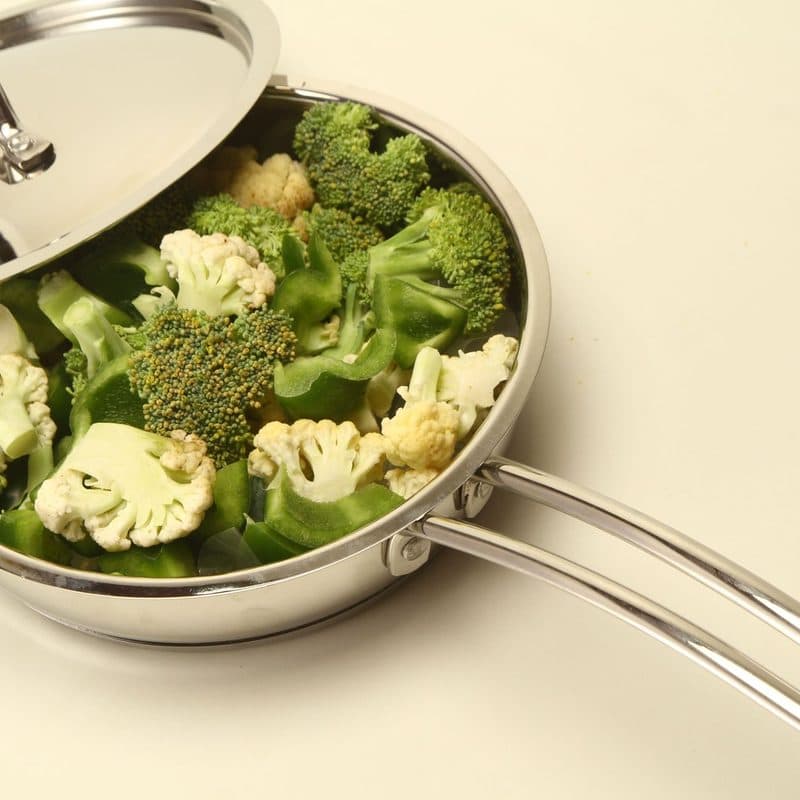 Made In Stainless Clad SaucierFive plies, an 800F published rating and rounded walls with no corner for a whisk to miss, at a price that makes it an easy second pan. | Anyone whose answer to this question turned out to be yes | 9.0 | |
| 2 | 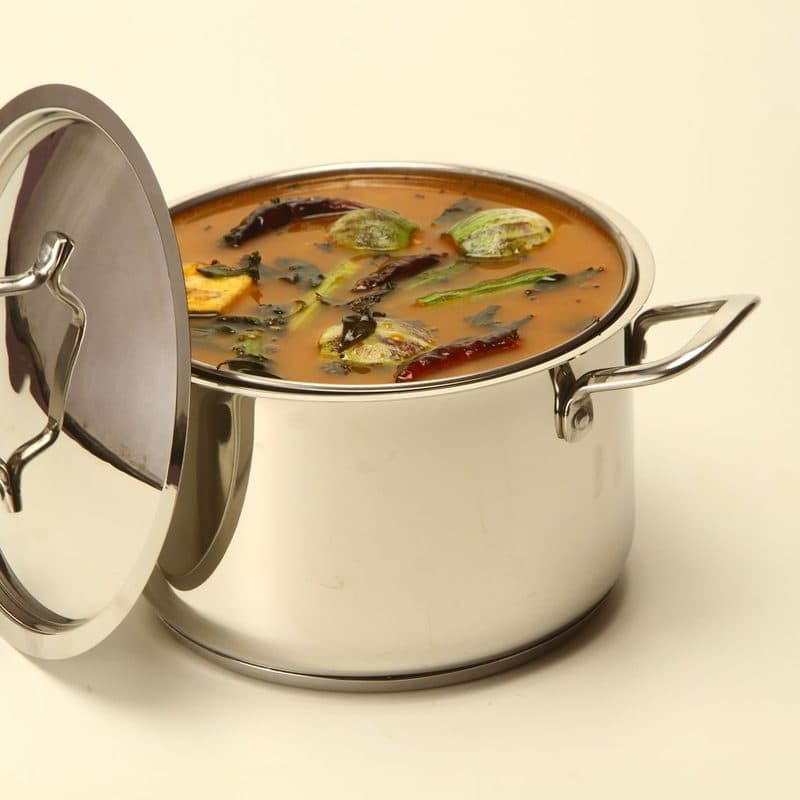 Misen Stainless SaucierFive-ply, 800F and dishwasher safe at a price that undercuts every American-made option — the low-risk way to find out if you want one. | Trying the shape without committing premium money | 8.7 | |
| 3 | 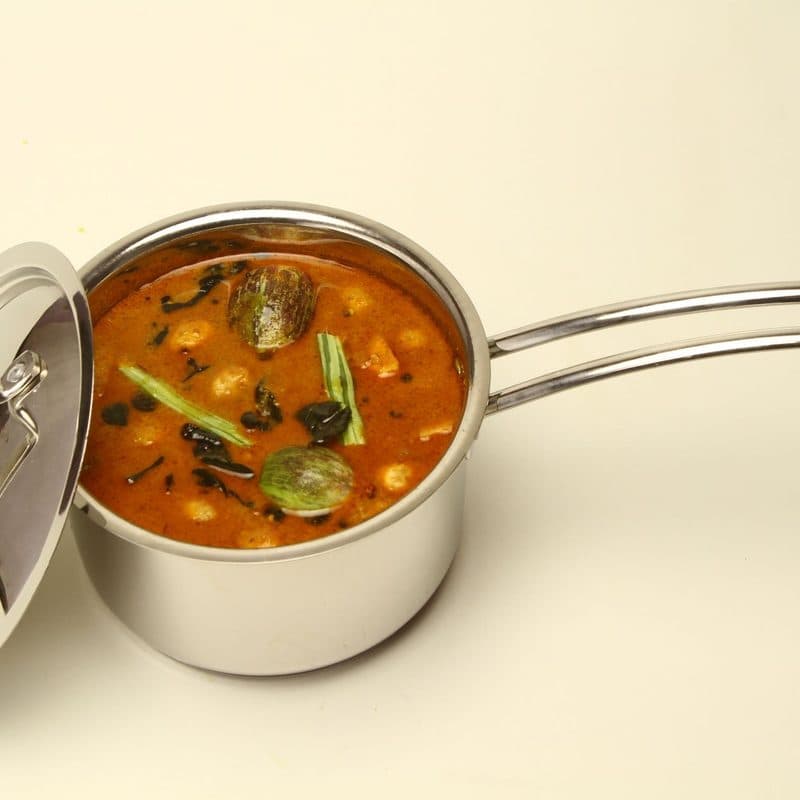 All-Clad Copper Core SaucierA genuine copper layer at the centre makes this the most responsive clad pan All-Clad builds, which is the only reason to spend this much. | Emulsions and custards that break if you are slow | 8.8 |
#ad Buy links are affiliate links. We never print a price — prices change weekly and a printed one is wrong within a month, so every link goes to the live Amazon listing. How we are funded.
The short answer
A saucier is worth it if you regularly whisk, stir or reduce — pan sauces, risotto, custards, polenta, gravy, caramel. It is not worth it if your pots mostly boil water, heat soup and cook rice. It is a shape, not an upgrade: it does a specific set of jobs noticeably better than a saucepan and a couple of common jobs noticeably worse.
What the shape actually changes
A saucier has the same capacity as a saucepan in a different geometry: the walls flare outward and meet the base in a curve rather than a right angle. Two consequences follow, and everything else is downstream of them.
No corner. A whisk is a round tool. In a straight-walled pan it cannot reach the ring where wall meets base, so flour in a roux, egg in a custard and starch in a risotto accumulate there and catch. In a saucier there is nowhere for them to hide.
More surface area per volume. The wide mouth means faster evaporation, so a sauce reduces more quickly. That is an advantage when you are reducing and a disadvantage when you are simmering something you want to keep.
Where it wins and where it loses
| Job | Saucier | Saucepan |
|---|---|---|
| Pan sauces and gravy | Clearly better — whisk reaches everywhere, reduces fast | Workable, with a corner you have to chase |
| Risotto and polenta | Clearly better — constant stirring, nothing seizes | Scorches in the corner if you look away |
| Custards and emulsions | Clearly better — no cold corner to curdle in | Possible, but needs a double boiler more often |
| Rice | Worse — the wide mouth loses steam | Better — narrow mouth and tight lid keep steam in |
| Boiling and blanching | No advantage, and less capacity for the footprint | Better, or use a stock pot |
| Long simmering with the lid on | Worse — more evaporation | Better |
Who should buy one
Buy a saucier if you already own a decent skillet and one saucepan, and you are thinking about a third vessel. In that position a saucier is almost always the better purchase than another saucepan, because it adds capability rather than another size of the same capability. We make the same argument in what size saucepan do you need.
Buy one if you make pan sauces. The workflow — sear in the skillet, deglaze, reduce, mount with butter — is the single most useful technique in home cooking and the saucier is the pan that finishes it properly.
Buy one if you cook risotto, polenta, grits, custard, lemon curd, hollandaise or caramel with any regularity. These are the dishes where the shape stops being a nicety.
Who should not
Do not buy one if you do not own a good skillet yet. The skillet is the higher-utility pan by a wide margin and should always come first — the two-pan kitchen explains the order.
Do not buy one as a saucepan substitute if your cooking is mostly boiling, blanching, reheating and rice. The wide mouth is actively worse for all four, and you will resent the evaporation.
Do not buy one if your induction ring is small. A rounded base has less flat contact area than a straight-walled pan, and on a small element that is a real loss of efficiency. The alternative shapes are laid out in saucier vs saucepan.
What size, if the answer is yes
Two to three quarts covers nearly every use. A 2-quart suits sauces for two and small batches of custard; a 3-quart handles risotto for four and a family-sized sauce with room to whisk without throwing it over the side. Below 2 quarts the shape stops helping; above 4 quarts you are carrying a wide, heavy pan to do a job a stock pot does better.
Our sizing guide is what size saucier do you need, and the technique side is in how to use a saucier.
Is the premium version worth it?
For most people, no. A well-built five-ply saucier does everything the shape exists to do, and the extra money for a copper core buys response speed that only matters for temperature-critical emulsions. If you have broken a hollandaise and wished the pan had cooled faster, you know whether that applies to you.
The wider version of that argument is in is expensive stainless steel cookware worth it, and the metallurgy is in copper core vs aluminum core. If you decide the answer here is yes, the shortlist is the best stainless steel sauciers.
The picks in full
1. Best saucier to start with
Made In Stainless Clad Saucier
Made In
Five plies, an 800F published rating and rounded walls with no corner for a whisk to miss, at a price that makes it an easy second pan.
- Shape
- 9.4
- Heat control
- 8.8
- Build
- 9.0
- Value
- 8.8
- Five-ply stainless clad construction
- Heat safe to 800F (Made In published spec)
- Induction compatible; handwash preferred
- Rounded walls with no corner for a whisk to miss
- Lifetime warranty on stainless cookware
What it gets right
- Cheapest route into a genuinely good saucier from a fully-clad brand
- The 800F rating makes oven-finishing a braise or a gratin uncomplicated
- Wide mouth reduces sauces faster than a straight-walled saucepan
Who should skip it
- That wide mouth is a liability if you mostly boil small quantities
- Rounded base means less contact area on a small induction ring
- Five plies are slower off the heat than a copper-core saucier
The point of a saucier is the curve where the wall meets the base. A whisk sweeps the whole interior with no square corner for a roux, a custard or a risotto to seize in, and that single geometric difference is why the shape exists.
Made In's version is five-ply stainless clad, heat safe to 800F by published specification, induction compatible, lifetime warranty on stainless. The wide mouth also reduces a sauce faster than a straight-walled saucepan of the same volume, which is the second thing you want from the shape.
The honest caveats: that wide mouth works against you if you mostly boil small quantities, the rounded base gives less contact area on a small induction ring, five plies respond more slowly off the heat than copper, and handwashing is preferred.
2. Cheapest saucier worth owning
Misen Stainless Saucier
Misen
Five-ply, 800F and dishwasher safe at a price that undercuts every American-made option — the low-risk way to find out if you want one.
- Shape
- 9.0
- Heat control
- 8.4
- Build
- 8.4
- Value
- 9.4
- Five-ply stainless construction
- Oven safe to 800F (Misen published spec)
- Dishwasher safe; induction compatible
- Lifetime warranty against defects
- Manufactured in China
What it gets right
- The cheapest genuinely fully-clad saucier we would recommend
- The dishwasher-safe rating removes the main reason people avoid steel
- Rounded interior does the job a saucier exists to do
Who should skip it
- No long service history behind the lifetime claim
- Handle geometry is less comfortable than Made In's
- Overseas manufacture rules it out for buy-American shoppers
If the question in the title is genuinely open for you, buying the cheapest pan that is still properly built is the rational answer. Misen's saucier is five-ply stainless, oven safe to 800F by published specification, dishwasher safe and induction compatible, with a lifetime warranty against defects.
The dishwasher rating is worth noting specifically on a saucier. Custards and reduced sauces are among the least pleasant residues to handwash, and the pan is a hemisphere, which does not help.
Against it: manufactured in China, which rules it out if made-in-USA is the point; no long service history behind the lifetime claim; and handle geometry that is less comfortable than Made In's.
3. Worth it if you cook temperature-critical sauces
All-Clad Copper Core Saucier
All-Clad
A genuine copper layer at the centre makes this the most responsive clad pan All-Clad builds, which is the only reason to spend this much.
- Shape
- 9.2
- Heat control
- 9.8
- Build
- 9.6
- Value
- 5.8
- Five-ply: copper core between two aluminum and two stainless layers
- Oven and broiler safe to 600F (All-Clad published spec)
- Induction compatible; handwash only
- Rounded saucier walls take a whisk into the corner
- Limited lifetime warranty; handcrafted in Canonsburg, PA
What it gets right
- Copper reacts fast enough that you can actually rescue a breaking sauce
- Rounded interior means no square corner for a roux or risotto to seize in
- The exposed copper band is a genuine wear indicator, not decoration
Who should skip it
- The most expensive pan on this site by a wide margin
- Copper's advantage is invisible unless you cook temperature-critical sauces
- The copper band discolors and needs polishing if you care how it looks
There is one case where a saucier is not just worth it but worth paying a lot for: emulsions and custards that break if the heat does not come off instantly. Copper conducts about twice as well as aluminum, so a copper-core pan responds fast enough that you can actually rescue a sauce rather than watch it split.
Five plies with a copper layer between two aluminum and two stainless layers, oven and broiler safe to 600F, induction compatible, handwash only, limited lifetime warranty, handcrafted in Canonsburg, Pennsylvania. The exposed copper band is a genuine wear indicator rather than decoration.
It is the most expensive pan on this site by a wide margin, the copper advantage is invisible unless you cook temperature-critical sauces, and the band discolours and needs polishing if you care how it looks.
Frequently asked questions
Is a saucier worth it?
Yes if you make pan sauces, risotto, custards or anything you whisk — the rounded wall-to-base curve means nothing seizes in a corner. No if your pots mostly boil water, cook rice or hold soup, where the wide mouth is a disadvantage.
Is a saucier better than a saucepan?
At different things. A saucier is better at whisking, reducing and stirring. A saucepan is better at rice, boiling and anything simmered with a lid on, because its narrow mouth loses less steam.
Do I need a saucier if I have a saucepan?
Only if you cook sauces, risotto or custards regularly. If you are choosing a third vessel and you already own a skillet and a saucepan, a saucier adds more than another saucepan would.
What size saucier should I buy?
Two to three quarts. Two quarts for sauces for two and small custards, three quarts for risotto for four and family-sized sauces with room to whisk.
Can you cook rice in a saucier?
You can, but a saucepan does it better. The saucier's wide mouth lets steam escape, and rice depends on trapped steam and a tight lid.
Is a copper-core saucier worth the extra money?
Only for temperature-critical sauces. Copper conducts about twice as well as aluminum, so the pan responds fast enough to rescue a breaking emulsion. For everything else a five-ply saucier is enough.