Saucepans & Sauciers
The Best Stainless Steel Stock Pots of 2026
The third pan almost everyone needs, and the one place we would genuinely tell you to buy the cheap commercial option.
Disclosure: Ply & Pan earns a commission on qualifying purchases made through links on this page. We take no free product and no sponsorship, and we never print a price. How we are funded.
Quick picks
The short answer. Tap any row for the full write-up.
| # | Product | Best for | Score | Price |
|---|---|---|---|---|
| 1 | 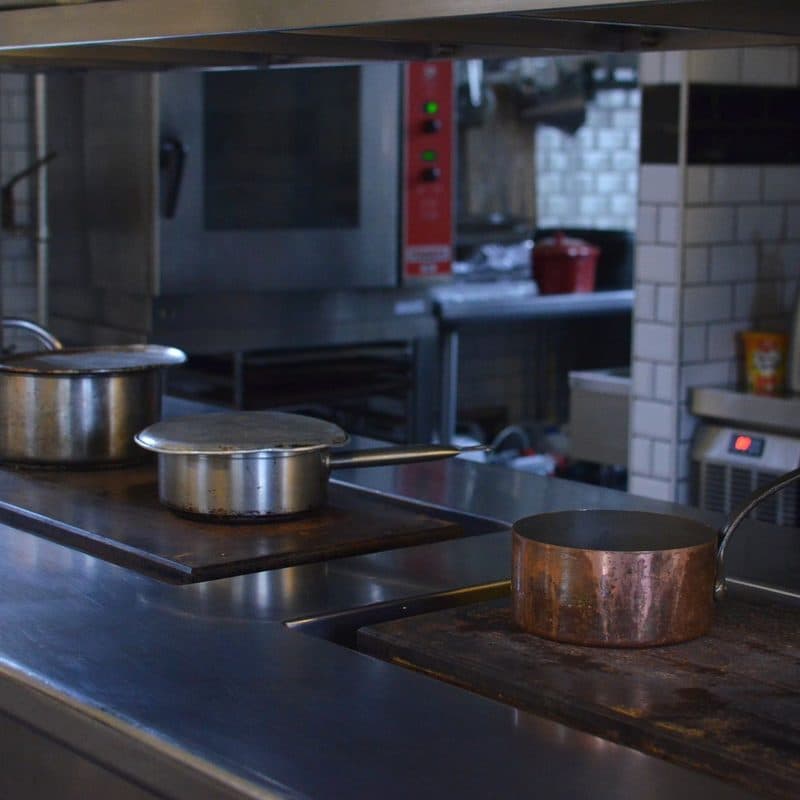 Winco SST-12 Commercial Stock PotWelded handles, NSF listing and no cladding you will never use. The honest answer, and the cheapest one. | Boiling, which is what a stock pot actually does | 9.0 | |
| 2 | 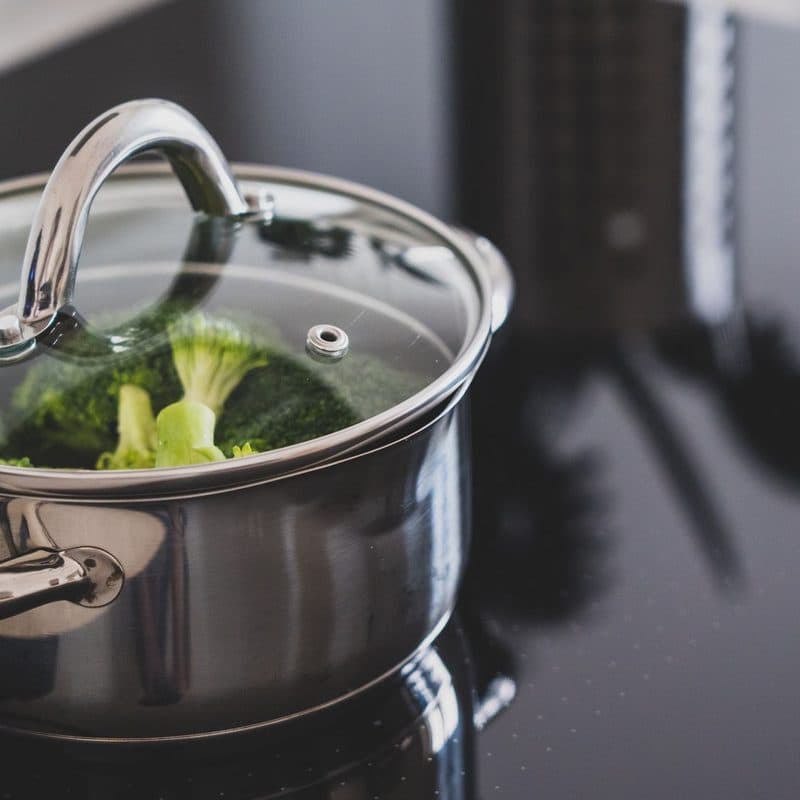 Tramontina Signature Tri-Ply Clad Stock PotFully clad walls at a price that does not sting, with a stainless lid and an NSF certification. | Chili, stew and anything that thickens | 8.8 | |
| 3 |  Heritage Steel Titanium Series Stock Pot316Ti resists the salt pitting that stock pots suffer worse than any other shape, and it is broiler safe. | Heavy salt use, and oven braising | 8.7 | |
| 4 |  Made In Stainless Clad Stock PotFive plies and 800F for less than All-Clad's tri-ply, and lighter than the commercial pots. | Starting on the hob and finishing in the oven | 8.5 | |
| 5 |  All-Clad D3 Stainless StockpotExcellent, American-made, and the hardest pot on this page to justify on anything but longevity. | Buyers who want the warranty department more than the pot | 8.4 |
#ad Buy links are affiliate links. We never print a price — prices change weekly and a printed one is wrong within a month, so every link goes to the live Amazon listing. How we are funded.
Who this is for
You own a skillet and something to make sauce in, and you have run into the limit: nowhere to boil pasta for four, nowhere to make stock, nowhere to blanch a large batch. A stock pot is the genuine third pan in a home kitchen, and we have said so repeatedly in the two-pan kitchen without ever telling you which one to buy. This page fixes that.
It also comes with a warning that cuts against our own commercial interest: this is the one pan where we would tell you to spend less. Not because cheap pots are secretly as good in general, but because the specific thing that makes expensive cookware worth buying is barely exercised by a vessel that boils water.
Why cladding matters less here
The argument for fully-clad construction is that heat travels up the walls, so food touching the sides cooks instead of scorching. That argument is correct, and it is why we insist on cladding for skillets, saucepans and especially sauciers.
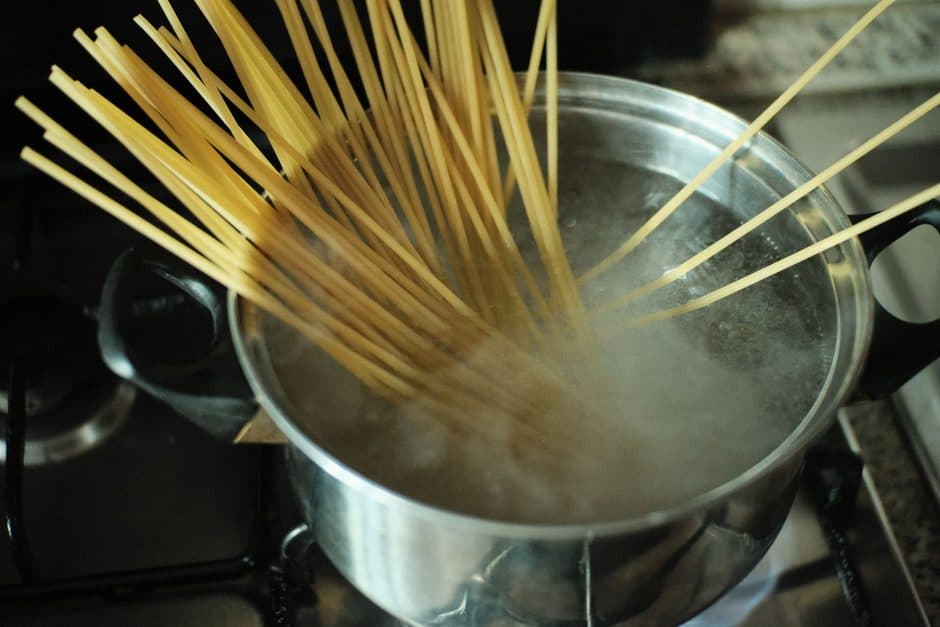
It depends on a condition that a stock pot usually fails: that the contents are thick enough to sit against the wall. A pot of boiling water is in constant, violent convection. The water is redistributing heat faster than any arrangement of aluminum could, and it is holding the entire interior surface at a uniform 212F regardless of what the walls are made of. You cannot scorch pasta water. The cladding is doing nothing you can measure.
The moment the contents thicken — chili, a reduced stock, a bean stew — that reverses, and the walls start to matter as much as they do in any other pan. So the real question is not "which stock pot is best?" but "will I ever cook something thick in it?" Answer that first and the ranking above reorders itself for you.
Welded handles versus riveted
This is the part of the decision nobody writes about, and on a pot it matters more than ply count.
Across this whole site we treat rivet failure as one of the two things that actually retire clad cookware. Handles develop play, then a wobble, then a safety problem. It is why we weight All-Clad's performance in America's Test Kitchen's concrete-strike protocol so heavily.
Commercial pots mostly do not have rivets. They have handles welded directly to the body, and a weld cannot loosen the way a rivet can. For a vessel that gets lifted full — eight quarts of water is roughly seventeen pounds before you add anything — that is a genuine structural advantage, and it belongs in the comparison.
The trade-offs are real in both directions:
| Riveted | Welded | |
|---|---|---|
| Can loosen over time | Yes, the common clad failure | No |
| Inspectable | Yes, you can see play early | Failure is sudden if it happens |
| Repairable | Sometimes re-tightened | No |
| Food trap at the join | Interior rivet heads | Weld seam on the exterior |
| Typical on | Consumer clad cookware | Commercial pots |
Neither is simply better. But if your mental model is "rivets are the mark of quality cookware", the stock pot is the shape where that heuristic is worth questioning.
What size to buy
Capacity is the decision people get wrong most often, usually by buying too small.
6 quarts. Too small for a pound of pasta with enough water to keep it moving, and too small for a meaningful batch of stock. It duplicates a large saucepan. Skip it.
8 quarts. The right answer for most households. It takes a pound of pasta comfortably, blanches a large batch of vegetables, and makes enough stock to be worth the effort. It also still fits in a normal cupboard and under a normal tap.
12 quarts. The right answer if you make stock seriously, cook for six or more, or ever boil shellfish or corn in volume. The penalty is storage and the fact that a 12-quart pot full of water is heavier than many people want to lift off a hob.
16 quarts and up. Brewing, canning, crab boils. A specialist purchase, and at that size a cheap commercial pot is even more obviously the correct choice.
One practical constraint worth checking before you order: measure the clearance between your largest burner and the extractor hood, and check the pot fits under your tap. A 12-quart pot that has to be filled with a jug is a pot you will resent.
How we evaluated these
We do not run a test kitchen and we are not going to imply otherwise. What we do is compare published manufacturer and distributor specifications, read warranty documents rather than warranty headlines, and weight everything toward long-term durability. The full method is on how we evaluate.
For this shape specifically we weighted three things differently from how we would weight them on a skillet. Handle construction went up, because the pot gets lifted heavy. Wall cladding went down, for the convection reason above. And alloy went up, because the salt exposure here is unlike anywhere else in the kitchen.
Every pot above was confirmed as a current, purchasable product before we wrote it up, and each specification came from the manufacturer or an authorized distributor listing. Sources are at the foot of the page.
What to look for
A stainless lid, not glass. Glass lids are typically rated far below the pot — often around 350F against a 500F or 600F body — so the lid caps the pot. They also crack from thermal shock, and a replacement lid for a discontinued pot is often impossible to find, which quietly retires an otherwise perfect vessel. Every pot above ships with a stainless lid.
A base diameter that matches your burner. A wide pot on a small ring heats as a hot center with cool edges. It matters less than it would on a skillet, because the water redistributes, but it costs you time to boil on every use.
Two substantial handles, positioned high. You will lift this full. Handles set close to the rim give better leverage and keep your knuckles clear of the body.
A published oven rating if you intend to braise. 500F covers almost all oven work; 800F covers all of it. Exceeding the published figure is what moves damage from the manufacturer's column into yours — the brand-by-brand list is in oven-safe temperatures by brand.
How long will it last?
Longer than any other pan in your kitchen, and the reason is simply that a stock pot leads a gentle life.
Warping, the failure that retires more clad cookware than anything else, is caused by thermal shock and by heating a pan empty at high heat. A stock pot is almost always filled before it goes on the heat and almost never run dry, so the mechanism barely applies. It is also rarely tossed, rarely scraped hard, and rarely subjected to a searing-hot-pan-to-cold-tap transition. We cover the mechanism in warped stainless steel pan.
That leaves two realistic ways a stock pot ends its life, and both are worth designing around.
Handle failure. The pot is heavy and gets lifted full, which concentrates every bit of stress on the handle join. This is the argument for welded handles above, and it is why we rank the commercial pot where we do.
Chloride pitting. The slow one. Salt dumped into still cold water sinks and sits in a concentrated layer against the base, which locally breaks down the passive oxide layer that keeps stainless stainless. The result is small dark pits that never polish out. It is cosmetic rather than hazardous, and it is permanent.
The fix for the second one costs nothing: salt the water once it is boiling and moving, not while it is cold and still. Do that and you have removed most of the argument for paying extra for 316Ti. Do not do it and the Heritage Steel pot starts earning its premium. The full picture on pan marks is in stainless steel pan discoloration.
Warranty terms across these brands are the usual shape: defects covered, heat damage and misuse excluded. Because a stock pot is unlikely to suffer either, the warranty matters less here than on any other purchase — which is one more reason the cheap pot is less of a risk than it looks. The full comparison is in cookware lifetime warranties compared.
What to avoid
Glass lids, for the rating and replacement reasons above.
Pots with plastic or silicone handle components, which set the oven ceiling regardless of what the metal could take and degrade near a gas flame climbing the side.
Very thin single-layer pots with no base disc at all. There is a floor below which a pot scorches even water-based soups, and bare pressed-steel pots at the bottom of the market sit under it. An encapsulated base is the minimum.
Buying a multi-piece set to obtain one stock pot. The arithmetic almost never works, as we set out in set vs buying piece by piece.
Nonstick stock pots. There is nothing a coating adds to boiling, and it removes your ability to deglaze and build a fond when you do use the pot for something richer.
The picks in full
1. Best overall
Winco SST-12 Commercial Stock Pot
Winco
Welded handles, NSF listing and no cladding you will never use. The honest answer, and the cheapest one.
- Durability
- 9.0
- Fitness for purpose
- 9.6
- Versatility
- 6.4
- Value
- 9.8
- 12 quarts; 18/8 stainless with an encapsulated tri-ply heavy-duty base
- Aluminum core in the base only; single-layer walls
- Induction ready; NSF listed for commercial kitchens
- Welded handles rather than riveted, with 6-point welds
- Cover included; 11 in diameter x 7.1 in high, 8.25 lb
What it gets right
- The welded handles have no rivets to work loose, which is the commonest clad-pot failure
- NSF listing is a real commercial standard, not a marketing badge
- Cheap enough that it is the obvious answer for a pot that only boils
Who should skip it
- Single-layer walls will scorch anything that thickens or clings
- Welded handles trap residue at the join and cannot be re-tightened
- Sold mainly through foodservice suppliers, so retail availability varies
Putting a commercial supply-house pot at the top of a roundup looks like a stunt. It is not. It follows directly from what a stock pot is actually asked to do, and from the failure mode that retires clad cookware.
Start with the handles, because this is the part nobody discusses. Every clad pot on this page has riveted handles, and rivets working loose is one of the two ways clad cookware dies. The Winco uses welded handles with six-point welds. There is no rivet to develop play, which means the single most likely long-term failure on a pot this heavy simply does not apply.
That is not a free win, and we will come back to it: welded handles cannot be re-tightened and they trap residue at the join. But on a vessel that routinely gets lifted full of eight pounds of water and pasta, a joint that cannot loosen is worth more than a joint that can be inspected.
The construction is 18/8 stainless with an encapsulated heavy-duty base carrying an aluminum core, and single-layer walls. On a skillet that would be disqualifying. On a pot that boils, the walls are doing nothing a conductive layer would improve — the water is already moving heat around far better than any metal can. We make the general version of this argument in fully clad vs disc bottom; the stock pot is the one shape where it lands fully in favor of the cheaper construction.
It is induction ready, NSF listed, and comes with a cover. The honest limitation is scope: the moment you want to build a chili or reduce a thick sauce in it, those single-layer walls will scorch, and you should buy the Tramontina instead. Availability is the other caveat — it is a foodservice item, so retail stock moves around.
2. Best if you actually cook in it
Tramontina Signature Tri-Ply Clad Stock Pot
Tramontina
Fully clad walls at a price that does not sting, with a stainless lid and an NSF certification.
- Durability
- 8.0
- Fitness for purpose
- 9.0
- Versatility
- 9.2
- Value
- 9.4
- 8 quarts; tri-ply clad, 18/10 stainless over an aluminum core
- Fully clad through the walls, not an encapsulated base
- Oven safe to 500F; dishwasher safe
- Induction compatible; NSF-certified
- Riveted cast stainless handles and a stainless lid; made in Brazil
What it gets right
- Fully clad walls, so it handles chili and thick sauces that a disc-bottom pot scorches
- Stainless lid shares the pot's oven rating rather than capping it
- Dishwasher safe and NSF-certified, neither of which All-Clad's tri-ply is
Who should skip it
- The 500F ceiling is the lowest here, so broiler finishing is out of spec
- You are paying for wall cladding that pure boiling never uses
- Lighter gauge than the commercial pots, so it is more prone to warping
The case for cladding a stock pot is narrow but real, and it is this: the moment the contents stop being mostly water, the walls start to matter. Chili, bolognese, a thick lentil soup, anything you reduce — all of it clings to the sides, and a single-layer wall over a hot base scorches what clings.
If that describes how you will use the pot, this is the one to buy. It is genuinely fully clad — 18/10 stainless over an aluminum core running up through the walls, not an encapsulated disc — at a price where most eight-quart pots quietly switch to a welded base. It is NSF-certified, dishwasher safe, and the lid is stainless, so it shares the pot's rating instead of capping it.
The 500F oven ceiling is the real limitation and it is the lowest on this page. For a pot that mostly lives on the hob that is irrelevant. If you want to start a braise on the stove and finish it in the oven, Made In and Heritage Steel both publish 800F and this pot does not reach them. Since heat damage is excluded from every warranty in this category, that ceiling is a coverage boundary rather than a suggestion.
It is also lighter-gauge than the commercial pots, which matters less here than it would in a skillet — a stock pot is rarely run empty at high heat, so the usual warping scenario barely arises.
3. Best materials
Heritage Steel Titanium Series Stock Pot
Heritage Steel
316Ti resists the salt pitting that stock pots suffer worse than any other shape, and it is broiler safe.
- Durability
- 9.2
- Fitness for purpose
- 8.6
- Versatility
- 9.4
- Value
- 7.4
- 8 quarts; 5-ply fully clad with a 316Ti cooking surface
- Body thickness 2.3mm; 11 in total diameter, 5.75 in deep
- Oven safe to 800F and broiler safe
- Induction ready; handwashing recommended
- Lifetime warranty; made in Clarksville, TN from globally sourced steel
What it gets right
- 316Ti resists the salt pitting that stockpots suffer more than any other shape
- The only pot here manufactured start-to-finish in a US factory, lids included
- 800F and broiler safe, so stove-to-oven braising is inside spec
Who should skip it
- Priced against All-Clad without All-Clad's service history
- Handwashing recommended, which is tedious on a 8-quart pot
- Smallest brand here, so replacement lids are harder to source
There is one genuine materials argument in this category, and the stock pot is where it is strongest. Chloride pitting — the small dark spots that will not polish out — is the only chemical attack a stainless cooking surface really suffers, and it is caused by salt concentrating against the metal.
Think about which pan in your kitchen sees the most salt. It is this one, and it is not close. A stock pot gets handfuls of salt dumped into still cold water several times a week for pasta, and it holds salted stock for hours at a time. Every other pan gets a pinch.
Heritage Steel's 316Ti cooking surface is stainless strengthened with titanium and molybdenum, and molybdenum is specifically what makes 316-series steel resist chlorides better than the 18/10 everyone else uses. That is a narrow, checkable claim rather than a marketing one, and the stock pot is the shape where you are most likely to cash it in. More on the alloys in 18/10 vs 18/8 vs 18/0.
The rest of the specification is strong: 5-ply fully clad at 2.3mm body thickness, oven safe to 800F and broiler safe, induction ready, lifetime warranty, and manufactured in Clarksville, Tennessee including the lids. Handwashing is recommended, which on an eight-quart pot is a genuine chore.
The honest counterweight: you can avoid pitting entirely for free by salting water once it is boiling and moving rather than when it is cold and still. If you already do that, you are paying for an alloy advantage you will never exercise.
4. Best oven rating
Made In Stainless Clad Stock Pot
Made In
Five plies and 800F for less than All-Clad's tri-ply, and lighter than the commercial pots.
- Durability
- 8.4
- Fitness for purpose
- 8.4
- Versatility
- 9.4
- Value
- 8.2
- 8 quarts; 5-ply stainless clad construction
- Heat safe to 800F / 430C
- Gas, electric and induction; handwash preferred
- Fitted lid included; made without PFAS, PFOA, PTFE, lead or cadmium
- Lifetime warranty; crafted in Italy
What it gets right
- The 800F rating makes oven-braising in the pot genuinely in spec
- Five plies hold a steady simmer on a burner that cycles
- Noticeably lighter than the commercial pots at the same capacity
Who should skip it
- Five plies of cladding are close to wasted on a vessel used for boiling
- Handwash preferred, and dishwasher staining is excluded from the warranty
- Younger company behind a lifetime promise than All-Clad
Made In's 800F rating is the reason to pick this one, and in a stock pot it has a specific use: braising. Brown the meat, build the liquid, lid on, straight into a 325F oven for three hours. That is a workflow a 500F pot handles fine and a broiler finish does not, and 800F gives you margin either way.
Five-ply stainless clad, fitted lid, induction compatible, lifetime warranty on the stainless, crafted in Italy, and made without PFAS, PFOA, PTFE, lead or cadmium. At 8 quarts it is also noticeably lighter than the commercial pots, which is worth more than it sounds when the thing is full.
What keeps it mid-table here is the same thing that makes it excellent elsewhere. Five plies of cladding are a real engineering achievement and a stock pot barely uses them. You are buying thermal evenness through the walls for a vessel whose contents are already circulating. If you will braise, that is money well spent. If you will boil pasta, it is not. The underlying trade is in tri-ply vs 5-ply.
Handwashing is preferred, and Made In's warranty excludes staining that results from dishwasher use — worth knowing before you put an eight-quart pot in the machine.
5. Best service record
All-Clad D3 Stainless Stockpot
All-Clad
Excellent, American-made, and the hardest pot on this page to justify on anything but longevity.
- Durability
- 9.4
- Fitness for purpose
- 8.0
- Versatility
- 8.8
- Value
- 6.0
- 8 quarts; tri-ply bonded, stainless over an aluminum core
- Oven and broiler safe to 600F
- Induction compatible; handwash only
- Double-riveted stainless handles and a tight-fitting stainless lid
- Limited lifetime warranty; bonded and assembled in Canonsburg, PA
What it gets right
- The same rivet and handle construction that survived ATK's concrete-strike testing
- Stainless lid shares the 600F rating instead of capping the pot
- Decades of warranty service behind it, which no newer brand can match
Who should skip it
- By far the most expensive way to boil water
- Handwash only on a pot you will fill with pasta water weekly
- Full cladding is a benefit a stockpot barely exercises
Everything we have said about the D3 skillet applies here: tri-ply bonded construction, 600F oven and broiler rating, induction compatible, handwash only, limited lifetime warranty, bonded and assembled in Canonsburg, Pennsylvania since 1971. The handles are double-riveted and the lid is stainless, so it shares the pot's rating.
It is also, by a distance, the most expensive way to boil water on this page, and we are not going to pretend the value case is strong. The thing you are buying is institutional: a manufacturer with fifty years of warranty service behind a promise, and the best-evidenced structural durability in clad cookware.
That argument is genuinely strong on a skillet, which gets thermally abused daily. On a stock pot it weakens, because a stock pot leads an easy life — rarely run empty, rarely shocked, rarely dropped. The failure modes All-Clad is best at resisting are the ones this shape suffers least.
Buy it if you want a matching set and already own the rest of the line, or if domestic manufacture matters and you prefer All-Clad's track record to Heritage Steel's smaller one. Otherwise the money is better spent on the skillet, where it buys something. Our full assessment of the brand is in the All-Clad overview.
Frequently asked questions
What size stock pot should I buy?
Eight quarts for most households: enough for a pound of pasta, a large blanching batch and a worthwhile quantity of stock, while still fitting a normal cupboard and under a tap. Twelve quarts if you make stock seriously or cook for six or more.
Does a stock pot need to be fully clad?
Only if you cook thick things in it. Boiling water circulates heat far better than any metal, so cladding does nothing measurable for pasta or blanching. For chili, stew or reduced sauces the walls matter and cladding is worth paying for.
Are welded handles better than riveted on a stock pot?
In one important way, yes: a weld cannot loosen, and rivet failure is a common end to clad cookware. The trade is that welds cannot be re-tightened and fail suddenly rather than visibly, where a loosening rivet warns you first.
Is a commercial stock pot good enough for home use?
For boiling, it is arguably better: NSF-listed construction, welded handles and an encapsulated aluminum base, at a fraction of clad prices. The limitation is single-layer walls, which will scorch anything that thickens.
Why does my stock pot have small dark pits in the base?
Chloride pitting from salt settling on the base of still, cold water. Stock pots see more salt than any other pan, so they suffer it most. Add salt once the water is boiling and moving, and it largely stops happening.
Should a stock pot have a glass or stainless lid?
Stainless. Glass lids are often rated around 350F against a pot rated 500F or higher, so the lid caps the pot, and they crack from thermal shock. A replacement lid for a discontinued pot is frequently unobtainable.
Can you use a stock pot on an induction hob?
Yes, provided the base is magnetic, and every pot on this page is induction ready. Check that the base diameter roughly matches your ring; a much wider pot heats slowly even though the water evens the temperature out.
Sources
- All-Clad — D3 Stainless 12-inch Fry Pan, published specification
- All-Clad — Cookware Limited Lifetime Warranty (PDF)
- Tramontina — Signature Tri-Ply Clad Stainless Steel Fry Pan, published specification
- Made In — Stainless Clad Frying Pan, published specification
- Made In — Warranty policy
- Heritage Steel — Titanium Series 10.5-inch Fry Pan, published specification
- Xometry — 18/8 vs 18/10 vs 18/0 stainless steels compared
- America's Test Kitchen — Getting Whacked (how the abuse testing works)