Saucepans & Sauciers
What Size Stock Pot Do You Need?
Eight quarts covers almost everything. The case for going bigger is narrower than the shelf of big pots suggests.
Disclosure: Ply & Pan earns a commission on qualifying purchases made through links on this page. We take no free product and no sponsorship, and we never print a price. How we are funded.
Quick picks
The short answer. Tap any row for the full write-up.
| # | Product | Best for | Score | Price |
|---|---|---|---|---|
| 1 | 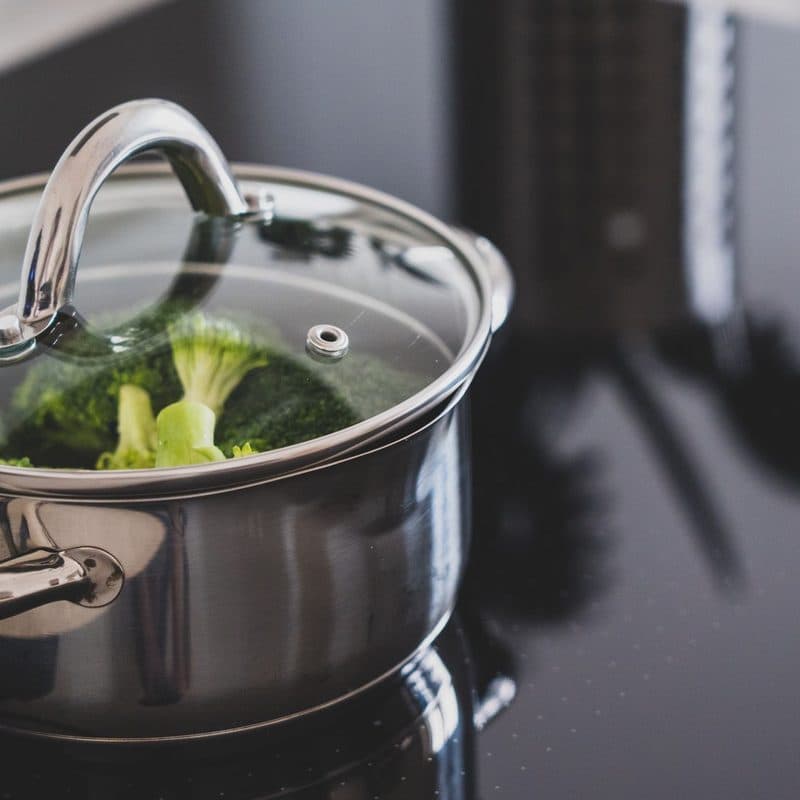 Tramontina Signature Tri-Ply Clad Stock PotFully clad through the walls at 8 quarts, so it handles thick food a disc-bottom pot scorches. Dishwasher safe and NSF-certified. | The one-pot answer: pasta, soup, chili and small stock | 8.9 | |
| 2 | 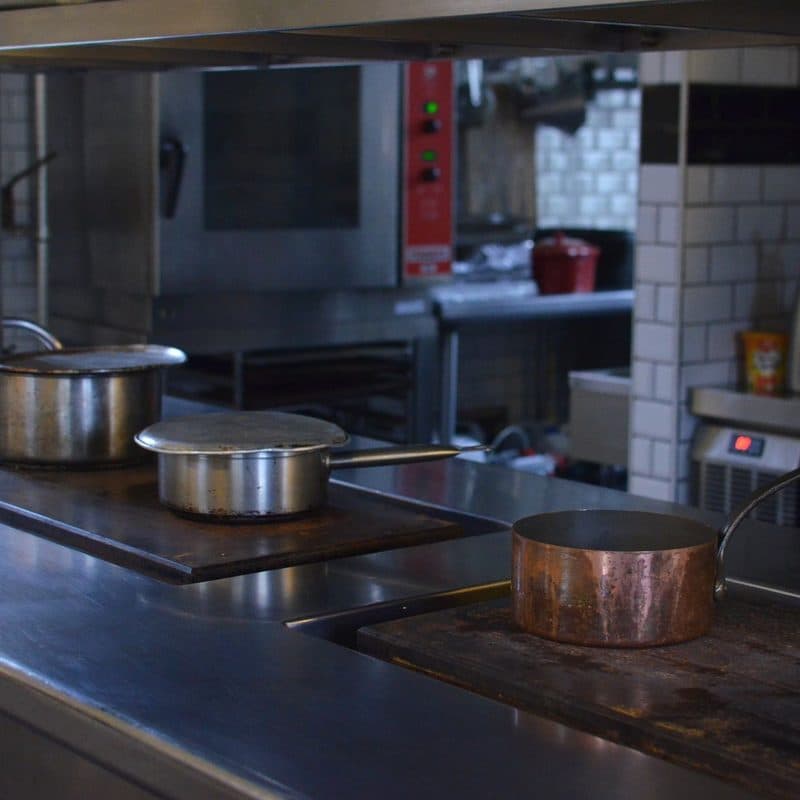 Winco SST-12 Commercial Stock PotA 12-quart NSF-listed commercial pot with welded handles and an encapsulated base, at a fraction of clad prices. | Stock, boils and anything that is only ever water | 8.7 | |
| 3 | 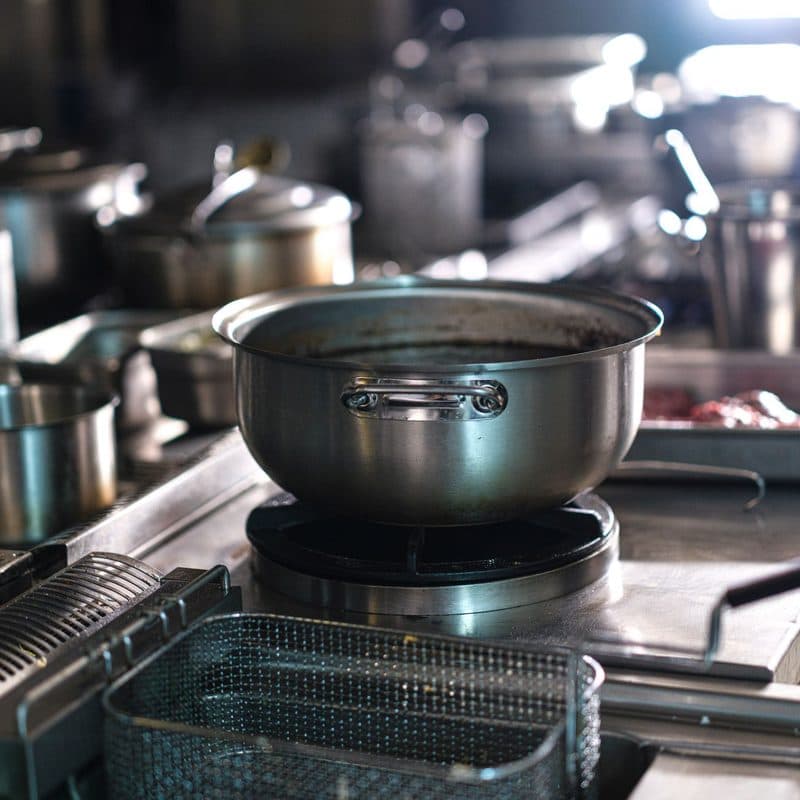 All-Clad D3 Stainless Stockpot600F, stainless lid, double-riveted handles and the only structural evidence in the category. The most expensive way to boil water. | A pot bought once, with a lid that shares its rating | 8.5 |
#ad Buy links are affiliate links. We never print a price — prices change weekly and a printed one is wrong within a month, so every link goes to the live Amazon listing. How we are funded.
The short answer
Buy 8 quarts if you are buying one stock pot. Buy 12 if you make stock or do seafood boils. Buy 16 only if you can. Eight quarts boils a pound of pasta properly, makes soup or chili for six, and holds a small batch of stock. Twelve is the real stock capacity, because stock needs bones covered by several inches of water and 8 quarts runs out fast. Sixteen and above is a canning and crab-boil vessel that most domestic burners struggle to bring to a boil at all.
Capacity matched to task
| Capacity | What it actually does | Who needs it |
|---|---|---|
| 6 quarts | Pasta for two or three, soup for four, steaming with an insert | One or two people with limited storage. A big saucepan, really. |
| 8 quarts | A pound of pasta with room, soup or chili for six, a small batch of stock, blanching in volume | The right single stock pot for most households. |
| 12 quarts | Proper stock with bones covered, seafood boils, corn for a crowd, large-batch soup to freeze | Anyone who makes stock, or cooks for eight or more regularly. |
| 16 quarts and up | Water-bath canning, crab and crawfish boils, brining | A specialist. Check your burner can boil it before you buy it. |
Why 8 quarts is the default
Stock pot sizing is really a question about three jobs with different volume demands, and 8 quarts is the smallest capacity that does all three acceptably.
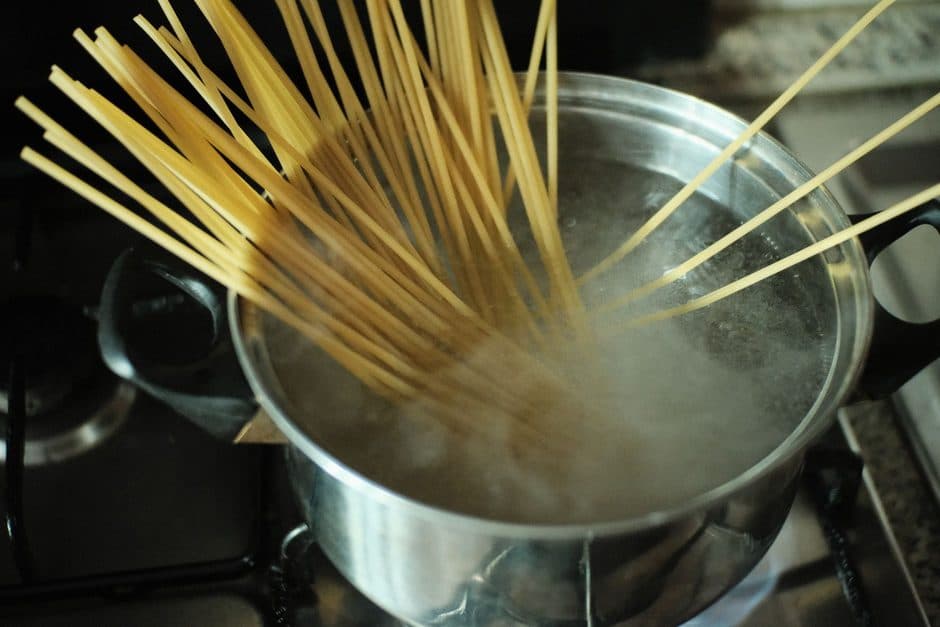
Pasta wants roughly 4 quarts of water per pound, plus headroom so it does not boil over. That is 6 quarts minimum and 8 with comfort. Soup and chili for six is 5 to 6 quarts of finished food, which again wants 8 quarts of vessel. Stock is the odd one out: bones displace volume and then need covering by two or three inches of water, so a chicken carcass in an 8-quart pot yields far less than you expect. That is the one job that genuinely argues for 12.
Which is why the common two-pot answer is 8 quarts clad for food that thickens and 12 quarts commercial for water — and the 12-quart can be the cheap one, because boiling water does not interrogate the walls.
Your burner is the real constraint
A big pot is useless if the hob cannot drive it. A domestic gas ring or radiant electric element puts out a fraction of a commercial burner, and filling a 16-quart pot with cold water on an average domestic hob can mean 30 minutes or more to a rolling boil, if it gets there.
Diameter is the specific problem. A wide pot overhangs a small element, so the middle heats and the edges do not, and the whole mass has to come up through convection. On induction the pot also has to sit within the coil to couple properly. Check the pot's base diameter against your largest burner before you buy anything above 12 quarts — the same matching logic as cookware on a glass top.
Clad walls, or an encapsulated base?
This is the one construction decision that changes the price several times over, and it depends entirely on what goes in the pot.
If the pot only ever holds liquid — pasta water, stock, blanching, boils — an encapsulated commercial base is the right buy. Heat enters through the bottom, the water convects, and the walls are irrelevant. Paying for wall cladding here is paying for a feature that never engages.
If the pot holds food that thickens or clings — chili, bean stews, thick soups, anything with dairy or starch — the walls matter and single-layer stainless will scorch where food touches it. Then you want fully clad. Fully clad vs disc bottom explains the mechanism, and our ranked picks across both constructions are in best stainless steel stock pots.
What to look for at any size
- Handle construction, inspected. A full 12-quart pot is heavy. Riveted handles can be checked and re-tightened; welded handles have no rivets to loosen but cannot be repaired.
- A stainless lid, not glass. A glass lid caps the pot's oven rating and cracks from thermal shock.
- Base diameter against your burner, not just capacity.
- Published oven rating, if you intend to braise in the pot. 500F to 800F is the range across brands — compared by brand.
- Storage reality. A 16-quart pot lives somewhere for 51 weeks a year. Measure the cupboard first.
If you actually wanted a saucepan
Below about 4 quarts you are not shopping for a stock pot, and the shapes diverge: a stock pot is tall and narrow to minimise evaporation over hours, where a saucepan is sized for a single dish and reaches a simmer fast. Saucepan vs stock pot draws the line, and what size saucepan you need covers the smaller vessel.
The picks in full
1. Best 8-quart
Tramontina Signature Tri-Ply Clad Stock Pot
Tramontina
Fully clad through the walls at 8 quarts, so it handles thick food a disc-bottom pot scorches. Dishwasher safe and NSF-certified.
- Capacity
- 8.6
- Construction
- 8.8
- Durability
- 7.8
- Value
- 9.6
- 8 quarts; tri-ply clad, 18/10 stainless over an aluminum core
- Fully clad through the walls, not an encapsulated base
- Oven safe to 500F; dishwasher safe
- Induction compatible; NSF-certified
- Riveted cast stainless handles and a stainless lid; made in Brazil
What it gets right
- Fully clad walls, so it handles chili and thick sauces that a disc-bottom pot scorches
- Stainless lid shares the pot's oven rating rather than capping it
- Dishwasher safe and NSF-certified, neither of which All-Clad's tri-ply is
Who should skip it
- The 500F ceiling is the lowest here, so broiler finishing is out of spec
- You are paying for wall cladding that pure boiling never uses
- Lighter gauge than the commercial pots, so it is more prone to warping
Eight quarts is the capacity that covers the most jobs, and this is the sensible version of it. Tri-ply clad through the walls rather than an encapsulated base, 18/10 stainless over an aluminum core, oven safe to 500F, dishwasher safe, induction compatible, NSF-certified, riveted cast stainless handles and a stainless lid.
Wall cladding is the specification that separates stock pots, and it only matters for some of what a stock pot does. Boiling water never uses it. Chili, thick soup, risotto-style grains and anything that clings to the side absolutely does — a single-layer wall scorches where food touches it.
The trade-offs: a 500F ceiling is the lowest here, so broiler finishing is out of spec; you pay for cladding that pure boiling never exercises; and the lighter gauge is more prone to warping than the commercial pots.
2. Best 12-quart
Winco SST-12 Commercial Stock Pot
Winco
A 12-quart NSF-listed commercial pot with welded handles and an encapsulated base, at a fraction of clad prices.
- Capacity
- 9.6
- Construction
- 7.4
- Durability
- 8.6
- Value
- 9.8
- 12 quarts; 18/8 stainless with an encapsulated tri-ply heavy-duty base
- Aluminum core in the base only; single-layer walls
- Induction ready; NSF listed for commercial kitchens
- Welded handles rather than riveted, with 6-point welds
- Cover included; 11 in diameter x 7.1 in high, 8.25 lb
What it gets right
- The welded handles have no rivets to work loose, which is the commonest clad-pot failure
- NSF listing is a real commercial standard, not a marketing badge
- Cheap enough that it is the obvious answer for a pot that only boils
Who should skip it
- Single-layer walls will scorch anything that thickens or clings
- Welded handles trap residue at the join and cannot be re-tightened
- Sold mainly through foodservice suppliers, so retail availability varies
If the pot is only ever going to hold water and bones, there is no argument for paying clad prices. This is 12 quarts of 18/8 stainless with an encapsulated heavy-duty tri-ply base, induction ready, NSF listed, cover included, 11 inches across and 7.1 inches high at 8.25 pounds.
The welded handles are the interesting detail. Six-point welds have no rivets to work loose, and a loose rivet is the commonest failure in clad pots. It is a genuinely different durability profile rather than a cheaper version of the same thing.
The costs are honest: single-layer walls will scorch anything that thickens or clings, the welded joins trap residue and cannot be re-tightened, and it is sold mainly through foodservice suppliers, so retail availability varies.
3. Best premium 8-quart
All-Clad D3 Stainless Stockpot
All-Clad
600F, stainless lid, double-riveted handles and the only structural evidence in the category. The most expensive way to boil water.
- Capacity
- 8.6
- Construction
- 9.4
- Durability
- 9.6
- Value
- 6.2
- 8 quarts; tri-ply bonded, stainless over an aluminum core
- Oven and broiler safe to 600F
- Induction compatible; handwash only
- Double-riveted stainless handles and a tight-fitting stainless lid
- Limited lifetime warranty; bonded and assembled in Canonsburg, PA
What it gets right
- The same rivet and handle construction that survived ATK's concrete-strike testing
- Stainless lid shares the 600F rating instead of capping the pot
- Decades of warranty service behind it, which no newer brand can match
Who should skip it
- By far the most expensive way to boil water
- Handwash only on a pot you will fill with pasta water weekly
- Full cladding is a benefit a stockpot barely exercises
Eight quarts, tri-ply bonded, oven and broiler safe to 600F, induction compatible, handwash only, double-riveted stainless handles, a tight stainless lid that shares the pot's rating rather than capping it, limited lifetime warranty, bonded and assembled in Canonsburg, Pennsylvania.
The handles are the reason to consider it at this capacity. A full 8-quart pot is heavy, and the handle join is the component under the most load — All-Clad's is the construction that survived America's Test Kitchen's concrete-strike protocol.
Against that: it is by far the most expensive way to boil water, handwash only on a pot you fill with pasta water weekly, and full cladding is a benefit a stock pot barely exercises.
Frequently asked questions
What size stock pot do I need?
Eight quarts for one pot: it boils a pound of pasta with room, makes soup or chili for six, and holds a small batch of stock. Go to 12 quarts if you make stock regularly or do seafood boils.
Is an 8-quart stock pot big enough for stock?
For a small batch, yes. Bones displace volume and then need covering by two or three inches of water, so an 8-quart pot yields far less finished stock than its capacity suggests. Twelve quarts is the real stock size.
What size stock pot for a seafood boil?
Twelve quarts minimum, and 16 or more for a crowd. Check your burner can bring that volume to a rolling boil first, because most domestic hobs struggle above 12 quarts.
What size stock pot for canning?
Water-bath canning generally wants 16 quarts or more, because jars must be covered by an inch or two of water with headroom for a rolling boil. That is a specialist purchase, not a general stock pot.
Does a stock pot need to be fully clad?
Only if you cook food that thickens or clings in it. For pasta water, stock and blanching, an encapsulated commercial base is just as good and costs far less. For chili and thick soup, clad walls stop scorching.
Can a stock pot be too big for my stove?
Yes. Above about 12 quarts, a domestic gas or radiant element can take 30 minutes or more to reach a boil, and a wide base overhanging a small element heats unevenly. Check base diameter against your largest burner.
Sources
- Tramontina — Signature Tri-Ply Clad Stainless Steel Fry Pan, published specification
- All-Clad — D3 Stainless 12-inch Fry Pan, published specification
- All-Clad — Care and use instructions for stainless cookware
- Made In — Stainless Clad Frying Pan, published specification
- Heritage Steel — Titanium Series 10.5-inch Fry Pan, published specification
- America's Test Kitchen — The Best Saucepans