Cookware Sets & Buy-It-For-Life
The Best Cookware for Glass Top Stoves
A glass cooktop heats by contact, not by flame. That makes base flatness the specification that decides everything else.
Disclosure: Ply & Pan earns a commission on qualifying purchases made through links on this page. We take no free product and no sponsorship, and we never print a price. How we are funded.
Quick picks
The short answer. Tap any row for the full write-up.
| # | Product | Best for | Score | Price |
|---|---|---|---|---|
| 1 |  Tramontina Signature Tri-Ply Clad Cookware SetTramontina publishes ceramic glass compatibility across the line, the bases are flat, and the price makes a warp survivable. | Covering every shape on a radiant cooktop without overpaying | 8.9 | |
| 2 | 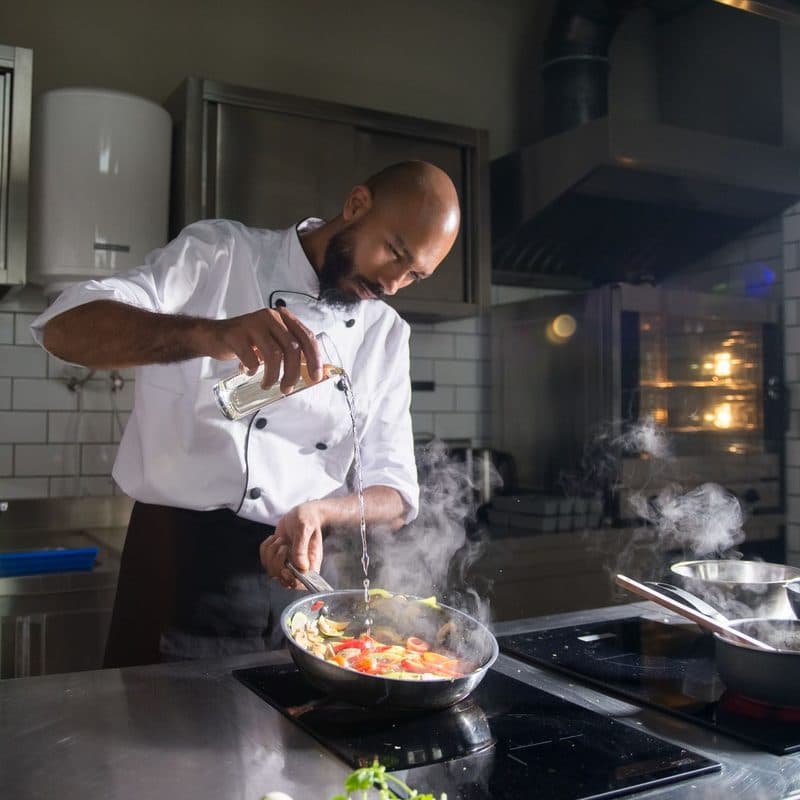 Demeyere Industry 5 Fry PanCommercial-gauge five-ply with a Silvinox surface. The heaviest, flattest base here, and dishwasher safe. | A cooktop you intend to keep pristine | 8.7 | |
| 3 | 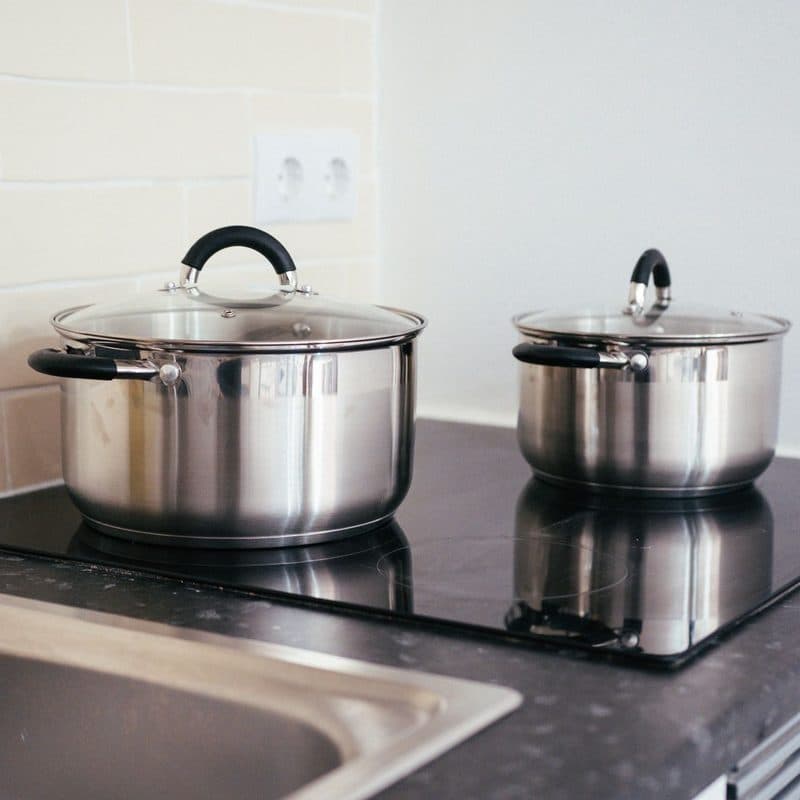 Cuisinart MultiClad Pro Cookware SetTri-ply throughout, dishwasher safe, stocked everywhere. Thinner than Tramontina, which shows on a cycling radiant element. | Replacing a damaged piece in six years without hunting | 8.0 | |
| 4 | 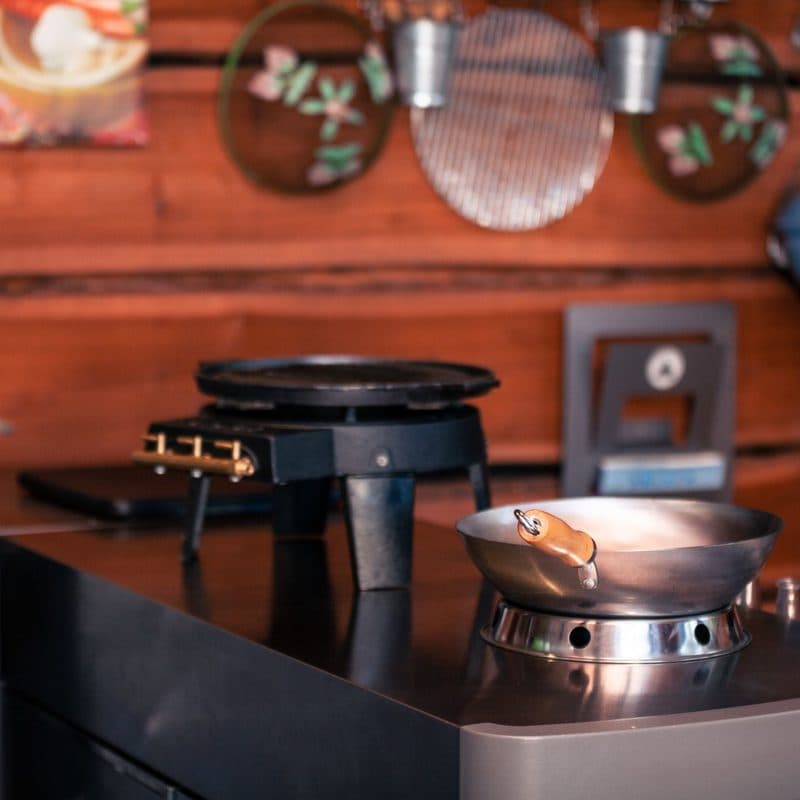 All-Clad D3 Stainless Fry PanThe best-evidenced structural durability in clad cookware, which on a contact-heating cooktop is the whole argument. | Buying the base that is still flat in twenty years | 8.6 |
#ad Buy links are affiliate links. We never print a price — prices change weekly and a printed one is wrong within a month, so every link goes to the live Amazon listing. How we are funded.
The short answer
For a glass top, buy fully-clad stainless with a thick, flat base, and the Tramontina Signature Tri-Ply Clad set is the one we would buy. Tramontina names ceramic glass in its own compatibility list, the bases are flat and heavy enough to hold contact, and the price means a warped pan is an annoyance rather than a disaster. If you want the flattest, heaviest base available and you intend to keep the cooktop pristine, buy Demeyere Industry 5 instead and accept the weight.
Why a glass top changes the answer
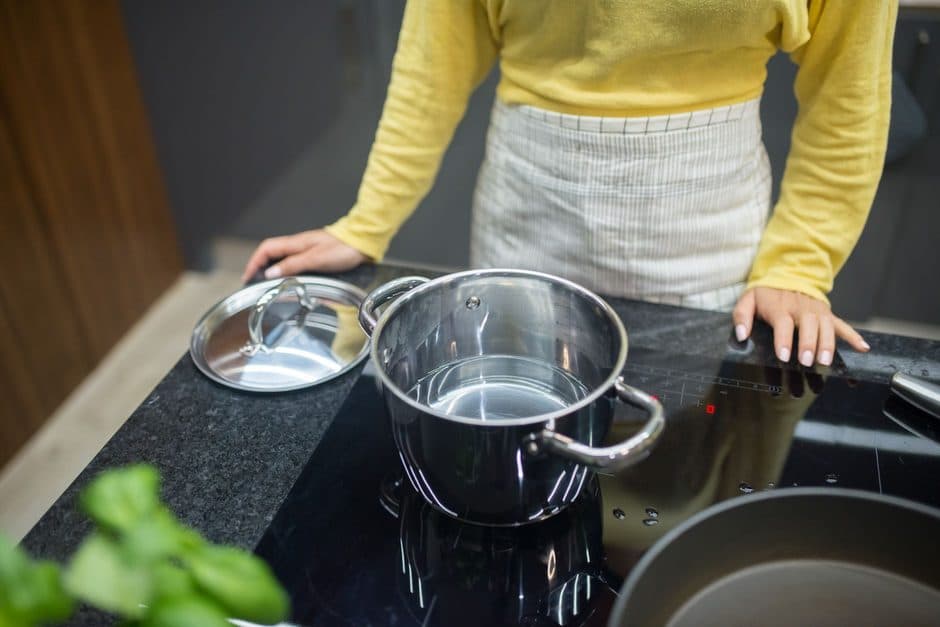
Every other cooktop is forgiving about base geometry. A gas flame wraps up the sides of a pan and heats metal that is nowhere near flat. A radiant glass element does not: it glows, the glass gets hot, and the heat crosses into the pan only where the pan is actually touching the glass. Contact area is the whole transfer mechanism.
That has three consequences that reorder a normal cookware ranking.
Flatness outranks ply count. A warped five-ply pan cooks worse on glass than a flat tri-ply one, because the five-ply pan is heating through a ring of contact while the middle sits in air. On gas you would barely notice. On glass it is the difference between browning and steaming.
Weight is a trade, not a virtue. Heavy gauge resists warping, which you want. Heavy pans also crack glass if you set them down carelessly or drag them, which you do not. The practical rule is to buy the heaviest pan you will reliably lift rather than slide.
The underside becomes a maintenance item. Burnt-on residue and trapped grit on the bottom of a pan is what scratches a radiant cooktop, and the scratches are permanent. This is the one argument for a dishwasher-safe line over All-Clad's handwash-only tri-ply, and it is covered in our dishwasher-safe ranking.
Glass top is not the same as induction
Both have a smooth glass surface and they are routinely confused, but the physics are opposite. A radiant glass top heats the glass with an element underneath and the glass heats the pan. An induction top stays relatively cool and induces a current directly in the pan's magnetic layer.
That matters because induction has a compatibility requirement — a magnetic base — that radiant glass does not, and radiant glass has a flatness requirement that induction cares about less. If your cooktop is induction, read the induction ranking instead, and check whether a stainless pan is magnetic at all before you buy. Every pan on this page works on both, which is the convenient part of buying fully-clad steel.
What to look for
- Published ceramic-glass compatibility. Not "all cooktops" in a marketing paragraph — the manufacturer's own specification list.
- Fully clad, not disc-bottomed. An encapsulated disc is a separate slab brazed to the pot, and the braze is a joint that can distort. Explained in fully clad vs disc bottom.
- Heavy gauge in the base. A published thickness beats a ply count. Made In states 2.7mm and Misen 3.0mm; most brands publish nothing.
- A smooth, unburred bottom edge. A rolled or burred bottom edge is what gouges glass.
- A lid you can keep. Lids retire pans, and glass lids crack from thermal shock faster than steel ones.
How not to wreck the cooktop
Lift pans, never slide them. Wipe the underside of the pan before it goes down, every time — this one habit prevents nearly all cooktop scratching. Never set a hot pan onto a cold wet glass surface, and never put a pan straight from the cooktop into a sink of water, which is also the main cause of warped pans.
Match the pan to the element rather than the other way round. A 10-inch pan on a 6-inch element heats in a disc and scorches at the edge of that disc, which is a sizing problem rather than a pan problem — what size skillet you actually need works that through.
How we evaluated these
We do not run a test kitchen. We read manufacturers' own published specifications and warranty documents, weight the result toward long-term durability, and synthesize third-party testing with attribution. For glass tops specifically we prioritized published ceramic-glass compatibility, base gauge, and whether the line is dishwasher safe, in that order. Full method on how we evaluate.
The picks in full
1. Best overall for glass tops
Tramontina Signature Tri-Ply Clad Cookware Set
Tramontina
Tramontina publishes ceramic glass compatibility across the line, the bases are flat, and the price makes a warp survivable.
- Base contact
- 8.8
- Coverage
- 8.8
- Durability
- 7.8
- Value
- 9.7
- Tri-ply clad throughout, not disc-bottomed on the pots
- 18/10 stainless interior over an aluminum core
- Oven safe to 500F; dishwasher safe; NSF-certified
- Induction compatible across the set
- Tramontina lifetime warranty
What it gets right
- Fully clad at a price where most sets quietly switch to disc bottoms
- The one set we would hand to someone furnishing a first kitchen
- The dishwasher-safe rating applies across the set, not just the skillets
Who should skip it
- Sets always include a piece or two you will never reach for
- The 500F ceiling limits oven work compared with buying pieces individually
- Lids are the weakest component; treat their rating as lower than the pans'
Tramontina is one of the few brands that names ceramic glass explicitly in its own compatibility list rather than leaving you to infer it from "all cooktops". The Signature Tri-Ply Clad line is rated for gas, electric, ceramic glass and induction, which is the sentence you want in writing before you put metal on an expensive cooktop.
The reason it wins here rather than in our general set ranking is the arithmetic of risk. A glass top transfers heat by direct contact, so a base that has bowed even half a millimetre loses most of its contact ring and cooks in a doughnut. Warping is the realistic failure mode on a radiant top, no manufacturer covers it under warranty, and the rational response is to own pans you can replace without flinching rather than pans you will nurse.
The compromises are the usual Tramontina ones and none of them bite on glass: the 500F oven ceiling is far above anything a radiant element asks for, and the lighter gauge only becomes a warping risk under thermal shock, which is a sink-and-cold-water problem rather than a cooktop problem.
2. Best base flatness
Demeyere Industry 5 Fry Pan
Demeyere
Commercial-gauge five-ply with a Silvinox surface. The heaviest, flattest base here, and dishwasher safe.
- Base contact
- 9.6
- Coverage
- 7.4
- Durability
- 9.2
- Value
- 7.0
- Five-ply construction from rim to rim
- Oven safe to 500F (Zwilling published spec)
- Dishwasher safe; induction compatible
- Patented Silvinox surface treatment resists fingerprints and acidic foods
- Lifetime warranty; made in Belgium
What it gets right
- Silvinox is the only surface treatment here that measurably slows cosmetic aging
- Built to a commercial-kitchen spec, and the gauge shows it
- Dishwasher safe despite the price bracket
Who should skip it
- A 500F ceiling is low for the money
- Heaviest pan on this site; genuinely tiring in the larger sizes
- Rare enough in US retail that replacing one piece takes effort
Base flatness is largely a function of gauge, and this is the heaviest pan we cover. Five plies from rim to rim at a commercial-kitchen thickness means the base has very little incentive to move, and on a glass top a base that does not move is worth more than any other property on the spec sheet.
Demeyere also addresses the second glass-top problem, which is cosmetic. Radiant tops scratch, and the scratches come from grit trapped between the pan bottom and the glass. The Silvinox surface treatment is the only finish in this category that measurably slows the micro-pitting and staining that gives an older pan a gritty bottom. Dishwasher safe, too, which keeps the underside genuinely clean rather than wiped.
The honest caveats: a 500F oven ceiling is low for the money, it is genuinely tiring to lift in the larger sizes, and US retail distribution is thin enough that replacing one piece in a decade takes effort. Weight is a double-edged argument on glass — heavy pans do not warp, and heavy pans crack glass if you drop them.
3. Best value
Cuisinart MultiClad Pro Cookware Set
Cuisinart
Tri-ply throughout, dishwasher safe, stocked everywhere. Thinner than Tramontina, which shows on a cycling radiant element.
- Base contact
- 7.8
- Coverage
- 8.6
- Durability
- 7.2
- Value
- 8.8
- Triple-ply: a pure aluminum core between stainless layers
- Oven safe to 500F (Cuisinart published spec; some retailers list 550F)
- Dishwasher safe; induction compatible
- Lifetime warranty
- Tapered rims for drip-free pouring
What it gets right
- Widely stocked, so replacing a single piece is easy
- Aluminum runs up the sidewalls, not just across the base
- Has been on the market long enough that its failure modes are known
Who should skip it
- Retailers list conflicting oven ratings; treat 500F as the safe number
- Thinner gauge than Tramontina's equivalent, and it shows on high heat
- Handles get hot faster than the clad competition
Radiant glass elements cycle: they do not modulate smoothly the way gas does, they switch between full power and off to hold an average. A thin pan tracks that cycling and a thick one averages it out, so gauge matters more on glass than on gas. MultiClad Pro is thinner than the Tramontina equivalent and you will see slightly more hot-spotting because of it.
What you buy instead is availability. Glass tops retire pans — a base gets bowed, or a bottom picks up a burr you refuse to drag across the glass again — and when that happens the useful property is being able to buy that exact piece at a general retailer rather than hunting a discontinued line. Triple-ply with aluminum running up the sidewalls, 500F by Cuisinart's own specification, dishwasher safe, induction compatible, lifetime warranty.
One caution we repeat everywhere: retailers list conflicting oven ratings for this set, some showing 550F. Cuisinart's own page says 500F, and the manufacturer is the party you will have to argue with.
4. Best premium
All-Clad D3 Stainless Fry Pan
All-Clad
The best-evidenced structural durability in clad cookware, which on a contact-heating cooktop is the whole argument.
- Base contact
- 9.2
- Coverage
- 8.0
- Durability
- 9.6
- Value
- 6.4
- Tri-ply: stainless interior, aluminum core, magnetic stainless exterior
- Oven and broiler safe to 600F (All-Clad published spec)
- Induction compatible on any stovetop
- Handwash only, per the manufacturer
- Limited lifetime warranty; bonded, engineered and assembled in Canonsburg, PA
What it gets right
- Survived America's Test Kitchen's concrete-strike abuse testing with barely a ding
- Rivets and handle join are the sturdiest in the category
- Decades of parts and service history standing behind the warranty
Who should skip it
- Costs roughly three times a Tramontina that cooks nearly as evenly
- The stick handle is narrow and bites into your palm on a loaded 12-inch pan
- Handwash only, which is a real constraint if you hate washing up
On a glass top the question "will this pan still be flat in twenty years" is not an abstraction, because flatness is how the heat gets in. All-Clad is the only pan in this category with published abuse-test evidence behind that claim: America's Test Kitchen heated pans to 500F, plunged them into ice water and struck them three times against concrete, and the All-Clad came through with barely a ding while rivals dented and one handle nearly detached.
Tri-ply bonded, 600F oven and broiler safe, induction compatible, handwash only, limited lifetime warranty, bonded in Canonsburg, Pennsylvania. The handwash-only rating is the one real nuisance for glass-top owners, because the underside of a pan used on radiant glass needs to be genuinely clean rather than approximately clean before it goes back down.
It is also the hardest value case on this page, and for a glass top specifically we would not buy the full set. Buy the skillet and the saucepan individually and let a cheaper line cover the shapes you use twice a year.
Frequently asked questions
Is stainless steel cookware safe on a glass top stove?
Yes, and it is the usual recommendation. Fully-clad stainless has a flat, heavy base that holds contact with the glass. The risk is mechanical: dragging a pan or trapping grit under it scratches the surface permanently.
What cookware should you avoid on a glass top?
Anything with a rough, ridged or burred bottom, anything warped, and very light single-layer pans that bow as they heat. Cast iron is not banned but it is heavy and rough enough to demand real care.
Does cookware need to be flat for a glass top stove?
Yes. A radiant glass element transfers heat only where the pan touches the glass, so a bowed base cooks in a ring with a cool middle. Flatness matters more on glass than on any other cooktop.
Is a glass top the same as induction?
No. A radiant glass top heats the glass with an element and the glass heats the pan. Induction induces current directly in the pan's magnetic layer and the surface stays comparatively cool.
Will stainless steel scratch a glass cooktop?
The steel itself rarely does. Grit and burnt residue trapped between the pan and the glass does. Wiping the pan's underside before every use prevents nearly all of it.
Should I buy a set or individual pieces for a glass top?
A set, if you are furnishing from nothing, because matching flat bases across every shape is the point. If you already own pans, replace the pieces whose bases have bowed and leave the rest.
Sources
- Tramontina — Signature Tri-Ply Clad Stainless Steel Fry Pan, published specification
- Cuisinart — MultiClad Pro Stainless Cookware Set, published specification
- Zwilling — Demeyere Industry 5 11-inch Frying Pan, published specification
- All-Clad — D3 Stainless 12-inch Fry Pan, published specification
- All-Clad — Care and use instructions for stainless cookware
- America's Test Kitchen — Getting Whacked (how the abuse testing works)