Cookware Sets & Buy-It-For-Life
Is Expensive Stainless Steel Cookware Worth It?
There is a price above which pans stop cooking better. Knowing where that line sits is worth more than any individual recommendation on this site.
Disclosure: Ply & Pan earns a commission on qualifying purchases made through links on this page. We take no free product and no sponsorship, and we never print a price. How we are funded.
Quick picks
The short answer. Tap any row for the full write-up.
| # | Product | Best for | Score | Price |
|---|---|---|---|---|
| 1 | 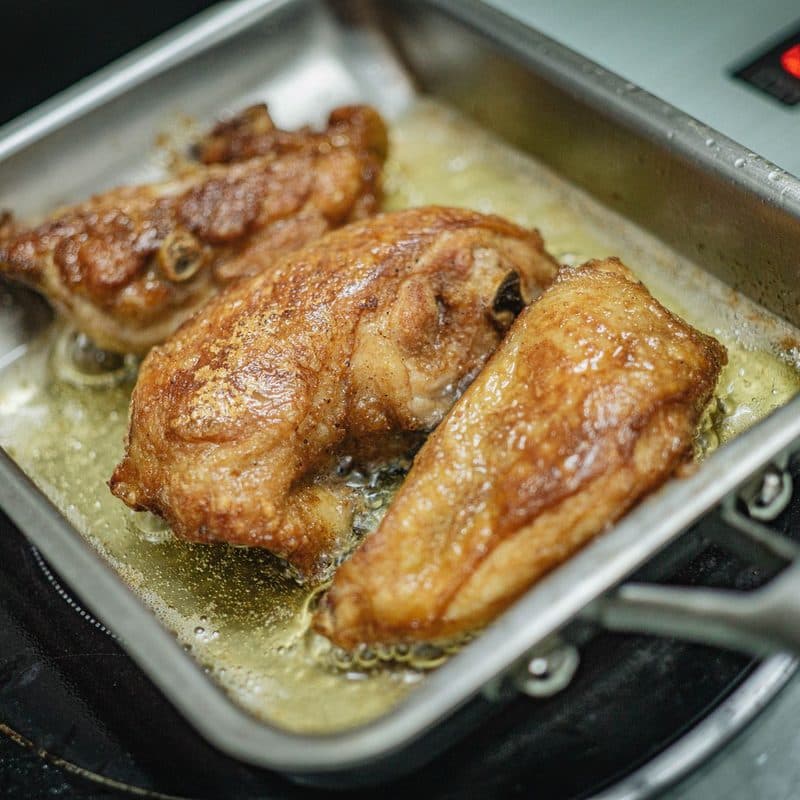 Tramontina Signature Tri-Ply Clad Fry PanFully clad, NSF-certified, dishwasher safe. This is the price point above which pans stop cooking meaningfully better. | Proving how little the premium buys in cooking terms | 8.7 | |
| 2 |  All-Clad D3 Stainless Fry PanThree times the price for a durability record, a readable warranty and a thirty-year parts history. Not better cooking — better odds. | Buyers who value warranty service and resale over savings | 9.0 | |
| 3 |  Hestan NanoBond Titanium SkilletTechnically the most advanced pan here and priced far beyond the point of diminishing returns. Buy it for the 1050F rating, not for better dinners. | A specific spec need, not a general upgrade | 8.1 |
#ad Buy links are affiliate links. We never print a price — prices change weekly and a printed one is wrong within a month, so every link goes to the live Amazon listing. How we are funded.
The short answer
Expensive stainless cookware is worth it for warranty service, oven rating, finish and resale value. It is not worth it for better cooking. The performance curve flattens as soon as a pan is genuinely fully clad, which happens at a surprisingly low price. Everything above that point is buying insurance, convenience and longevity odds — all real things, none of which show up in the food.
The three tiers, and what separates them
| Tier | What you get | What you do not |
|---|---|---|
| Below the clad floor | A pan. Usually disc-bottomed, often thin, frequently single-layer walls. | Even heat up the walls. This is the only tier where the money genuinely changes how food cooks. |
| Fully clad value | Cladding through the walls, induction compatibility, a lifetime warranty, usually a dishwasher rating. | A high oven ceiling, a premium finish, a long service record, resale value. |
| Premium clad | 600F to 1050F oven ratings, heavier gauge, better handles, documented warranties, decades of parts availability. | Meaningfully better cooking. Blind, the difference is small to nonexistent. |
What the premium genuinely buys
- A warranty you can read and claim. All-Clad publishes its terms as a document and has handled claims for decades. A young brand's identical sentence is a promise rather than a record. We compare the documents in cookware lifetime warranties compared.
- Oven rating. Published ceilings run from 500F to 1050F across the brands we track, and this is a hard number that decides whether broiler finishing is in or out of specification — oven-safe temperatures by brand.
- Gauge and base flatness over time. Thicker bases resist the slow warping that actually ends clad pans. This is the most defensible longevity argument for paying more.
- Finish engineering. Demeyere's Silvinox is the only treatment in the category that measurably slows cosmetic aging. That is a real feature you cannot get cheaply.
- Resale and parts. Premium lines hold value and remain in production for decades, so a matching piece or a replacement lid is still available years later.
What it does not buy
Better food. Above the fully-clad floor, differences in searing, browning and sauce-making are small enough that blind comparisons rarely separate them reliably. The pan is not the bottleneck; the preheat is.
Nonstick behaviour. No amount of money makes bare steel release eggs without technique. Both a cheap clad pan and an expensive one stick if you put food in before the surface is hot — see why food sticks to stainless steel.
Immunity to warping. Every manufacturer excludes thermal shock from its warranty, and a premium pan run under a cold tap while hot will deform like any other.
The arithmetic a buy-it-for-life buyer should run
The honest version of the value question is not "is this pan three times better?" It is "over twenty years, which costs less in money and in hassle?"
A fully-clad value pan is cheap enough that replacing it twice in two decades still costs less than one premium pan. So on pure money, the value tier wins. The premium wins on the other side of the ledger: never having to make the decision again, never having to shop for a replacement, and keeping something with resale value instead of something with none.
Which of those you weight more heavily is a temperament question, not a technical one. What is not defensible is buying a premium pan expecting the food to improve. The broader framing is in buy-it-for-life cookware and what cookware lasts the longest.
How we would actually spend the money
Buy a premium skillet and value everything else. The skillet is the pan you use most, it takes the most abuse, and it is where handle comfort and base flatness are felt daily. Saucepans and pots boil water, and boiling water is a solved problem at any price.
Then buy shapes rather than upgrades. A second pan that does something different — a saucier, a stock pot — widens what you can cook far more than a thicker version of a pan you already own. The two-pan kitchen is the short version and set vs buying piece by piece covers whether to buy a boxed set at all. If budget is the binding constraint, best budget stainless steel cookware is the shortlist.
The picks in full
1. Where the curve flattens
Tramontina Signature Tri-Ply Clad Fry Pan
Tramontina
Fully clad, NSF-certified, dishwasher safe. This is the price point above which pans stop cooking meaningfully better.
- Cooking
- 8.6
- Longevity
- 7.8
- Service
- 7.4
- Value
- 9.8
- Tri-ply: aluminum core between two layers of 18/10 stainless
- Oven safe to 500F (Tramontina published spec)
- Dishwasher safe; works on gas, electric, ceramic glass and induction
- NSF-certified for commercial kitchens
- Mirror-polished exterior, riveted stainless handle
What it gets right
- Cooks close enough to All-Clad that most people could not pick them apart blind
- Dishwasher safe and NSF-certified, neither of which All-Clad's tri-ply is
- Cheap enough that replacing it in fifteen years still costs less than one D3
Who should skip it
- The 500F oven rating is 100F below All-Clad and 300F below Made In
- Handle is less comfortable and the polished finish scuffs faster
- Lighter gauge base is more prone to warping under thermal shock
Every honest answer to this question needs a reference point, and this is it. Tramontina Signature is genuinely fully clad — aluminum core between two layers of 18/10, carried up the walls — NSF-certified for commercial kitchens, dishwasher safe, induction compatible, lifetime warranty.
Blind, most cooks could not reliably separate it from a pan costing three times more. That is not a slight on the expensive pan; it is a statement about where the performance curve flattens. Above fully-clad construction, additional money is buying things other than cooking.
What it gives up is a 500F rather than 600F ceiling, a lighter base that is more prone to warping under thermal shock, a handle that is less comfortable, and a polished finish that scuffs faster. Those are the things the premium actually buys.
2. Where the premium is defensible
All-Clad D3 Stainless Fry Pan
All-Clad
Three times the price for a durability record, a readable warranty and a thirty-year parts history. Not better cooking — better odds.
- Cooking
- 9.2
- Longevity
- 9.8
- Service
- 9.6
- Value
- 6.6
- Tri-ply: stainless interior, aluminum core, magnetic stainless exterior
- Oven and broiler safe to 600F (All-Clad published spec)
- Induction compatible on any stovetop
- Handwash only, per the manufacturer
- Limited lifetime warranty; bonded, engineered and assembled in Canonsburg, PA
What it gets right
- Survived America's Test Kitchen's concrete-strike abuse testing with barely a ding
- Rivets and handle join are the sturdiest in the category
- Decades of parts and service history standing behind the warranty
Who should skip it
- Costs roughly three times a Tramontina that cooks nearly as evenly
- The stick handle is narrow and bites into your palm on a loaded 12-inch pan
- Handwash only, which is a real constraint if you hate washing up
The case for paying up is not that the food is better. It is that the risk is lower. All-Clad publishes its limited lifetime warranty as a document, has operated a warranty and repair service for decades, and has barely changed the D3 line in that time, so a replacement lid bought years apart still fits.
It also has the only strong independent durability evidence in the category: in America's Test Kitchen's abuse protocol it came through 500F, an ice-water plunge and three concrete strikes essentially undamaged while rivals dented and handles loosened. Tri-ply, 600F, induction compatible, bonded in Pennsylvania.
The costs are plain: three times a Tramontina, handwash only, and a narrow stick handle that bites into your palm under load. If buying twice over twenty years does not bother you, the premium is not for you.
3. Where the premium stops making sense
Hestan NanoBond Titanium Skillet
Hestan
Technically the most advanced pan here and priced far beyond the point of diminishing returns. Buy it for the 1050F rating, not for better dinners.
- Cooking
- 9.0
- Longevity
- 9.4
- Service
- 8.2
- Value
- 5.6
- Titanium-based alloys bonded to stainless in nano layers
- Oven, broiler and grill safe to 1050F (Hestan published spec)
- Dishwasher safe; induction compatible
- Made without PFAS, nickel, lead or cadmium
- Lifetime warranty; handcrafted in Italy
What it gets right
- The 1050F rating puts grill and broiler work genuinely in spec
- A nickel-free cooking surface matters if you react to nickel
- Hestan claims four times the durability of plain stainless, and the surface does resist scratching
Who should skip it
- The most expensive skillet in this category, and it is not close
- The titanium surface changes appearance, not stick behavior; food still sticks if you rush the preheat
- Repair is not realistic, so a damaged surface means a replacement claim
The top of the market is where the value argument fully breaks down, and NanoBond is the clearest illustration. Titanium-based alloys bonded into the steel in nano layers, oven, broiler and grill safe to 1050F — by a wide margin the highest rating in clad cookware — dishwasher safe, made without PFAS, nickel, lead or cadmium, lifetime warranty, handcrafted in Italy.
All of that is real and some of it is genuinely useful: a nickel-free cooking surface matters if you react to nickel, and the 1050F rating puts grill and broiler work properly in spec.
But it is the most expensive skillet on this site and it is not close, the titanium surface changes hardness and appearance rather than stick behaviour — food still sticks if you rush the preheat — and a damaged surface means a warranty claim rather than a repair. Buy it for a reason, not as an upgrade.
Frequently asked questions
Is expensive stainless steel cookware worth it?
For warranty service, oven rating, finish and resale, yes. For better cooking, no. Once a pan is genuinely fully clad, the performance curve flattens and extra money buys longevity odds rather than better food.
Does expensive cookware cook better?
Barely. Blind, most cooks cannot reliably separate a fully-clad value pan from a premium one by the food. The preheat matters far more than the price.
What is the cheapest cookware worth buying?
The cheapest pan that is genuinely fully clad rather than disc-bottomed. Below that line the money does change how food cooks; above it, much less so.
Is All-Clad worth three times the price of Tramontina?
It depends what you are buying. The cooking difference is small. The difference in warranty service history, oven rating, base thickness and resale value is real, and that is what the premium pays for.
Where should I spend the most money in a cookware set?
The skillet. It gets the most use and the most abuse, and handle comfort and base flatness are felt daily. Saucepans and stock pots boil water, which is a solved problem at any price.
Does expensive cookware last longer?
Usually, because thicker bases resist the slow warping that ends clad pans. But every brand excludes thermal shock from its warranty, so care matters more than price.
Sources
- All-Clad — D3 Stainless 12-inch Fry Pan, published specification
- All-Clad — Cookware Limited Lifetime Warranty (PDF)
- Tramontina — Signature Tri-Ply Clad Stainless Steel Fry Pan, published specification
- Hestan Culinary — NanoBond titanium skillet, published specification
- America's Test Kitchen — The Best Stainless-Steel Skillets
- America's Test Kitchen — Getting Whacked (how the abuse testing works)
- Consumer Reports — Best cookware sets
- US Federal Trade Commission — Endorsement guides for online reviews