Skillets & Fry Pans
The Best Stainless Steel Skillet for Eggs
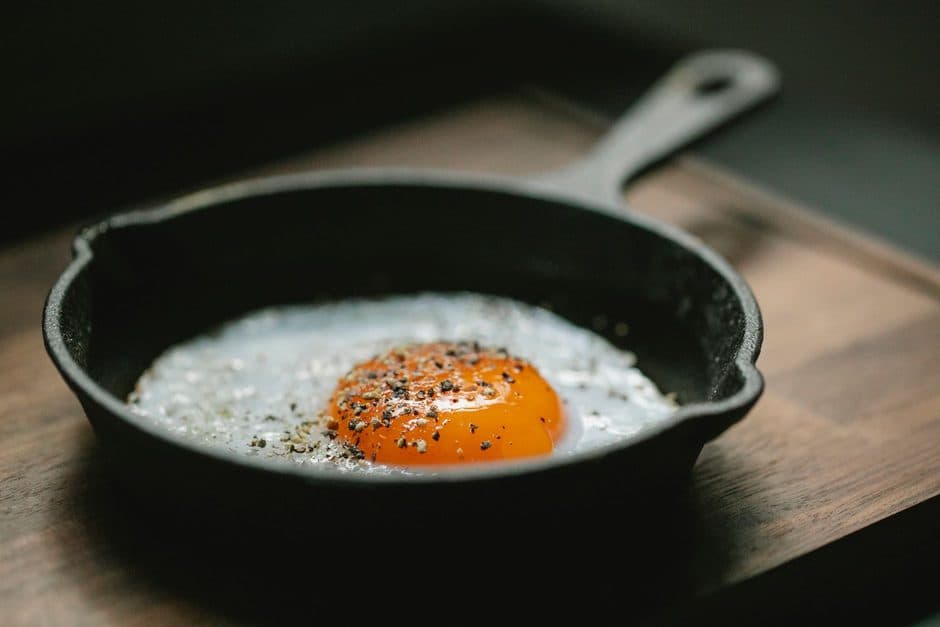
Eggs are the one food that punishes a slow pan. That makes this a different ranking from our general skillet list.
Disclosure: Ply & Pan earns a commission on qualifying purchases made through links on this page. We take no free product and no sponsorship, and we never print a price. How we are funded.
Quick picks
The short answer. Tap any row for the full write-up.
| # | Product | Best for | Score | Price |
|---|---|---|---|---|
| 1 | 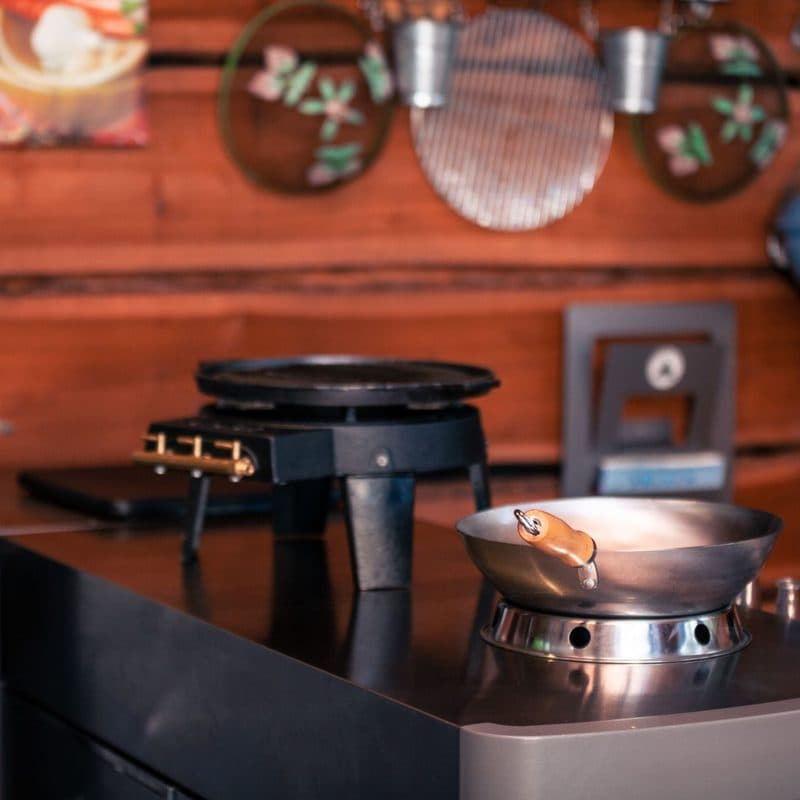 All-Clad D3 Stainless Fry PanThree plies react faster than five, and eggs live or die on how quickly a pan answers the burner. Buy the 8-inch. | Holding a moderate heat evenly and then letting go of it fast | 9.1 | |
| 2 | 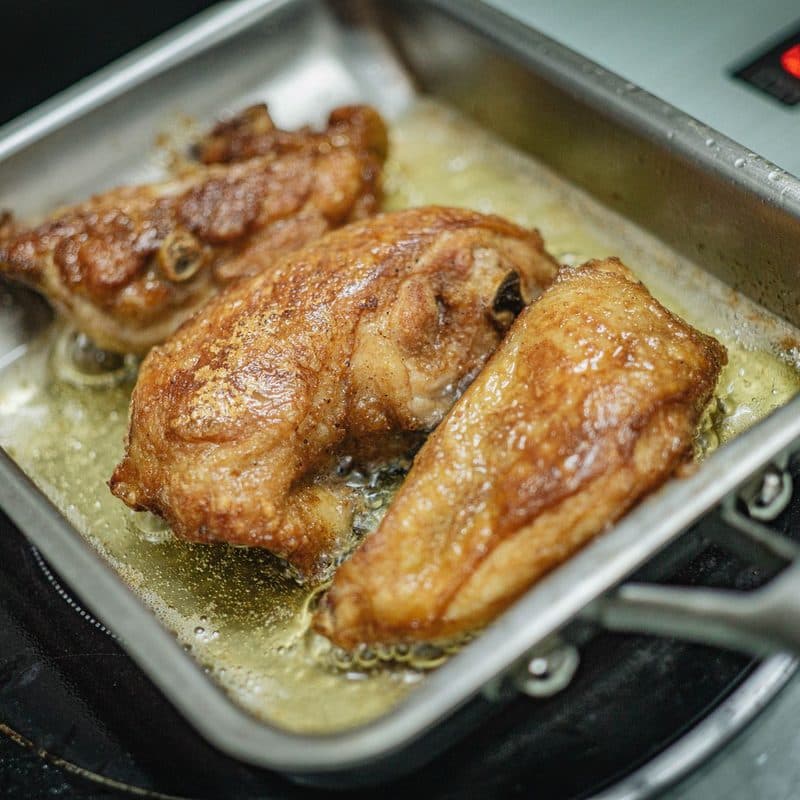 Tramontina Signature Tri-Ply Clad Fry PanTri-ply, dishwasher safe, roughly a third of the price. Eggs do not interrogate the gauge. | Anyone unwilling to spend All-Clad money on an egg pan | 8.7 | |
| 3 | 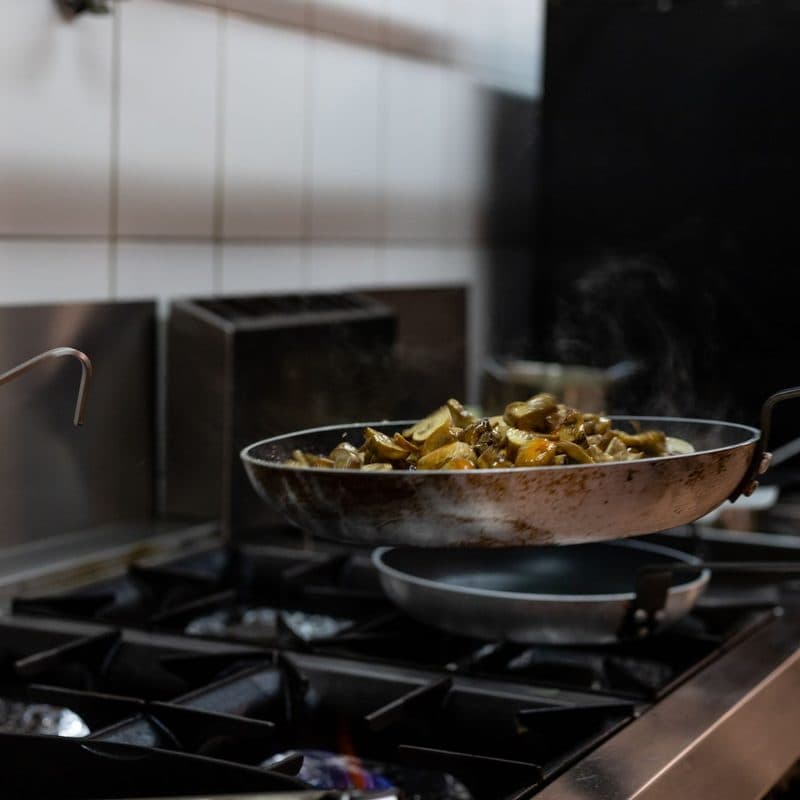 Zwilling Spirit 3-Ply Fry PanThe most comfortable handle in tri-ply, which matters when soft scrambled eggs mean three minutes on and off the heat. | The low-and-slow method, where you hold the pan and stir | 8.2 | |
| 4 |  Made In Stainless Clad Frying PanFive plies make it a worse scrambling pan and a better frittata pan. The 800F rating is the reason. | Egg dishes that start on the hob and finish under a broiler | 8.5 |
#ad Buy links are affiliate links. We never print a price — prices change weekly and a printed one is wrong within a month, so every link goes to the live Amazon listing. How we are funded.
The short answer
For eggs, buy an 8-inch tri-ply skillet, and the All-Clad D3 is the one we would buy. Three plies shed heat faster than five, which is the property that rescues eggs from overcooking, and an 8-inch base keeps two or three eggs in contact with metal instead of leaving a dry, overheating ring around them. If the price is wrong for you, the Tramontina Signature is the same construction for roughly a third of the money and eggs will not tell the difference.
Why this is not our general ranking
Our main skillet roundup ranks on durability, because that is what decides a buy-it-for-life purchase. Eggs reward a different trait. They want a pan that changes temperature quickly, and the pans that score best on thermal mass and sear recovery are precisely the ones that respond slowest.
So the five-ply pans that lead a general ranking drop here, and tri-ply leads. The full version of that trade-off is in tri-ply vs 5-ply, and eggs are the cleanest practical example of it anywhere in a kitchen.
Specifications side by side
| Pan | Plies | Oven rating | Dishwasher | Warranty |
|---|---|---|---|---|
| All-Clad D3 | 3 | 600F, broiler safe | Handwash only | Limited lifetime, US and Canada |
| Tramontina Signature | 3 | 500F | Dishwasher safe | Lifetime |
| Zwilling Spirit | 3 | 500F | Dishwasher safe | Not published on the product page |
| Made In Stainless Clad | 5, 2.7mm | 800F / 430C | Handwash preferred | Lifetime on stainless |
Every figure above is the manufacturer's own published specification, cited in the sources at the foot of this page. Where a brand does not publish a figure we say so rather than estimating one.
What to look for in an egg pan
8 inches, not 12. The usable cooking surface of a 12-inch skillet is roughly 40% larger than a 10-inch, which is the right choice for browning a pan of vegetables and the wrong one for two eggs. Surface the food does not cover simply runs hotter than the rest and burns your butter. Sizing in full in what size skillet you need.
Tri-ply over five-ply. Fewer layers, less mass, faster response in both directions. This is one of the few categories where the cheaper construction is also the better one.
Sloped sides. A spatula has to get under an omelette, and a flared wall lets it. A straight-sided saute pan fights you.
Light enough to lift one-handed. The reliable scrambled-egg method involves moving the pan on and off the heat repeatedly. A 3.0mm pan is a liability there, which is why the heaviest pans on this site are absent from this list.
A base you have checked is flat. Set the pan on a genuinely flat surface and press one edge. Any rock means a pool of butter on one side and dry metal on the other, and on eggs that shows up on the first attempt.
The pan is the smaller half of the problem
We should be honest about this: no stainless skillet is nonstick, and buying a better one does not replace the technique. Eggs release from steel when the pan is preheated into the right window, the fat goes in before the egg, and the egg is left alone long enough to set a crust. Rush any of the three and the most expensive pan on this page will glue your breakfast to itself.
The method, including the water test for judging that window and the two approaches that work, is in how to cook eggs in stainless steel. The underlying physics — protein bonding to hot metal, and the pan's surface contracting as cold food lands — is in why food sticks.
And an answer we are not going to pretend otherwise about: if you cook eggs every day and nothing else in that pan, a cheap nonstick skillet is a reasonable purchase alongside your steel. Nonstick coatings have a finite life, so treat it as a consumable rather than a buy-it-for-life item — the full comparison is in stainless vs nonstick.
How long will an egg pan last?
Longer than any other pan in the house, because egg cookery is the gentlest thing you can do to clad steel. You are nowhere near the oven ceiling, you are not shocking a hot pan with cold liquid, and you are not scraping fond off the base with a metal spatula. The two failure modes that retire clad pans — a warped base and loose rivets — are both driven by the abuse an egg pan never sees.
The one habit that shortens the life of a small stainless pan is salting water for poaching before it moves. Salt that settles on a cold base sits in a concentrated layer and pits the steel permanently, and All-Clad's own care instructions tell you to bring liquids to a boil or wait until food starts to cook before adding salt for exactly that reason. More on that in does stainless steel cookware rust.
The picks in full
1. Best overall for eggs
All-Clad D3 Stainless Fry Pan
All-Clad
Three plies react faster than five, and eggs live or die on how quickly a pan answers the burner. Buy the 8-inch.
- Response
- 9.2
- Evenness
- 8.8
- Durability
- 9.6
- Value
- 7.2
- Tri-ply: stainless interior, aluminum core, magnetic stainless exterior
- Oven and broiler safe to 600F (All-Clad published spec)
- Induction compatible on any stovetop
- Handwash only, per the manufacturer
- Limited lifetime warranty; bonded, engineered and assembled in Canonsburg, PA
What it gets right
- Survived America's Test Kitchen's concrete-strike abuse testing with barely a ding
- Rivets and handle join are the sturdiest in the category
- Decades of parts and service history standing behind the warranty
Who should skip it
- Costs roughly three times a Tramontina that cooks nearly as evenly
- The stick handle is narrow and bites into your palm on a loaded 12-inch pan
- Handwash only, which is a real constraint if you hate washing up
Egg cookery is a narrow-temperature problem. Too cool and the protein sits in the oil and weeps; too hot and it bonds to the steel before the fat can get between the two. The pan's job is to hold a moderate temperature evenly and then surrender it the moment you move it off the ring, and that second half is where ply count stops being a spec-sheet argument.
Tri-ply has less thermal mass than five-ply, so it both heats and cools faster. For searing a steak that is a disadvantage. For soft scrambled eggs, where the fix for overcooking is to pull the pan and keep stirring, it is the most useful property a pan can have. The D3 is the reference tri-ply: stainless, aluminum core, magnetic stainless, a 600F oven and broiler rating, induction compatible, handwash only, limited lifetime warranty, bonded in Canonsburg, Pennsylvania.
Buy it in 8 inches rather than 12. Two eggs in a 12-inch pan leave most of the surface empty and overheating, and an empty hot zone is what scorches butter. The narrow stick handle we criticise on a loaded 12-inch is a non-issue on a pan this light.
2. Best value for eggs
Tramontina Signature Tri-Ply Clad Fry Pan
Tramontina
Tri-ply, dishwasher safe, roughly a third of the price. Eggs do not interrogate the gauge.
- Response
- 8.8
- Evenness
- 8.4
- Durability
- 7.8
- Value
- 9.7
- Tri-ply: aluminum core between two layers of 18/10 stainless
- Oven safe to 500F (Tramontina published spec)
- Dishwasher safe; works on gas, electric, ceramic glass and induction
- NSF-certified for commercial kitchens
- Mirror-polished exterior, riveted stainless handle
What it gets right
- Cooks close enough to All-Clad that most people could not pick them apart blind
- Dishwasher safe and NSF-certified, neither of which All-Clad's tri-ply is
- Cheap enough that replacing it in fifteen years still costs less than one D3
Who should skip it
- The 500F oven rating is 100F below All-Clad and 300F below Made In
- Handle is less comfortable and the polished finish scuffs faster
- Lighter gauge base is more prone to warping under thermal shock
The compromises in the Tramontina Signature are a lighter gauge and a 500F oven ceiling. Neither is an egg problem. You are cooking at a fraction of that ceiling, and the thin-gauge warping risk comes from thermal shock, which is not something a two-egg omelette inflicts on a pan.
What you keep is the part that matters: an aluminum core between two layers of 18/10 stainless, running rim to rim rather than welded to the base, plus NSF certification and a published dishwasher-safe rating that All-Clad's tri-ply does not have. If eggs are the reason you are nervous about stainless, buying the cheap pan to learn on is the rational move.
3. Best handle
Zwilling Spirit 3-Ply Fry Pan
Zwilling
The most comfortable handle in tri-ply, which matters when soft scrambled eggs mean three minutes on and off the heat.
- Response
- 8.6
- Evenness
- 8.2
- Durability
- 7.6
- Value
- 7.8
- Tri-ply: 18/10 stainless over a thick aluminum core
- Oven safe to 500F (Zwilling published spec)
- Dishwasher safe; induction compatible
- V-shaped handle designed to be gripped with oven mitts
- Flared rims for clean pouring
What it gets right
- The most comfortable handle of any tri-ply pan we looked at
- Zwilling's retail footprint makes warranty contact straightforward
- Dishwasher safe, unlike All-Clad's tri-ply
Who should skip it
- Zwilling does not publish clear warranty terms on the product page
- A 500F ceiling at a mid-tier price makes it hard to place
- The line is muddied by ceramic-nonstick versions sold under the same Spirit name
French-style scrambled eggs are made by lifting the pan on and off the burner while stirring continuously, which turns handle comfort from a nicety into the whole experience. Zwilling's V-shaped handle spreads the load across a wider contact area than All-Clad's narrow stick profile, and it is designed to be gripped through a mitt.
The caveats are real and we publish them elsewhere: a 500F oven ceiling at a mid-tier price, and warranty terms Zwilling does not state clearly on the product page. For an egg pan that never goes near a broiler the ceiling is irrelevant and the handle is the feature you touch every morning. Watch the product name, though — Zwilling sells a ceramic-nonstick pan under the same Spirit label.
4. Best for frittatas and oven finishes
Made In Stainless Clad Frying Pan
Made In
Five plies make it a worse scrambling pan and a better frittata pan. The 800F rating is the reason.
- Response
- 7.8
- Evenness
- 9.2
- Durability
- 8.6
- Value
- 8.4
- Five-ply construction, 2.7mm thick (Made In published spec)
- Heat safe to 800F / 430C, 200F above All-Clad's rating
- Gas, electric and induction; handwash preferred
- Lifetime warranty on stainless; the frying pans are made in Italy
- Flared rim pours cleanly, which sounds trivial until you deglaze
What it gets right
- The 800F rating puts broiler work and hard oven finishes in spec rather than in hope
- Longer, flatter handle is more comfortable than All-Clad's stick handle
- Direct-to-consumer pricing undercuts All-Clad at an equivalent ply count
Who should skip it
- No decades-long warranty service record yet; the company is young
- Five plies make it slower to respond than a tri-ply of the same size
- Warranty excludes warping from thermal shock, same as everyone else's
A frittata, a shakshuka or a Spanish tortilla inverts the problem. Here you want thermal steadiness rather than responsiveness, and you want to put the pan under a broiler to set the top without worrying about the published ceiling. Made In publishes 800F / 430C for the Stainless Clad line, 200F above All-Clad and 300F above Tramontina and Zwilling.
Five plies at a stated 2.7mm hold their temperature when six cold eggs land in the pan, which is the exact moment a thin pan stalls and eggs start to stew. The trade is honest: this is the wrong pan for soft scrambled eggs, because it does not let go of heat quickly enough to save you when you overshoot.
Frequently asked questions
What is the best stainless steel skillet for eggs?
An 8-inch tri-ply skillet, and we would buy the All-Clad D3. Three plies shed heat faster than five, which is what lets you rescue eggs by pulling the pan off the heat. The Tramontina Signature is the same construction for roughly a third of the price.
What size skillet is best for eggs?
8 inches for two or three eggs. Pan surface that food does not cover runs hotter than the rest and scorches the fat. A 12-inch skillet is the right size for browning vegetables, not for an omelette.
Is tri-ply or 5-ply better for eggs?
Tri-ply. It has less thermal mass, so it both heats and cools faster, and that responsiveness is what saves eggs from overcooking. Five-ply is the better choice for frittatas and anything that finishes in the oven.
Can you cook eggs in stainless steel without sticking?
Yes, with technique rather than equipment: preheat into the right window, add fat before the egg, and leave the egg undisturbed long enough to set a crust. No stainless pan is nonstick, and no pan on this page changes that.
Should I just buy a nonstick pan for eggs?
It is a legitimate second pan if you cook eggs daily. Treat it as a consumable with a three-to-five-year life rather than a buy-it-for-life purchase, and keep the steel for everything else.
Does a dishwasher-safe rating matter for an egg pan?
It is convenient, and it is also a warranty question. Tramontina and Zwilling publish dishwasher-safe ratings; All-Clad specifies handwashing, and Made In prefers it and excludes dishwasher staining from its warranty.
Sources
- All-Clad — D3 Stainless 12-inch Fry Pan, published specification
- All-Clad — Care and use instructions for stainless cookware
- Tramontina — Signature Tri-Ply Clad Stainless Steel Fry Pan, published specification
- Zwilling — Spirit 3-Ply 12-inch Frying Pan, published specification
- Made In — Stainless Clad Frying Pan, published specification
- Made In — Warranty policy
- All-Clad — Cooking on stainless steel for beginners (brand blog)