Skillets & Fry Pans
The Best Stainless Steel Pan for Fish
Crisp skin that lifts in one piece is a heat-management problem, not a coating problem. The right pan makes it repeatable.
Disclosure: Ply & Pan earns a commission on qualifying purchases made through links on this page. We take no free product and no sponsorship, and we never print a price. How we are funded.
Quick picks
The short answer. Tap any row for the full write-up.
| # | Product | Best for | Score | Price |
|---|---|---|---|---|
| 1 | 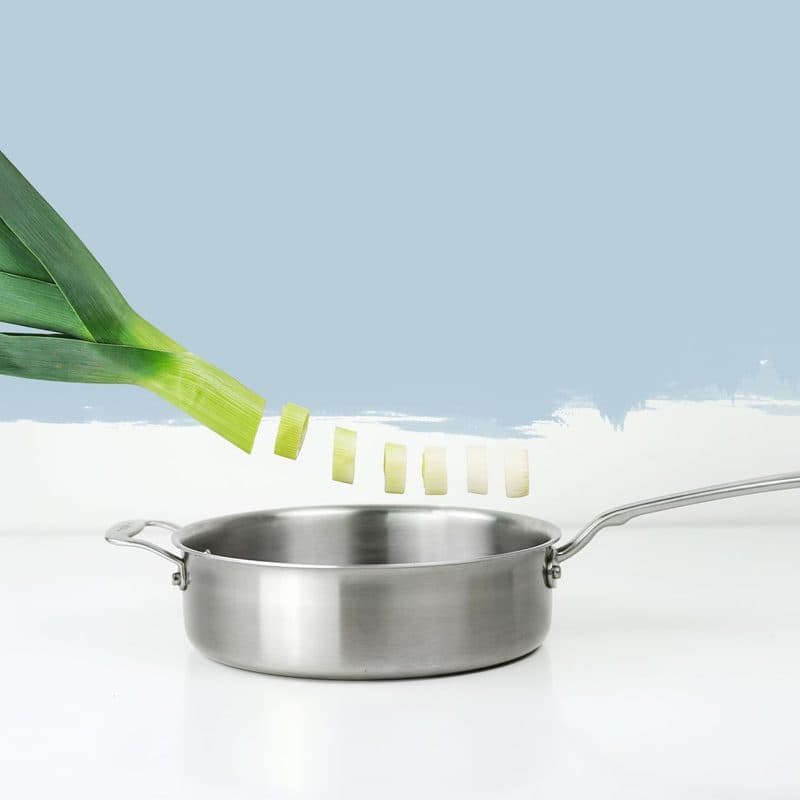 Made In Stainless Clad Frying PanFive plies at 2.7mm hold their temperature when a cold fillet lands, and the 800F rating covers finishing the thickest pieces under heat. | Skin-on fillets finished under a broiler | 9.0 | |
| 2 | 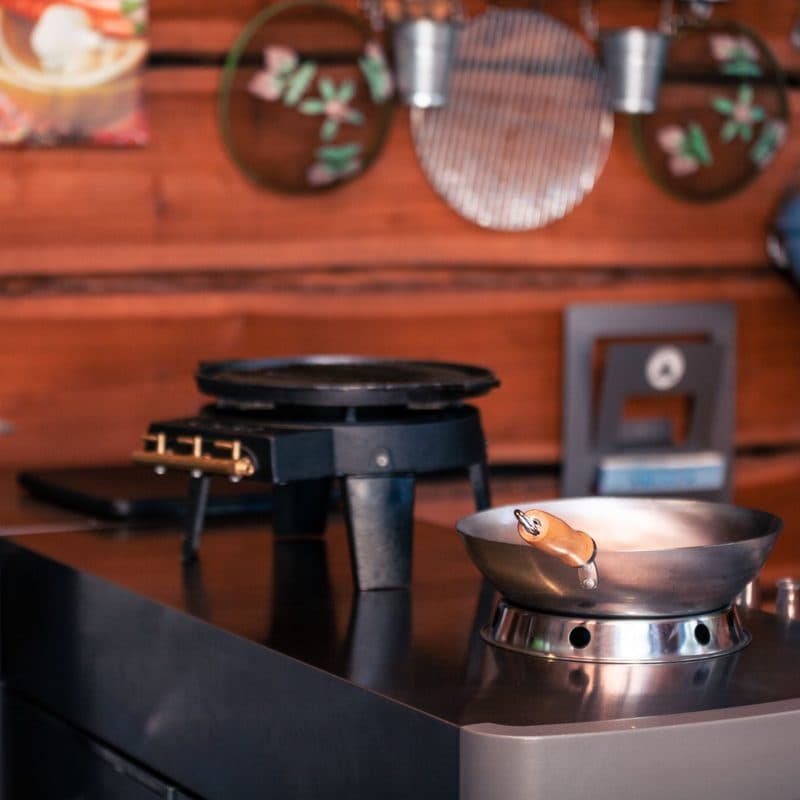 All-Clad D3 Stainless Fry PanResponds faster than any 5-ply here, which is what you want with thin fillets, and the 600F rating still covers a broiler finish. | Delicate fillets where you need fast heat control | 8.7 | |
| 3 | 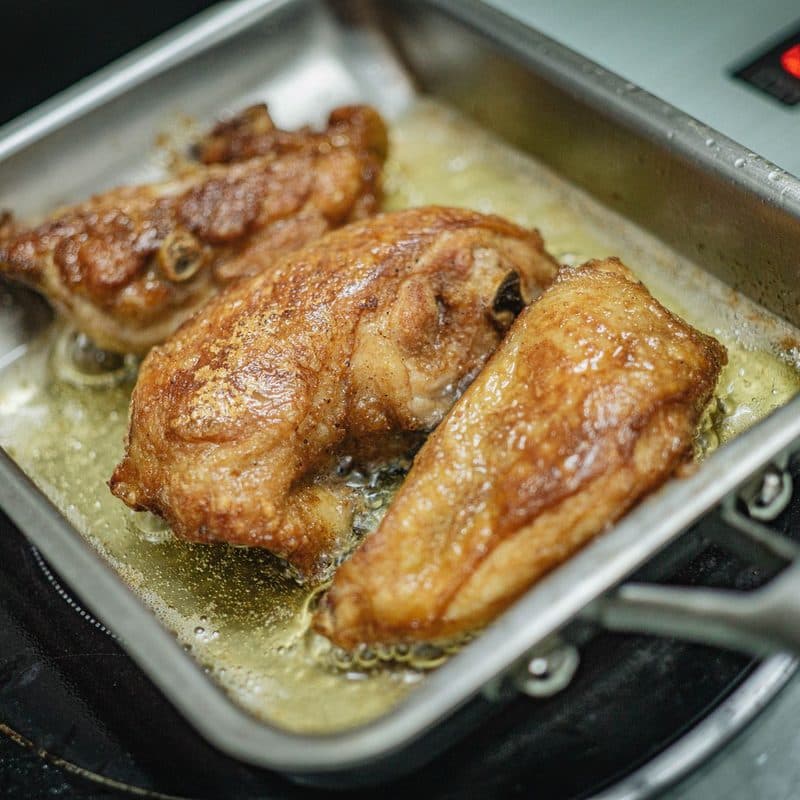 Tramontina Signature Tri-Ply Clad Fry PanDishwasher safe, which is the feature that matters most on a pan you will cook fish in weekly, and fully clad so the walls do not scorch. | Cooking fish often without babying the pan | 8.4 |
#ad Buy links are affiliate links. We never print a price — prices change weekly and a printed one is wrong within a month, so every link goes to the live Amazon listing. How we are funded.
The short answer
The Made In Stainless Clad frying pan is the best stainless pan for fish, because thermal mass is what stops skin sticking and five plies at 2.7mm give you the most of it at a sane price. The All-Clad D3 is the better choice for thin, delicate fillets where fast heat control matters more than mass. The Tramontina is the pick if you cook fish often and want to put the pan in the dishwasher afterwards.
Why fish sticks, and why it is not the steel
Fish skin sticks for a specific, fixable reason. Proteins in the skin form covalent bonds with the metal surface when they meet it below the temperature at which they set and contract. Get the surface hot enough and the proteins sear and shrink away from the pan; get it wrong and they bond, and the skin tears when you lift.
A cold fillet pulls a lot of heat out of the pan in the first few seconds, which is why a thin pan fails at this even when it was hot to begin with. The pan has to be hot enough to survive that drop. The general version of this is in why food sticks to stainless steel, and the preheat test is in the stainless steel water test.
The technique, in order
- Dry the fish properly. Pat the skin with paper towel until it stops darkening the paper. Surface water boils before the skin sears, and that steam is what prevents browning.
- Preheat the empty pan on medium for two to three minutes. Test it: a drop of water should skitter across the surface as a single bead rather than hissing and evaporating. That is the Leidenfrost point and it is the signal the pan is ready.
- Add oil, then the fish, skin side down, away from you. A neutral oil with a high smoke point. The fillet should sizzle immediately and audibly.
- Press the fillet flat for ten seconds. Skin contracts as it heats and curls the fillet up off the pan. A fish spatula or the back of a spoon held across the fillet stops that.
- Do not move it. The fillet will release itself when the crust has formed, typically after two to four minutes depending on thickness. If it resists, it is not ready.
- Flip once, briefly. Thirty to sixty seconds on the flesh side is usually enough, or finish thick pieces in the oven.
What makes a pan good for fish
- Thermal mass. Thicker base, steadier surface temperature when the cold fillet lands. This is the single most important property.
- Fully clad walls. A disc-bottomed pan has cooler edges, so a long fillet sticks at one end and releases at the other.
- A low, flared side. You need to get a thin spatula under the fish at a shallow angle. High straight walls make that awkward — see skillet vs sauté pan.
- Oven rating, for thick pieces. A hob start and oven finish is the standard method for anything over an inch thick.
- Easy cleaning. Fish residue is the least pleasant thing to leave in a pan, which makes a dishwasher rating a genuine feature.
Which size
A 10-inch handles two fillets. A 12-inch handles four, and crowding is the second most common cause of sticking after an under-heated pan, because the moisture released by several fillets drops the surface temperature and turns a sear into a steam. If you cook fish for more than two people, the 12-inch is the right pan — the best 12-inch skillets covers that size specifically.
Is nonstick simply easier for fish?
For the first year, yes. A coated pan will release a fillet with no technique at all. The trade is that it cannot brown as hard, so you do not get the same crust, and the coating is a consumable: it degrades with heat and use and the pan becomes rubbish in a way stainless never does.
If you cook fish twice a year, a nonstick pan is the pragmatic answer. If you cook it weekly and want crisp skin, learn the preheat on steel once and the problem is permanently solved. The honest comparison is in stainless vs nonstick, and if you are starting from scratch, cookware for beginners sets out the learning curve.
The picks in full
1. Best overall for fish
Made In Stainless Clad Frying Pan
Made In
Five plies at 2.7mm hold their temperature when a cold fillet lands, and the 800F rating covers finishing the thickest pieces under heat.
- Heat hold
- 9.4
- Release
- 8.8
- Rim
- 9.0
- Value
- 8.2
- Five-ply construction, 2.7mm thick (Made In published spec)
- Heat safe to 800F / 430C, 200F above All-Clad's rating
- Gas, electric and induction; handwash preferred
- Lifetime warranty on stainless; the frying pans are made in Italy
- Flared rim pours cleanly, which sounds trivial until you deglaze
What it gets right
- The 800F rating puts broiler work and hard oven finishes in spec rather than in hope
- Longer, flatter handle is more comfortable than All-Clad's stick handle
- Direct-to-consumer pricing undercuts All-Clad at an equivalent ply count
Who should skip it
- No decades-long warranty service record yet; the company is young
- Five plies make it slower to respond than a tri-ply of the same size
- Warranty excludes warping from thermal shock, same as everyone else's
Fish punishes thin pans. A cold fillet dumps heat into the surface the instant it lands, and if the surface temperature falls below the point where the proteins set, the skin bonds to the steel instead of releasing from it. Thermal mass is the fix, and Made In's five plies at 2.7mm give you more of it than any tri-ply pan.
The 800F rating is the second reason this is the pick. A thick piece of cod or a whole small fish wants a hob start and an oven or broiler finish, and Made In is one of only two brands here whose published rating puts that comfortably in specification.
The flared rim matters more for fish than for most cooking, because you slide a fish spatula under a fillet and lift it out rather than tipping it. A clean rim and a shallow flare make that easier. Against it: five plies respond slowly if you need heat out fast, handwashing is preferred, and the brand is young.
2. Best tri-ply for fish
All-Clad D3 Stainless Fry Pan
All-Clad
Responds faster than any 5-ply here, which is what you want with thin fillets, and the 600F rating still covers a broiler finish.
- Heat hold
- 8.8
- Release
- 9.0
- Rim
- 8.4
- Value
- 6.6
- Tri-ply: stainless interior, aluminum core, magnetic stainless exterior
- Oven and broiler safe to 600F (All-Clad published spec)
- Induction compatible on any stovetop
- Handwash only, per the manufacturer
- Limited lifetime warranty; bonded, engineered and assembled in Canonsburg, PA
What it gets right
- Survived America's Test Kitchen's concrete-strike abuse testing with barely a ding
- Rivets and handle join are the sturdiest in the category
- Decades of parts and service history standing behind the warranty
Who should skip it
- Costs roughly three times a Tramontina that cooks nearly as evenly
- The stick handle is narrow and bites into your palm on a loaded 12-inch pan
- Handwash only, which is a real constraint if you hate washing up
Thin fillets — sole, trout, small mackerel — cook in two or three minutes a side and the risk is overcooking rather than sticking. For those, response matters more than mass, and tri-ply responds faster than five-ply by construction: less metal to heat and less metal to cool.
The D3 is the reference version of that. Oven and broiler safe to 600F, induction compatible, limited lifetime warranty, bonded in Pennsylvania, and the most durable pan in the category by independent abuse testing.
Handwash only is the real cost with fish, because a fish pan needs washing immediately rather than soaking. The stick handle is narrow, and it is roughly three times the price of a Tramontina that will cook a fillet perfectly well.
3. Best value for fish
Tramontina Signature Tri-Ply Clad Fry Pan
Tramontina
Dishwasher safe, which is the feature that matters most on a pan you will cook fish in weekly, and fully clad so the walls do not scorch.
- Heat hold
- 8.0
- Release
- 8.4
- Rim
- 8.0
- Value
- 9.8
- Tri-ply: aluminum core between two layers of 18/10 stainless
- Oven safe to 500F (Tramontina published spec)
- Dishwasher safe; works on gas, electric, ceramic glass and induction
- NSF-certified for commercial kitchens
- Mirror-polished exterior, riveted stainless handle
What it gets right
- Cooks close enough to All-Clad that most people could not pick them apart blind
- Dishwasher safe and NSF-certified, neither of which All-Clad's tri-ply is
- Cheap enough that replacing it in fifteen years still costs less than one D3
Who should skip it
- The 500F oven rating is 100F below All-Clad and 300F below Made In
- Handle is less comfortable and the polished finish scuffs faster
- Lighter gauge base is more prone to warping under thermal shock
The practical problem with a fish pan is not performance, it is aftermath: protein residue and oil that has been held near its smoke point. A dishwasher-safe pan is a meaningfully better fish pan than a handwash-only one, whatever the spec sheet says, and Tramontina publishes that rating.
It is also genuinely fully clad — aluminum core between two layers of 18/10, carried up the walls — so the edges of the pan are not cooler than the middle, which is what causes one end of a fillet to stick while the other releases. NSF-certified, induction compatible, lifetime warranty.
The 500F ceiling limits broiler finishing, the lighter base holds less heat so you need a longer preheat with cold fish, and the base is more prone to warping if you run it under the tap while hot — exactly the temptation after cooking fish.
Frequently asked questions
What is the best stainless steel pan for fish?
The Made In Stainless Clad frying pan. Five plies at 2.7mm hold their temperature when a cold fillet lands, which is the property that stops skin sticking, and the 800F rating covers finishing thick pieces under a broiler.
Can you cook fish in a stainless steel pan without it sticking?
Yes. Dry the skin, preheat until a drop of water beads and skitters, add oil, lay the fillet down and do not move it. It releases itself once the crust forms, usually in two to four minutes.
Why does fish skin stick to stainless steel?
Because the surface was not hot enough when the fillet landed. Below the searing temperature, skin proteins bond to the metal instead of contracting away from it. Cold fish in a thin pan is the worst case.
Should you press fish down in the pan?
For the first ten seconds, yes. Skin contracts as it heats and curls the fillet up off the surface, so a brief press with a spatula keeps the whole skin in contact while the crust forms.
Is stainless or nonstick better for salmon?
Stainless, if you want crisp skin — it browns harder and does not degrade. Nonstick is more forgiving if you cook fish rarely and do not mind softer skin.
What size pan is best for cooking fish?
A 10-inch for two fillets, a 12-inch for four. Crowding drops the surface temperature and turns a sear into a steam, which is the second most common cause of sticking.
Sources
- Made In — Stainless Clad Frying Pan, published specification
- All-Clad — D3 Stainless 12-inch Fry Pan, published specification
- Tramontina — Signature Tri-Ply Clad Stainless Steel Fry Pan, published specification
- Encyclopaedia Britannica — Leidenfrost effect
- All-Clad — Cooking on stainless steel for beginners (brand blog)
- America's Test Kitchen — The Best Stainless-Steel Skillets