Brands & Head-to-Head
Hestan NanoBond vs All-Clad
NanoBond publishes the highest oven rating in clad cookware and a nickel-free surface. It also costs more than anything else here.
Disclosure: Ply & Pan earns a commission on qualifying purchases made through links on this page. We take no free product and no sponsorship, and we never print a price. How we are funded.
Quick picks
The short answer. Tap any row for the full write-up.
| # | Product | Best for | Score | Price |
|---|---|---|---|---|
| 1 | Hestan NanoBond Titanium Skillet1050F, dishwasher safe, no nickel in the cooking surface. The most expensive skillet here and not close. | Grill and broiler work, and a nickel-free cooking surface | 8.6 | |
| 2 | 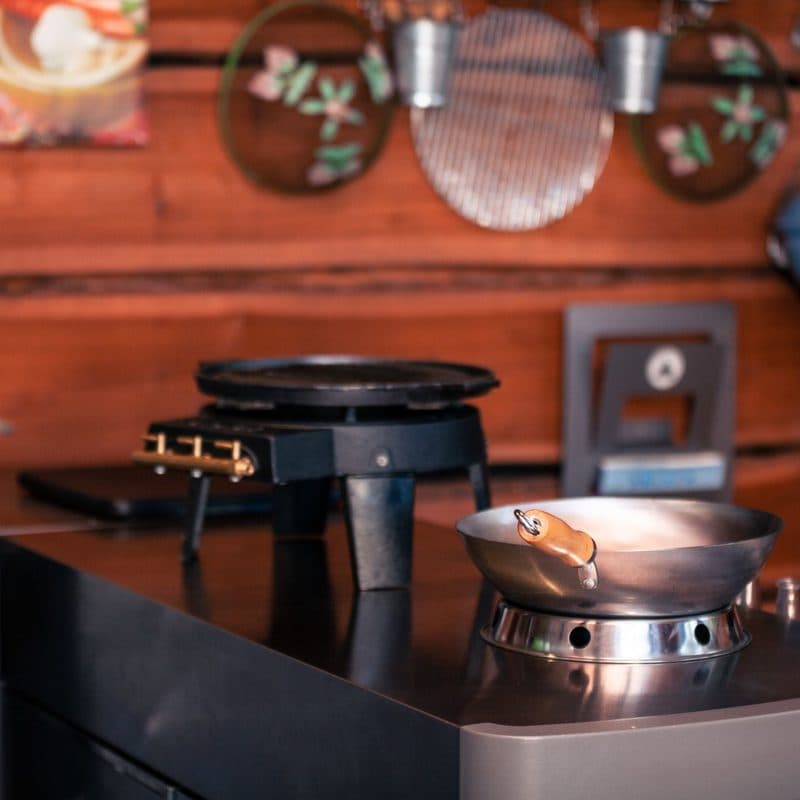 All-Clad D3 Stainless Fry Pan600F, handwash only, and the only pan in this category with published abuse-test results behind it. | A once-in-a-lifetime purchase with published evidence | 9.0 | |
| 3 |  Heritage Steel Titanium Series Fry PanFive-ply with a 316Ti surface at 800F and broiler safe, made in Tennessee, for considerably less. | 800F and a 316Ti surface without NanoBond money | 8.9 |
#ad Buy links are affiliate links. We never print a price — prices change weekly and a printed one is wrong within a month, so every link goes to the live Amazon listing. How we are funded.
Key takeaways
- Hestan publishes 1050F, oven, broiler and grill safe — by a wide margin the highest rating in clad cookware. All-Clad publishes 600F.
- NanoBond is dishwasher safe and made without PFAS, nickel, lead or cadmium. All-Clad's tri-ply is handwash only and has a conventional 18/10 nickel-bearing surface.
- All-Clad is the only pan in this category with published abuse-test evidence, and it is bonded in Pennsylvania. NanoBond is handcrafted in Italy.
- NanoBond's titanium surface changes hardness and appearance, not stick behaviour. Food still sticks if you rush the preheat.
- NanoBond is the most expensive skillet we cover, and Heritage Steel covers most of its advantages for considerably less.
The quick answer
Buy All-Clad D3 unless you specifically need a cooking surface above 600F or a nickel-free pan, in which case buy the Hestan NanoBond. The 1050F rating is real and it is the highest published number in the category, but it only matters if you genuinely put pans under a broiler or on a grill. The nickel-free surface matters a great deal if you react to nickel and not at all if you do not. For everyone else, All-Clad's published durability evidence at a fraction of the price is the better buy — or Heritage Steel at 800F as the middle path.
Side by side
| Hestan NanoBond | All-Clad D3 | |
|---|---|---|
| Surface | Titanium-based alloys bonded in nano layers | 18/10 stainless |
| Oven rating | 1050F, oven, broiler and grill safe | 600F, broiler safe |
| Dishwasher | Dishwasher safe | Handwash only |
| Induction | Yes | Yes |
| Nickel in cooking surface | None | Yes, roughly 10 percent by the 18/10 designation |
| PFAS, lead, cadmium | None, per Hestan | None — it is bare steel |
| Warranty | Lifetime | Limited lifetime, original purchaser |
| Made in | Italy | Canonsburg, Pennsylvania |
| Published abuse testing | None we could find | Yes, via America's Test Kitchen |
| Repairability | Not realistic; a damaged surface is a replacement claim | Not realistic, but the structure rarely fails |
| Typical price | Highest on this site | High |
What 1050F actually buys
It buys headroom, and headroom is worth something specific: staying inside the manufacturer's published specification. A domestic broiler element can drive a pan surface well above 600F, and a gas grill higher still. At that point an All-Clad is operating outside its published rating, and heat damage is excluded from every warranty in this category.
So the honest framing is that 1050F does not make the pan cook better. It makes a category of cooking — finishing under a broiler, searing on a grill, hard oven work — a specified use rather than a risk you are absorbing. If you never do those things, you are paying for a number that will never apply. Every brand's stated ceiling is in oven safe temperatures by brand.
The nickel question
18/10 stainless is roughly 18 percent chromium and 10 percent nickel, and a small amount of nickel can leach into food, particularly acidic food cooked for a long time in a new pan. For the general population this is not a meaningful exposure. For people with a diagnosed nickel sensitivity it can be.
NanoBond's cooking surface contains no nickel, which is a genuine and unusual property rather than a marketing line, and it is the strongest reason to choose it. If this is why you are here, read is stainless steel cookware safe and best non-toxic stainless cookware, which set out what is actually established about leaching and what is not.
What NanoBond does not do
It is not nonstick and it does not behave like nonstick. Hestan claims a harder, more scratch-resistant surface, and the surface does resist scratching — but hardness is not release. Food sticks to NanoBond for exactly the same reason it sticks to any steel pan: protein bonding to metal that was not hot enough or was crowded too soon. The technique is the same, and it is in why food sticks to stainless steel and the water test.
It also does not come with the durability evidence All-Clad has. The surface is harder; nobody has published an abuse-test result for the structure. And repair is not realistic on a bonded titanium surface, so a damaged pan becomes a warranty claim rather than a pan you live with.
The middle path
Heritage Steel sits between these two and deserves a look before you commit to either. A 316Ti cooking surface, five-ply fully clad, 800F and broiler safe, made start to finish in Tennessee, for considerably less than NanoBond. It gives up 250F of ceiling and keeps nickel in the alloy, but it covers the high-heat case and adds genuine pitting resistance — 304 vs 316 stainless steel explains why that matters, and it is our top pick in best 5-ply cookware.
Verdict
NanoBond is a legitimately differentiated product rather than a repackaged clad pan, and the 1050F rating and nickel-free surface are both real. It is also the most expensive skillet on this site by a distance, and both of its advantages are conditional on how you cook and on your own body.
Buy it if you cook at broiler and grill temperatures routinely, or if nickel sensitivity rules out 18/10. Otherwise buy All-Clad D3 for the evidence, or Heritage Steel for 800F and a 316Ti surface at a sane price.
The picks in full
1. Buy if you cook hot, or react to nickel
Hestan NanoBond Titanium Skillet
Hestan
1050F, dishwasher safe, no nickel in the cooking surface. The most expensive skillet here and not close.
- Heat rating
- 10.0
- Surface
- 9.4
- Convenience
- 9.2
- Value
- 6.0
- Titanium-based alloys bonded to stainless in nano layers
- Oven, broiler and grill safe to 1050F (Hestan published spec)
- Dishwasher safe; induction compatible
- Made without PFAS, nickel, lead or cadmium
- Lifetime warranty; handcrafted in Italy
What it gets right
- The 1050F rating puts grill and broiler work genuinely in spec
- A nickel-free cooking surface matters if you react to nickel
- Hestan claims four times the durability of plain stainless, and the surface does resist scratching
Who should skip it
- The most expensive skillet in this category, and it is not close
- The titanium surface changes appearance, not stick behavior; food still sticks if you rush the preheat
- Repair is not realistic, so a damaged surface means a replacement claim
Titanium-based alloys bonded to stainless in nano layers, oven, broiler and grill safe to 1050F, dishwasher safe, induction compatible, made without PFAS, nickel, lead or cadmium, lifetime warranty, handcrafted in Italy.
2. Buy if you want the proven default
All-Clad D3 Stainless Fry Pan
All-Clad
600F, handwash only, and the only pan in this category with published abuse-test results behind it.
- Heat rating
- 7.6
- Surface
- 8.4
- Convenience
- 6.8
- Value
- 7.2
- Tri-ply: stainless interior, aluminum core, magnetic stainless exterior
- Oven and broiler safe to 600F (All-Clad published spec)
- Induction compatible on any stovetop
- Handwash only, per the manufacturer
- Limited lifetime warranty; bonded, engineered and assembled in Canonsburg, PA
What it gets right
- Survived America's Test Kitchen's concrete-strike abuse testing with barely a ding
- Rivets and handle join are the sturdiest in the category
- Decades of parts and service history standing behind the warranty
Who should skip it
- Costs roughly three times a Tramontina that cooks nearly as evenly
- The stick handle is narrow and bites into your palm on a loaded 12-inch pan
- Handwash only, which is a real constraint if you hate washing up
Tri-ply bonded, 600F oven and broiler safe, induction compatible, handwash only, limited lifetime warranty, bonded and assembled in Canonsburg, Pennsylvania since 1971.
3. The middle path
Heritage Steel Titanium Series Fry Pan
Heritage Steel
Five-ply with a 316Ti surface at 800F and broiler safe, made in Tennessee, for considerably less.
- Heat rating
- 9.4
- Surface
- 9.6
- Convenience
- 7.0
- Value
- 7.4
- 316Ti cooking surface: stainless strengthened with titanium and molybdenum
- Five-ply fully clad construction
- Oven safe to 800F and broiler safe (Heritage Steel published spec)
- Induction compatible; handwashing recommended
- Lifetime warranty; manufactured in Clarksville, TN
What it gets right
- 316Ti resists pitting from salt and acid better than the 18/10 everyone else uses
- The 800F oven rating matches Made In and beats All-Clad by 200F
- Made in a family-owned Tennessee factory, not assembled from imported bodies
Who should skip it
- Least-known brand here, so resale and second-hand parts are thin
- Priced against All-Clad without All-Clad's service history
- The clad steel is sourced from South Korea, so made-in-USA means built, not mined
316Ti cooking surface, five-ply fully clad, oven safe to 800F and broiler safe, induction compatible, handwashing recommended, lifetime warranty, manufactured in Clarksville, Tennessee. On this page because it covers most of NanoBond's advantages for less.
Frequently asked questions
Is Hestan NanoBond better than All-Clad?
On heat rating and surface hardness, yes: 1050F against 600F and a nickel-free titanium-bonded surface. On published durability evidence, warranty service history and price, All-Clad is the better buy for most cooks.
Is Hestan NanoBond nonstick?
No. The titanium bonding makes the surface harder and more scratch-resistant, not slicker. Food sticks for the same reason it sticks to any steel pan: an underheated or crowded surface.
Is NanoBond really oven safe to 1050F?
That is Hestan's published rating, covering oven, broiler and grill use. It is by a wide margin the highest in clad cookware, where All-Clad publishes 600F and Made In and Heritage Steel publish 800F.
Is Hestan NanoBond nickel free?
The cooking surface is, per Hestan, along with no PFAS, lead or cadmium. That is the strongest practical reason to choose it over 18/10 stainless, which is roughly 10 percent nickel.
Is NanoBond worth the price?
Only if you need the heat ceiling or the nickel-free surface. Both are real, and both are conditional. Heritage Steel's 316Ti five-ply at 800F covers most of the same ground for considerably less.
Can Hestan NanoBond go in the dishwasher?
Yes, Hestan publishes a dishwasher-safe rating, which All-Clad's tri-ply does not. That is a genuine daily-use advantage on a pan at any price.
Sources
- Hestan Culinary — NanoBond titanium skillet, published specification
- All-Clad — D3 Stainless 12-inch Fry Pan, published specification
- All-Clad — Cookware Limited Lifetime Warranty (PDF)
- All-Clad — Care and use instructions for stainless cookware
- Heritage Steel — Titanium Series 10.5-inch Fry Pan, published specification
- America's Test Kitchen — Getting Whacked (how the abuse testing works)
- National Institutes of Health — Nickel fact sheet for health professionals
- US FDA — Food contact substances and cookware safety