Cookware Sets & Buy-It-For-Life
The Best 5-Ply Stainless Steel Cookware
Five layers are not automatically better than three. They are better at specific things, and worse at one.
Disclosure: Ply & Pan earns a commission on qualifying purchases made through links on this page. We take no free product and no sponsorship, and we never print a price. How we are funded.
Quick picks
The short answer. Tap any row for the full write-up.
| # | Product | Best for | Score | Price |
|---|---|---|---|---|
| 1 | 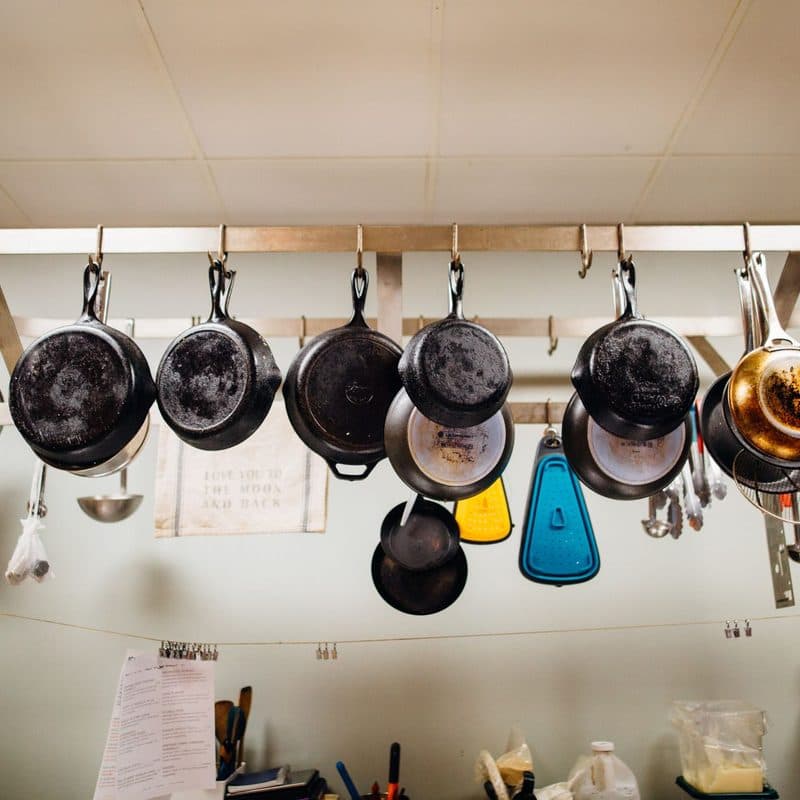 Heritage Steel Titanium Series Fry PanFive-ply with a 316Ti cooking surface, 800F and broiler safe, made start to finish in a Tennessee factory. | Buying once, with the most corrosion-resistant surface here | 8.9 | |
| 2 | 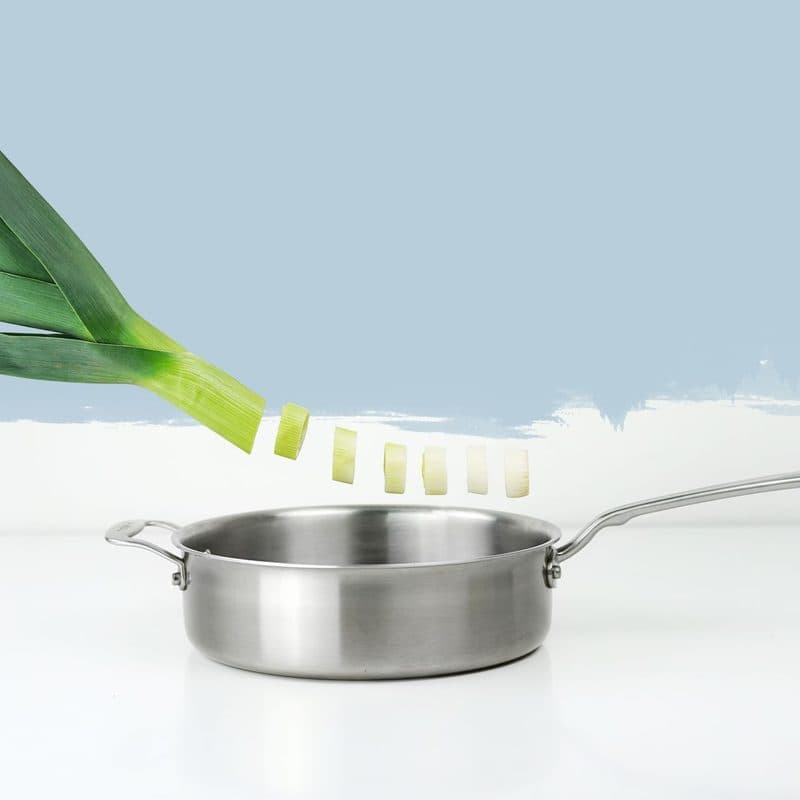 Made In Stainless Clad Frying PanFive plies at a published 2.7mm with an 800F rating, usually priced below All-Clad's tri-ply. | The highest published oven rating at a sane price | 8.8 | |
| 3 | 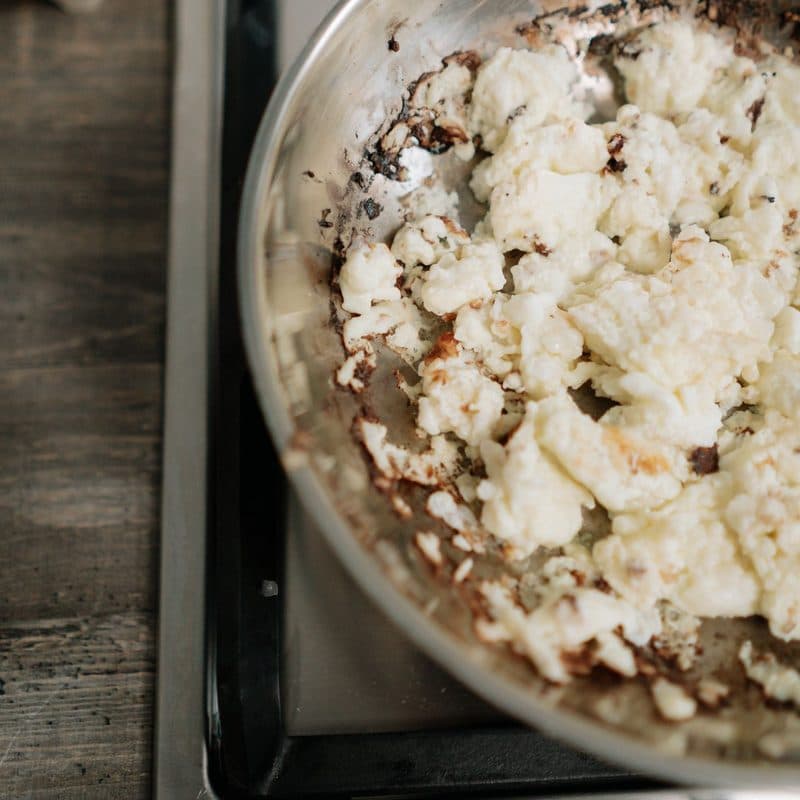 All-Clad D5 Stainless Brushed Fry PanAlternating aluminum and stainless, brushed finish, 600F, and All-Clad's warranty department behind it. | Five-ply from the brand with the longest service record | 8.4 | |
| 4 |  Misen 5-Ply Stainless SkilletFive plies at a published 3.0mm, 800F, and dishwasher safe. Overseas manufacture is the trade. | Maximum thermal mass on a budget, dishwasher included | 8.5 |
#ad Buy links are affiliate links. We never print a price — prices change weekly and a printed one is wrong within a month, so every link goes to the live Amazon listing. How we are funded.
The short answer
Heritage Steel's Titanium Series is the best 5-ply cookware you can buy, and Made In Stainless Clad is the best value in five layers. Heritage is the only one here with a 316Ti cooking surface, which resists salt and acid pitting better than the 18/10 everyone else uses, and it publishes 800F and broiler safe. Made In matches the 800F rating at a published 2.7mm for less money. Buy All-Clad D5 instead if the fifty-year warranty record outweighs the 200F you give up.
What the extra layers actually buy
Five-ply is not five layers of cooking surface. It is the same sandwich as tri-ply with more metal in the middle: typically alternating aluminum and stainless, or aluminum with a stainless damping layer, between the two faces. More metal means more thermal mass.
Thermal mass does one thing well and one thing badly. Well: it holds temperature when cold food lands in the pan, which is why a five-ply pan browns a steak properly where a thin pan drops to a stew. It also averages out a burner that cycles on and off, which is every radiant electric element. Badly: it refuses to cool down. When a pan sauce starts to break, the fix is to pull the pan off the heat, and a five-ply pan takes noticeably longer to answer.
So the honest framing is that five-ply is a searing, simmering and oven construction, and tri-ply is a sauce-and-eggs construction. If most of your cooking is the latter, read the best tri-ply cookware instead and keep the money. Tri-ply vs 5-ply is the full argument.
Layer count is the wrong specification
Nothing stops a manufacturer from counting thin layers. Five thin plies can add up to less metal than three thick ones, and a layer count tells you nothing about how much aluminum is actually in there.
Published thickness is the specification that means something, and almost nobody publishes it. On this page, Misen states 3.0mm and Made In states 2.7mm. All-Clad publishes no thickness at all for D5. Where thickness is not published, use weight at a given diameter as the proxy, and treat any brand that will not commit to a number as having declined to compete on it.
The second specification worth more than the ply count is the surface alloy. 18/10 is the default; 316-series steel adds molybdenum and resists chloride pitting substantially better, which matters if you cook salty or acidic food for hours at a time. That trade-off is set out in 304 vs 316 stainless steel.
What to look for in 5-ply
- A published thickness in millimetres. If it is missing, the layer count is marketing.
- A published oven rating, and check it against the lid. 800F is achievable; 500F at a premium price is not good value.
- What the cooking surface actually is. 18/10, 316Ti and a titanium-bonded surface are three different propositions.
- Fully clad to the rim. Five layers in a base with single-layer walls above is still a disc-bottom pan.
- Weight you will actually lift. Five-ply in 12 inches is heavy, and a pan you avoid is a pan you wasted.
- The dishwasher line in the manual, not on the retailer's page. Misen and Demeyere publish dishwasher-safe; All-Clad, Made In and Heritage do not.
How we evaluated these
We do not run a test kitchen. We compare manufacturers' own published specifications, read the warranty documents rather than the marketing summaries of them, and synthesize published third-party testing with attribution, weighted toward long-term durability. Full method on how we evaluate.
For five-ply we rank published thickness and surface alloy above layer count, because those are the two numbers that differ meaningfully between brands while "five-ply" does not.
Is 5-ply worth the money?
It is worth it if you sear a lot, cook on cycling electric elements, or finish food in a hot oven — and if the pan you buy publishes a thickness and a high oven rating to justify the premium. A 5-ply pan with an unpublished gauge and a 500F ceiling is a worse buy than a well-made tri-ply at half the price.
It is not worth it if your cooking is eggs, pan sauces and quick weeknight food, or if you are buying your first stainless pan. Buy the responsive construction, learn the technique in why food sticks to stainless steel, and add a heavy pan later for the jobs that need one.
The picks in full
1. Best 5-ply overall
Heritage Steel Titanium Series Fry Pan
Heritage Steel
Five-ply with a 316Ti cooking surface, 800F and broiler safe, made start to finish in a Tennessee factory.
- Surface
- 9.6
- Heat rating
- 9.4
- Durability
- 9.0
- Value
- 7.4
- 316Ti cooking surface: stainless strengthened with titanium and molybdenum
- Five-ply fully clad construction
- Oven safe to 800F and broiler safe (Heritage Steel published spec)
- Induction compatible; handwashing recommended
- Lifetime warranty; manufactured in Clarksville, TN
What it gets right
- 316Ti resists pitting from salt and acid better than the 18/10 everyone else uses
- The 800F oven rating matches Made In and beats All-Clad by 200F
- Made in a family-owned Tennessee factory, not assembled from imported bodies
Who should skip it
- Least-known brand here, so resale and second-hand parts are thin
- Priced against All-Clad without All-Clad's service history
- The clad steel is sourced from South Korea, so made-in-USA means built, not mined
Every other pan on this page has an 18/10 cooking surface. Heritage Steel uses 316Ti — stainless strengthened with titanium and carrying molybdenum — and molybdenum is the element that resists chloride pitting. Pitting is the only chemical attack that genuinely erodes a stainless interior over decades, and it comes from salt and acid sitting in a pan.
The rest of the specification is at the top of the category: five-ply fully clad, oven safe to 800F and broiler safe, induction compatible, lifetime warranty, manufactured in a family-owned factory in Clarksville, Tennessee. Handwashing recommended, which is the one convenience cost.
The risk is obscurity rather than quality. This is the smallest brand we cover, so second-hand parts and lids are thin, and it is priced against All-Clad without All-Clad's service record. The clad steel itself is sourced abroad, so made-in-USA here means built, not mined.
2. Best value 5-ply
Made In Stainless Clad Frying Pan
Made In
Five plies at a published 2.7mm with an 800F rating, usually priced below All-Clad's tri-ply.
- Surface
- 8.4
- Heat rating
- 9.4
- Durability
- 8.6
- Value
- 8.8
- Five-ply construction, 2.7mm thick (Made In published spec)
- Heat safe to 800F / 430C, 200F above All-Clad's rating
- Gas, electric and induction; handwash preferred
- Lifetime warranty on stainless; the frying pans are made in Italy
- Flared rim pours cleanly, which sounds trivial until you deglaze
What it gets right
- The 800F rating puts broiler work and hard oven finishes in spec rather than in hope
- Longer, flatter handle is more comfortable than All-Clad's stick handle
- Direct-to-consumer pricing undercuts All-Clad at an equivalent ply count
Who should skip it
- No decades-long warranty service record yet; the company is young
- Five plies make it slower to respond than a tri-ply of the same size
- Warranty excludes warping from thermal shock, same as everyone else's
Made In is one of very few brands that publishes an actual thickness rather than a layer count, and 2.7mm is a real number you can compare. Combined with a published 800F / 430C rating — 200F above All-Clad — it means broiler work and hard oven finishes sit inside the manufacturer's specification rather than inside your hope.
The handle is longer and flatter than All-Clad's stick profile and genuinely more comfortable on a loaded pan, and the flared rim pours without dribbling, which stops mattering only until the first time you deglaze. Lifetime warranty on stainless; the frying pans are made in Italy.
The trade-offs: no decades-long warranty service record, because the company is young. Five plies respond more slowly than a tri-ply of the same size, which is the wrong trait for a pan sauce. And like everyone else, the warranty excludes warping from thermal shock.
3. Best evidence behind it
All-Clad D5 Stainless Brushed Fry Pan
All-Clad
Alternating aluminum and stainless, brushed finish, 600F, and All-Clad's warranty department behind it.
- Surface
- 8.4
- Heat rating
- 7.6
- Durability
- 9.4
- Value
- 6.8
- Five-ply: alternating layers of aluminum and stainless steel
- Oven and broiler safe to 600F (All-Clad published spec)
- Induction compatible; handwash only
- Brushed exterior hides scuffs better than the polished D3
- Limited lifetime warranty; made in All-Clad's Pennsylvania factory
What it gets right
- The extra stainless layer genuinely damps hot spots on a weak or uneven burner
- Brushed finish still looks composed after a year; polished D3 shows every scratch
- Heavier gauge means less flexing at the base over a decade
Who should skip it
- Slower to respond when you pull heat, which is the wrong trait for a pan sauce
- Costs meaningfully more than D3 for a difference most cooks will not feel
- Noticeably heavier in a 12-inch, which matters when you are tossing food
D5 alternates five layers of aluminum and stainless, and the extra stainless layer genuinely damps hot spots on a weak or uneven burner. If your stove has one bad ring, this is the pan that hides it. The brushed exterior also still looks composed after a year where the polished D3 shows every scratch.
The argument for buying it over a better-specified rival is the same as for every All-Clad: a Pennsylvania factory operating since 1971, and the only published abuse-test result in the category. Durability evidence beats a spec sheet when the purchase is meant to be the last one.
Against that, the 600F ceiling is 200F below Made In and Heritage Steel, it costs meaningfully more than D3 for a difference most cooks will not feel, it is noticeably heavier in a 12-inch, and it is handwash only. It is also slower to respond when you pull heat — exactly the wrong trait for sauce work. If that is your cooking, D3 is the better buy.
4. Thickest gauge for the money
Misen 5-Ply Stainless Skillet
Misen
Five plies at a published 3.0mm, 800F, and dishwasher safe. Overseas manufacture is the trade.
- Surface
- 8.2
- Heat rating
- 9.4
- Durability
- 8.2
- Value
- 9.0
- Five-ply, 3.0mm construction (Misen published spec)
- Oven safe to 800F / 426C
- Dishwasher safe and induction compatible
- Lifetime warranty against defects
- Manufactured in China
What it gets right
- Thickest pan in its price band; 3.0mm is genuinely heavy gauge
- Dishwasher safe, which almost nothing else in this class claims
- Sloped sides make it more useful for tossing than a straight-walled skillet
Who should skip it
- Overseas manufacturing is a deal-breaker if made-in-USA is the point
- The warranty is defect-only, and the company is younger than the pans it warranties
- 3.0mm is heavy enough to be tiring in a 12-inch
3.0mm is the thickest published gauge on this page, and gauge is what five-ply is for. A pan with that much mass barely notices six cold eggs or a cold steak landing in it, which is the moment a thin pan stalls and food starts to stew instead of brown.
Misen also publishes an 800F rating and, unusually in this class, a dishwasher-safe rating. Almost nothing else at this gauge claims both. Lifetime warranty against defects.
Two deductions. It is manufactured in China, which is decisive if buying American is the point of the purchase. And 3.0mm is heavy enough to be tiring in a 12-inch — mass you paid for is still mass you lift.
Frequently asked questions
Is 5-ply stainless steel cookware worth it?
For searing, long simmers and oven work, yes. For eggs and pan sauces, no, because the extra thermal mass makes the pan slower to respond when you pull it off the heat. It is a different tool, not a better tier.
What is the best 5-ply stainless steel cookware?
Heritage Steel's Titanium Series, because it is the only one here with a 316Ti cooking surface and it publishes 800F and broiler safe. Made In Stainless Clad matches the heat rating for less money.
Is 5-ply better than 3-ply?
Only for specific jobs. Five layers hold temperature better when cold food lands in the pan; three layers respond faster when you change the heat. Published thickness matters more than either number.
Does 5-ply cookware heat more evenly?
Usually yes, especially on an uneven or cycling burner, because the extra stainless layer damps hot spots. The improvement is real but smaller than marketing implies on a good burner.
How thick should 5-ply cookware be?
2.5mm or more is heavy gauge. Made In publishes 2.7mm and Misen 3.0mm. Most brands publish nothing at all, and a five-ply pan with no stated thickness may hold less metal than a thick tri-ply.
Is 5-ply cookware heavier?
Yes, noticeably, and it matters in a 12-inch pan you toss food in. Buy the heaviest pan you will reliably use rather than the heaviest one available.
Sources
- Heritage Steel — Titanium Series 10.5-inch Fry Pan, published specification
- Made In — Stainless Clad Frying Pan, published specification
- All-Clad — D5 Stainless Brushed 12-inch Fry Pan, published specification
- Misen — Stainless Steel Skillet, published specification
- Made In — 3-Ply vs 5-Ply Stainless Steel Cookware (brand blog)
- Prudent Reviews — 3-Ply vs 5-Ply Stainless Steel Cookware
- Boulder Engineering Studio — 304 vs 316 stainless steel: composition and chloride thresholds