Brands & Head-to-Head
Tramontina vs Cuisinart
The two default budget clad sets. Tramontina builds the better pan; Cuisinart sells the more replaceable one.
Disclosure: Ply & Pan earns a commission on qualifying purchases made through links on this page. We take no free product and no sponsorship, and we never print a price. How we are funded.
Quick picks
The short answer. Tap any row for the full write-up.
| # | Product | Best for | Score | Price |
|---|---|---|---|---|
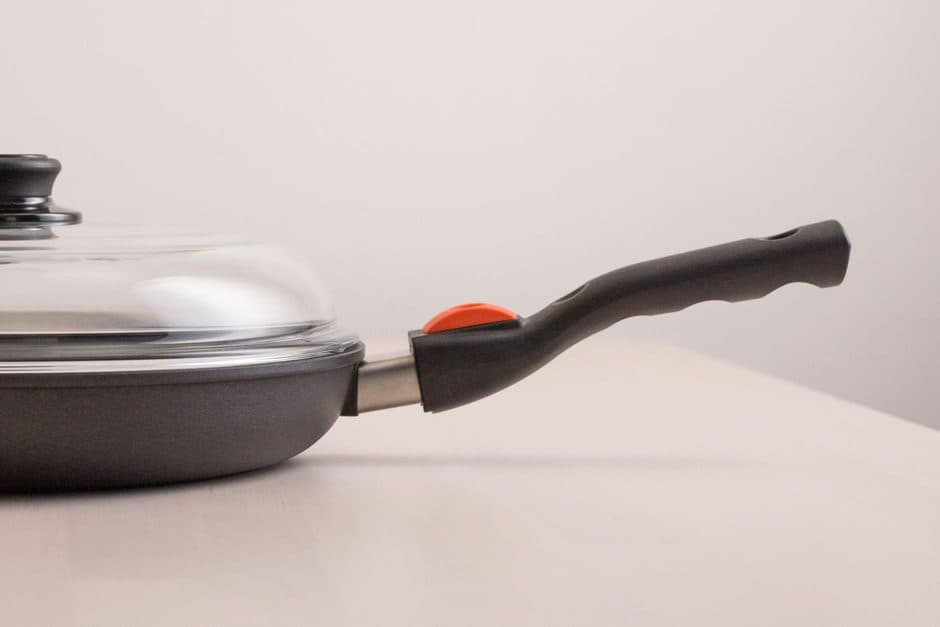
| 1 |  Tramontina Signature Tri-Ply Clad Cookware SetHeavier gauge, commercial certification, and cladding that runs through the pots as well as the pans. | Thicker gauge, NSF certification and fully-clad pots | 8.9 | |
| 2 | 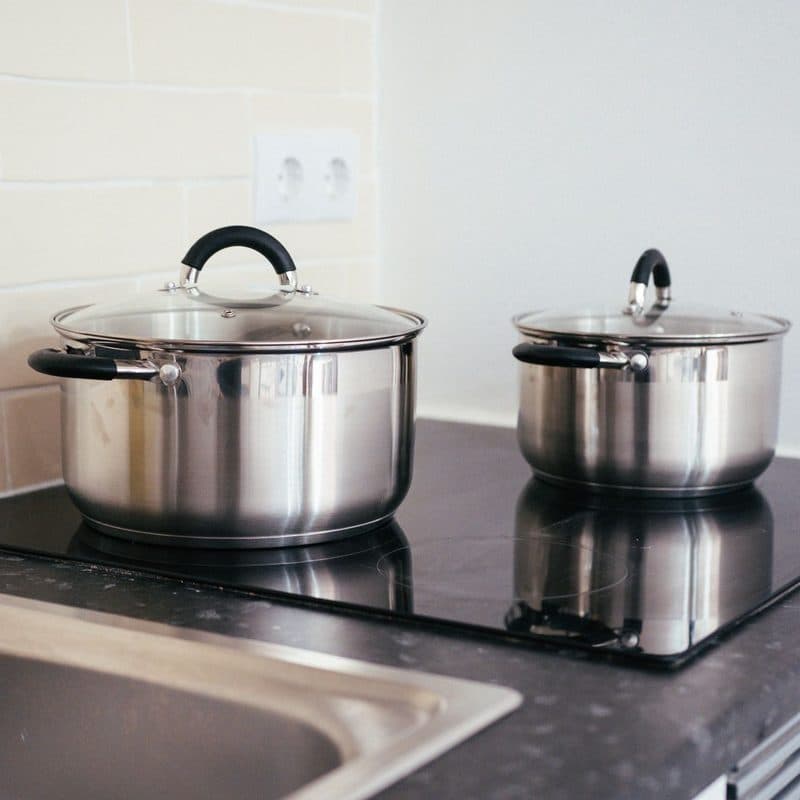 Cuisinart MultiClad Pro Cookware SetThinner, but stocked almost everywhere and on the market long enough that its failure modes are documented. | Replacing a single piece in six years without a hunt | 8.0 | |
| 3 |  All-Clad D3 Stainless Fry PanThree to four times the price of either, with the only published abuse-test result in the category. | A once-in-a-lifetime purchase with published evidence | 8.6 |
#ad Buy links are affiliate links. We never print a price — prices change weekly and a printed one is wrong within a month, so every link goes to the live Amazon listing. How we are funded.
Key takeaways
- Both are fully-clad tri-ply sets with 18/10 interiors, 500F oven ratings, dishwasher-safe ratings, induction compatibility and lifetime warranties. On paper they are nearly the same product.
- Tramontina is the heavier gauge and the only one of the two that is NSF-certified for commercial kitchens.
- Cuisinart is stocked in nearly every general retailer, which makes replacing one damaged piece in six years trivial.
- Cuisinart's oven rating is published as 500F by Cuisinart even where retailers advertise 550F. Treat 500F as the real number.
- Buy Tramontina for the construction. Buy Cuisinart if you expect to replace pieces individually over the years.
The quick answer
Buy the Tramontina Signature Tri-Ply Clad set. It is the thicker pan, it is NSF-certified, and it clads the pots as well as the skillets. Buy the Cuisinart MultiClad Pro instead if replaceability matters more to you than gauge — it is stocked almost everywhere, and cookware fails one piece at a time, so being able to buy that exact piece in 2034 is a real durability argument rather than a convenience one.
Side by side
| Tramontina Signature Tri-Ply Clad | Cuisinart MultiClad Pro | |
|---|---|---|
| Layers | 3, fully clad to the rim | 3, aluminum core up the sidewalls |
| Interior alloy | 18/10 stainless | Stainless over a pure aluminum core |
| Published thickness | Not published | Not published |
| Oven rating | 500F | 500F (some retailers list 550F) |
| Dishwasher | Dishwasher safe | Dishwasher safe |
| Induction | Yes | Yes |
| Commercial certification | NSF-certified | None published |
| Warranty | Lifetime | Lifetime |
| Made in | Brazil | Not published per piece |
| Retail availability | Good | Excellent — stocked almost everywhere |
| Typical price | Similar | Similar |
Construction: where the real gap is
Both sets are genuinely clad rather than disc-bottomed, which already puts them ahead of most of what is sold at this price. The difference is gauge. The Tramontina is the heavier of the two, and on a powerful gas ring the Cuisinart shows slightly more hot-spotting and slightly less even browning as a result.
That is a smaller gap than brand marketing on either side implies. The fact that both clad the walls rather than brazing a disc into the base matters far more than the gauge difference between them — a disc-bottom saucepan scorches milk, rice and anything that thickens, and neither of these does. Fully clad vs disc bottom sets out why that is the specification to check first.
The NSF certification on the Tramontina is the one hard credential separating them. NSF is a commercial-kitchen standard covering cleanability and material suitability, and it is awarded by an outside body rather than claimed by the brand. It does not mean the pan cooks better. It does mean an independent party has inspected it.
The oven rating discrepancy
Cuisinart's MultiClad Pro is frequently advertised at 550F by retailers. Cuisinart's own product page says 500F.
Use 500F. The warranty is written against the manufacturer's published specification, so if a pan is damaged at 540F the retailer who advertised 550F is not the party you will be arguing with. This is a general rule worth carrying: where a retailer and a manufacturer disagree about a number, the manufacturer's number is the one with consequences attached. We compare every brand's stated ceiling in oven safe temperatures by brand.
Why availability is a durability argument
A cookware set does not fail as a unit. It fails one piece at a time, in a fairly predictable order: lids first, then the most-used skillet, then nothing for decades. That is worked through in what cookware lasts the longest.
Which means set longevity is largely a question about replacement parts. A glass lid cracks, a knob loosens, and suddenly a perfectly good pan is a partially retired pan. On that measure Cuisinart wins clearly: it is stocked in nearly every general retailer, so buying that one piece is an errand. Tramontina's distribution is good but narrower, and Demeyere's — to pick the other end of the category — is thin enough that replacing a piece takes real effort.
Who should buy neither
If you already own pans and are replacing them as they fail, neither set is the right purchase: you will pay for six pieces to fix two. Set vs buying piece by piece runs the arithmetic, and the two-pan kitchen makes the case that most households need a skillet and a saucier rather than a set at all.
If you finish food under a broiler, both 500F ceilings are a problem and you want Made In or Heritage Steel at 800F. If you want the best-evidenced durability in the category and the price is tolerable, that is All-Clad — compared directly in All-Clad vs Tramontina and Cuisinart vs All-Clad.
Verdict
Tramontina is the better-built set and the one we recommend, and it is our overall value pick in best stainless steel cookware sets and best tri-ply cookware. Cuisinart is the better-supported one, and for a buyer who expects to maintain a set over twenty years rather than replace it, that is a defensible reason to choose it. Both are a far better buy than a disc-bottom set at the same price, which is the real competition.
The picks in full
1. Buy if you want the better pan
Tramontina Signature Tri-Ply Clad Cookware Set
Tramontina
Heavier gauge, commercial certification, and cladding that runs through the pots as well as the pans.
- Construction
- 8.6
- Coverage
- 8.8
- Availability
- 7.6
- Value
- 9.7
- Tri-ply clad throughout, not disc-bottomed on the pots
- 18/10 stainless interior over an aluminum core
- Oven safe to 500F; dishwasher safe; NSF-certified
- Induction compatible across the set
- Tramontina lifetime warranty
What it gets right
- Fully clad at a price where most sets quietly switch to disc bottoms
- The one set we would hand to someone furnishing a first kitchen
- The dishwasher-safe rating applies across the set, not just the skillets
Who should skip it
- Sets always include a piece or two you will never reach for
- The 500F ceiling limits oven work compared with buying pieces individually
- Lids are the weakest component; treat their rating as lower than the pans'
Tri-ply clad throughout with an 18/10 interior over an aluminum core, 500F oven rating, dishwasher safe, induction compatible, NSF-certified, lifetime warranty, made in Brazil. The gauge is the argument.
2. Buy if you want the easier one to live with
Cuisinart MultiClad Pro Cookware Set
Cuisinart
Thinner, but stocked almost everywhere and on the market long enough that its failure modes are documented.
- Construction
- 7.6
- Coverage
- 8.6
- Availability
- 9.6
- Value
- 8.8
- Triple-ply: a pure aluminum core between stainless layers
- Oven safe to 500F (Cuisinart published spec; some retailers list 550F)
- Dishwasher safe; induction compatible
- Lifetime warranty
- Tapered rims for drip-free pouring
What it gets right
- Widely stocked, so replacing a single piece is easy
- Aluminum runs up the sidewalls, not just across the base
- Has been on the market long enough that its failure modes are known
Who should skip it
- Retailers list conflicting oven ratings; treat 500F as the safe number
- Thinner gauge than Tramontina's equivalent, and it shows on high heat
- Handles get hot faster than the clad competition
Triple-ply with a pure aluminum core up the sidewalls, 500F by Cuisinart's own specification, dishwasher safe, induction compatible, lifetime warranty. Distribution is the argument.
3. Buy if neither is enough
All-Clad D3 Stainless Fry Pan
All-Clad
Three to four times the price of either, with the only published abuse-test result in the category.
- Construction
- 9.2
- Coverage
- 8.0
- Availability
- 8.8
- Value
- 6.4
- Tri-ply: stainless interior, aluminum core, magnetic stainless exterior
- Oven and broiler safe to 600F (All-Clad published spec)
- Induction compatible on any stovetop
- Handwash only, per the manufacturer
- Limited lifetime warranty; bonded, engineered and assembled in Canonsburg, PA
What it gets right
- Survived America's Test Kitchen's concrete-strike abuse testing with barely a ding
- Rivets and handle join are the sturdiest in the category
- Decades of parts and service history standing behind the warranty
Who should skip it
- Costs roughly three times a Tramontina that cooks nearly as evenly
- The stick handle is narrow and bites into your palm on a loaded 12-inch pan
- Handwash only, which is a real constraint if you hate washing up
Tri-ply bonded, 600F oven and broiler safe, handwash only, limited lifetime warranty, bonded in Canonsburg since 1971. Worth including because the honest answer to this comparison is sometimes "neither".
Frequently asked questions
Is Tramontina better than Cuisinart?
As a pan, yes. Tramontina is the heavier gauge, it is NSF-certified for commercial kitchens, and the cladding runs through the pots as well as the pans. Cuisinart's advantage is retail availability, not construction.
Is Tramontina cookware good quality?
Yes. The Signature Tri-Ply Clad line is fully clad with an 18/10 interior over an aluminum core, NSF-certified, dishwasher safe and induction compatible, with a lifetime warranty — specifications most premium brands match but do not beat.
Is Cuisinart MultiClad Pro oven safe to 500F or 550F?
Treat it as 500F. Cuisinart's own product page states 500F; some retailers advertise 550F. The warranty is written against the manufacturer's figure, so that is the one that carries consequences.
Are both Tramontina and Cuisinart dishwasher safe?
Yes, both publish dishwasher-safe ratings, which All-Clad's tri-ply does not. Handwash the lids regardless — glass lids and their knobs are the component that fails first in any set.
Which is better for induction?
Both work on induction. Tramontina's heavier base holds contact and averages out a cycling element slightly better, so it has a small edge, but neither has a compatibility problem.
Should I buy either instead of All-Clad?
If you want the lowest cost per year of ownership, yes — both cook close enough to All-Clad that most people could not pick them apart blind. All-Clad buys published abuse-test evidence and a fifty-year service record, not better cooking.
Sources
- Tramontina — Signature Tri-Ply Clad Stainless Steel Fry Pan, published specification
- Cuisinart — MultiClad Pro Stainless Cookware Set, published specification
- All-Clad — D3 Stainless 12-inch Fry Pan, published specification
- All-Clad — Cookware Limited Lifetime Warranty (PDF)
- America's Test Kitchen — Getting Whacked (how the abuse testing works)
- Consumer Reports — Best cookware sets