Skillets & Fry Pans
The Best Stainless Steel Skillets for Induction
Induction is unforgiving about two things: magnetism and flatness. Most guides only mention the first.
Disclosure: Ply & Pan earns a commission on qualifying purchases made through links on this page. We take no free product and no sponsorship, and we never print a price. How we are funded.
Quick picks
The short answer. Tap any row for the full write-up.
| # | Product | Best for | Score | Price |
|---|---|---|---|---|
| 1 | 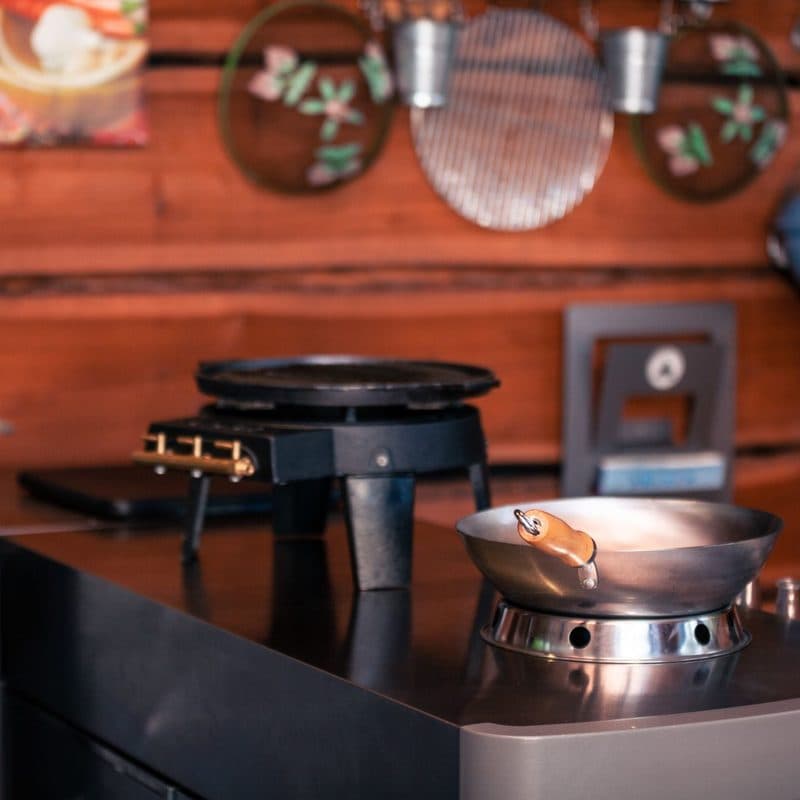 All-Clad D3 Stainless Fry PanMagnetic 18/0 exterior and the most warp-resistant base in the category. On induction, flatness is everything. | A base that stays flat, which is what induction actually needs | 9.2 | |
| 2 | 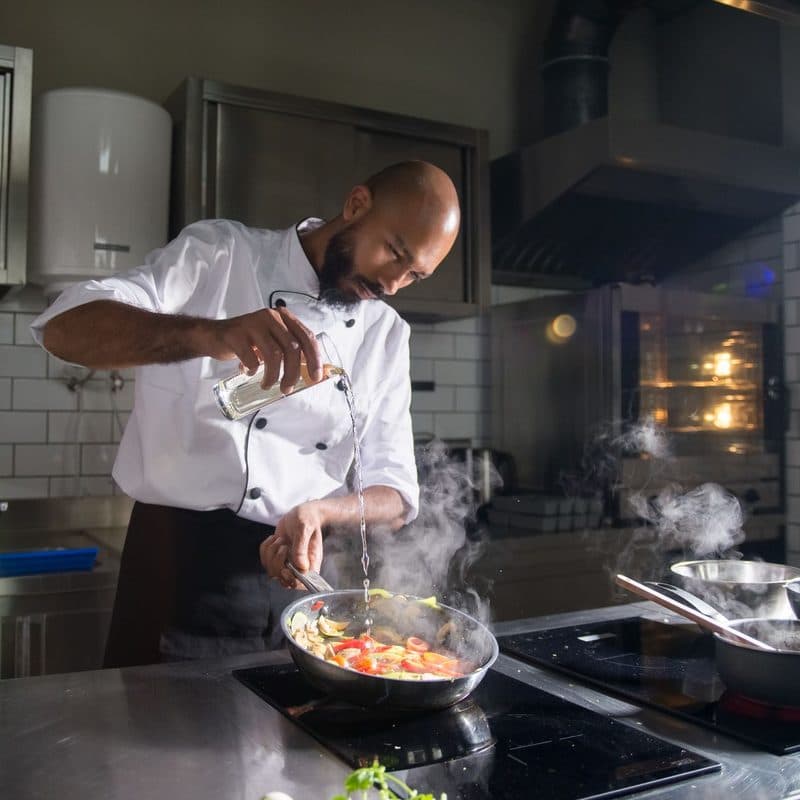 Demeyere Industry 5 Fry PanThe heaviest base here, which is exactly what a strong induction ring wants. | Powerful induction hobs that overwhelm thin pans | 8.6 | |
| 3 | 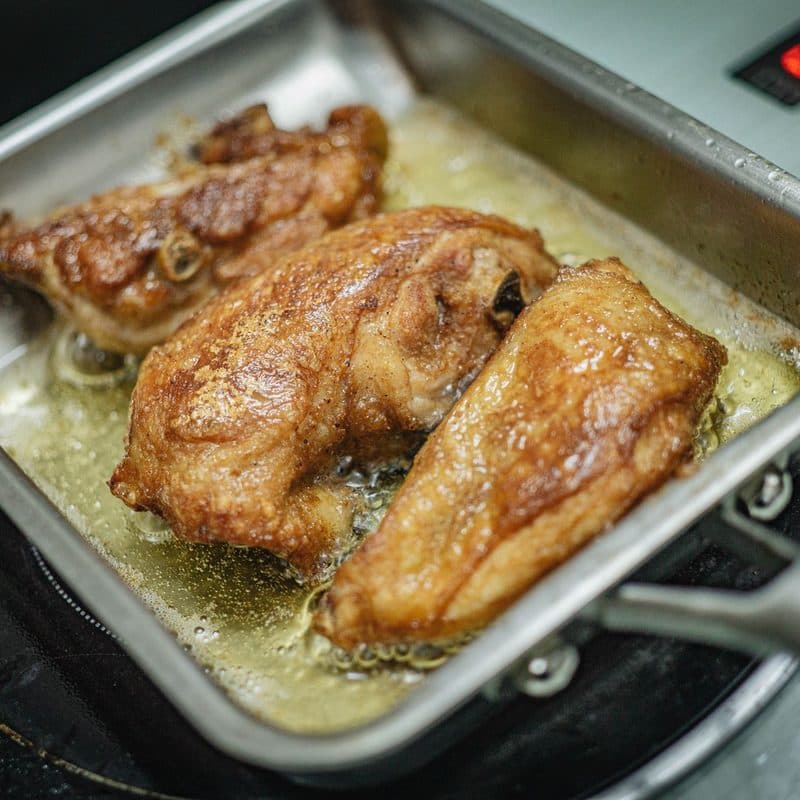 Tramontina Signature Tri-Ply Clad Fry PanInduction-ready, dishwasher safe, cheap. Just check the base is flat before you keep it. | A first induction pan you are not precious about | 8.4 |
#ad Buy links are affiliate links. We never print a price — prices change weekly and a printed one is wrong within a month, so every link goes to the live Amazon listing. How we are funded.
Why induction is fussier than gas
An induction hob does not heat the pan from outside. It generates an alternating magnetic field that induces currents directly in the pan's base, and the base heats itself. Two consequences follow, and together they explain every induction cookware complaint.
First, the base must be ferromagnetic. Nickel-bearing stainless like 18/10 and 18/8 is not. That is why good clad pans use nickel-free magnetic 18/0 for the exterior layer and 18/10 for the cooking surface — the right alloy on each side.
Second, only metal in genuine contact with the glass gets driven. There is no flame to wrap around a slightly lifted edge. A base that is convex by half a millimeter heats as a ring with a cool center, and oil pools at the low point. This is why a warped pan is a far bigger problem on induction than on gas.
The two tests to run
The magnet test. Hold a fridge magnet against the base. It should grab firmly, not cling weakly. A weak grab usually means a thin magnetic layer that will couple inefficiently.
The rock test. Put the pan on a flat, hard surface and press each edge in turn. Any movement is a fail. Do this on arrival, not after six months, because it is a returns question.
How long will it last on induction?
Induction is harder on cookware than gas in one specific way: it heats the base fast and the walls not at all, which means a bigger thermal gradient across the pan and more stress on the bond. Pans that survive this are thick, and pans that do not are thin. That is the whole reason mass matters more here.
The practical failure sequence is: fast empty preheat, base expands rapidly against cooler walls, repeated over months, base gradually goes convex, pan starts spinning slightly on the glass. Nothing about that is covered by any warranty on this page — All-Clad excludes warping from high heat or heating empty, and Made In excludes warping from thermal shock.
Prevention is cheap: preheat on medium rather than maximum, never preheat empty for more than a minute or two, and let the pan cool before it meets water. Induction's speed makes the empty preheat especially dangerous, because a pan reaches damaging temperatures faster than your intuition from gas expects.
The picks in full
1. Best for induction overall
All-Clad D3 Stainless Fry Pan
All-Clad
Magnetic 18/0 exterior and the most warp-resistant base in the category. On induction, flatness is everything.
- Durability
- 9.6
- Flatness
- 9.4
- Heat
- 8.8
- Value
- 7.2
- Tri-ply: stainless interior, aluminum core, magnetic stainless exterior
- Oven and broiler safe to 600F (All-Clad published spec)
- Induction compatible on any stovetop
- Handwash only, per the manufacturer
- Limited lifetime warranty; bonded, engineered and assembled in Canonsburg, PA
What it gets right
- Survived America's Test Kitchen's concrete-strike abuse testing with barely a ding
- Rivets and handle join are the sturdiest in the category
- Decades of parts and service history standing behind the warranty
Who should skip it
- Costs roughly three times a Tramontina that cooks nearly as evenly
- The stick handle is narrow and bites into your palm on a loaded 12-inch pan
- Handwash only, which is a real constraint if you hate washing up
Every pan on this page is magnetic, so magnetism is not the differentiator. Flatness is. An induction hob heats only the metal in direct contact with the glass, so a base with even a slight convexity cooks in a ring and leaves a cool center. On gas, a slightly warped pan is an annoyance. On induction it is a different pan.
That is why the D3 tops this list rather than the pans with better spec sheets. It is the one with published evidence of resisting the thing that destroys flatness: America's Test Kitchen's thermal-shock protocol heats pans to 500F and plunges them into ice water specifically to provoke warping, and the All-Clad came through it essentially unchanged where others did not.
Construction detail worth understanding: the D3's exterior is magnetic stainless, and the interior that touches food is 18/10. That is not cost-cutting. Nickel-bearing 18/10 is non-magnetic and an induction coil cannot drive it, so the pan needs a nickel-free magnetic layer facing the hob. See 18/10 vs 18/8 vs 18/0.
2. Best heavy-gauge option
Demeyere Industry 5 Fry Pan
Demeyere
The heaviest base here, which is exactly what a strong induction ring wants.
- Durability
- 9.4
- Flatness
- 9.2
- Heat
- 8.8
- Value
- 6.6
- Five-ply construction from rim to rim
- Oven safe to 500F (Zwilling published spec)
- Dishwasher safe; induction compatible
- Patented Silvinox surface treatment resists fingerprints and acidic foods
- Lifetime warranty; made in Belgium
What it gets right
- Silvinox is the only surface treatment here that measurably slows cosmetic aging
- Built to a commercial-kitchen spec, and the gauge shows it
- Dishwasher safe despite the price bracket
Who should skip it
- A 500F ceiling is low for the money
- Heaviest pan on this site; genuinely tiring in the larger sizes
- Rare enough in US retail that replacing one piece takes effort
Induction delivers heat faster than gas and concentrates it in the base, which punishes thin pans — they hot-spot and, over time, they distort. Mass is the defense, and the Industry 5 has more of it than anything else on this page. Five-ply from rim to rim, built to a commercial specification, made in Belgium.
Demeyere also builds this line specifically with induction in mind, and it shows in how evenly the base couples to the ring. Add dishwasher-safe status and the Silvinox surface treatment, which resists the detergent dulling that catches up with most stainless eventually.
The 500F oven rating remains the awkward fact. At this price it is 100F below All-Clad and 300F below Made In, and if you finish things under a broiler that is a genuine limitation on an expensive pan.
3. Best value for induction
Tramontina Signature Tri-Ply Clad Fry Pan
Tramontina
Induction-ready, dishwasher safe, cheap. Just check the base is flat before you keep it.
- Durability
- 7.8
- Flatness
- 7.6
- Heat
- 8.4
- Value
- 9.7
- Tri-ply: aluminum core between two layers of 18/10 stainless
- Oven safe to 500F (Tramontina published spec)
- Dishwasher safe; works on gas, electric, ceramic glass and induction
- NSF-certified for commercial kitchens
- Mirror-polished exterior, riveted stainless handle
What it gets right
- Cooks close enough to All-Clad that most people could not pick them apart blind
- Dishwasher safe and NSF-certified, neither of which All-Clad's tri-ply is
- Cheap enough that replacing it in fifteen years still costs less than one D3
Who should skip it
- The 500F oven rating is 100F below All-Clad and 300F below Made In
- Handle is less comfortable and the polished finish scuffs faster
- Lighter gauge base is more prone to warping under thermal shock
Tramontina publishes compatibility with gas, electric, ceramic glass and induction, and the Signature line couples to a hob perfectly well. At this price it is the sensible way to find out whether you get on with cooking on steel before committing real money.
The one thing to do is check flatness on arrival. Lighter-gauge pans have more variance in how flat they leave the factory, and on induction that matters immediately rather than eventually. Set it on a worktop or a glass hob and press each edge in turn. If it rocks at all, return it — that is not a pan that will improve.
One induction-specific note that applies to every pan here: small pans on large rings and large pans on small rings both cook badly. Match the base diameter to the ring within an inch or so.
Frequently asked questions
Does all stainless steel work on induction?
No. The base must be ferromagnetic. Nickel-bearing 18/10 and 18/8 are not magnetic. Clad pans designed for induction use a nickel-free 18/0 exterior layer specifically so the hob can drive them.
How do I test whether a pan works on induction?
Hold a fridge magnet against the base. It should grab firmly rather than cling weakly. A weak grab usually indicates a thin magnetic layer that will couple to the hob inefficiently.
Why does my pan heat unevenly on induction?
Usually the base is not perfectly flat. Induction heats only metal in direct contact with the glass, so slight convexity produces a hot ring and a cool center. Check by pressing each edge on a flat surface.
Does induction damage stainless pans?
Not directly, but it heats the base fast while the walls stay cool, which increases thermal stress. Preheat on medium rather than maximum and never heat a pan empty for long.
Do I need a thicker pan for induction?
It helps. Mass evens out the concentrated heat an induction ring delivers and resists the warping that ruins flatness. Heavier clad pans are meaningfully better matched to induction than light ones.
Should the pan match the ring size?
Within an inch or so, yes. A small pan on a large ring wastes energy and can trigger pan-detection errors; a large pan on a small ring heats as a hot spot with cool edges.
Sources
- All-Clad — D3 Stainless 12-inch Fry Pan, published specification
- Zwilling — Demeyere Industry 5 11-inch Frying Pan, published specification
- Tramontina — Signature Tri-Ply Clad Stainless Steel Fry Pan, published specification
- Xometry — 18/8 vs 18/10 vs 18/0 stainless steels compared
- America's Test Kitchen — The Best Stainless-Steel Skillets
- All-Clad — Cookware Limited Lifetime Warranty (PDF)